
Today we’re talking about 2018’s best entry-level cameras. Being a new photographer and graduating from a smartphone to your first digital camera can be a stressful experience. You want to choose a model that sets your photos apart, but isn’t so manual and complex that learning how to use it is intimidating. Today, we’re going to talk about a few cameras that fit that sweet spot. This is the Nikon D3500 with a 18-55mm lens. It’s an easy to use DSLR camera made to feel comfortable and balanced in your hand. The body is lightweight and small, an asset if you’re carrying it with you for day-to-day use or on vacation. It can run laps around your smartphone camera; it features an 11 point autofocus for great action shots, has an Expeed image sensor to capture vibrant images, and a 24.2 Megapixel DX CMOS Sensor; the larger the DX SMOS Sensor, the wider your shots can be. Capturing beautiful images in full HD 1080P is as easy as pointing and shooting. If you can’t wait to get your pictures up on social media, you can connect the D3500 with your smartphone via Nikon’s free SnapBridge app. Once connected, your photos will populate in the app’s feed in real time. Next up is the Fujifilm X-T100 with a 15-45mm lens. This is a mirrorless camera which means it’s fully digital; it doesn’t have the mirror that most other cameras use to frame and capture photos. Because it’s mirrorless, it is considerably lighter and smaller than most other cameras making it incredibly portable. It has a retro look with an anodized coated aluminum top cover and is available in black silver and gold. It’s also WiFi enabled so you can stay connected and easily share photos and videos to your mobile device. Highly interactive, the camera features a touch screen menu and 180 degree flip and tilt screen. Getting back to specs, the X-T100 features a 24.2 Megapixel APS-C CMOS III Sensor–comparable with the D3500–and can capture a respectable ultra HD 4k video at 15 frames per second. If you want a quality beginner mirrorless that looks good around your neck, this is the one for you. Last but certainly not least, the Canon EOS M50 with a 14-45mm lens. Highlights include the ability to shoot 4k video at 23.98 frames per second, built-in 5 axis image stabilization, and a 24.1 Megapixel (APS-C) CMOS Sensor; if you’re keeping score, that’s slightly less than the D3500 and X-T100. However, this model makes up for it with it’s Dual Pixel CMOS Autofocus system that has 99 autofocus points, helping you instantly and easily capture your moment. The EOS M50 is also the most share-friendly of all three cameras; you can transfer data from your Canon to your smartphone via Bluetooth or–if you’re an Andriod user–using NFC.
Review: Kanto Audio Speakers, An Immersive Listening Experience

For the audiophile who craves an immersive listening experience, Kanto Audio Speakers deliver higher sound quality in compact, fun, and creative designs. Founded in 2007 by a group of dedicated professionals with years of experience designing and manufacturing CE products, Kanto has since burst onto the scene as one of the most reliable, highest quality names in speakers and stereo systems. Understanding that passion and knowledge are the two best tools they have, Kanto is committed to raising the bar when it comes to giving you outstanding audio and superior sound. Their design aesthetic is centered on two key principles: simple form factor and the use of premium materials, giving you stylish designs to fit your digital lifestyle.
Kanto has excelled at crafting high-quality, high-fidelity speakers and subwoofers that don’t break the bank. Style is just as important as quality to Kanto as they continuously strive to bring you better audio equipment. Whether you’re looking for speakers to play music, to use for gaming, or to connect to your turntable, Kanto have quite a few options.
Kanto Audio’s commitment to complete customer satisfaction has driven them to fine tune and design some of their best sound systems to date. Inspired by an equal appreciation for sound and design, their colorful selection of powered desktop speakers, bookshelf speakers, and sealed subwoofers have really caught our eye. Here’s a look at some of Kanto Audio’s best speakers and subwoofers:
Kanto YU2 Powered Desktop Speakers
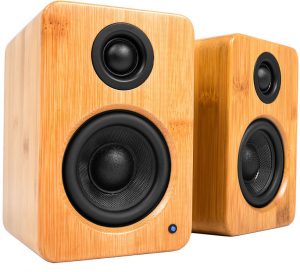
The smallest offering in Kanto’s YU line of powered desktop speakers, YU2 desktop speakers are compact, colorful, and creative. A perfect size for desktop speakers, the YU2 produces a warm sound through the 3” composite material woofer and a ¾” silk dome tweeter. The built-in soundcard streams high quality audio from the source by directly connecting via USB or 3.5mm AUX input. A small DAC (digital to analog) converter changes the signal to analog and passes it directly through the built-in amp for a clean and simple signal path that doesn’t skip a beat.
These powered speakers mark a significant improvement over your built-in computer speakers, however given their smaller size, they could do better with the base. Available in bamboo, gloss black, gloss white, gloss teal, gloss red, matte black, matte grey, and matte white, the YU2 powered desktop speakers are any color you need to match your digital lifestyle.
What We Liked: Major improvement over your computer’s built-in speakers. Connects via USB or 3.5mm AUX input. Available in a wide variety of colors. Built-in amp.
Kanto YU4 Powered Desktop Speakers
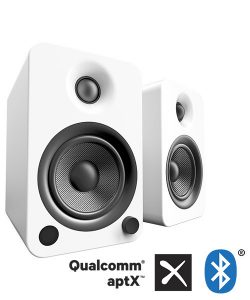
Packed with features, including larger speaker drives and a beefier amplifier, the Kanto YU4 marks major improvements over its little brother, the YU2. The YU4 upgrades to a 4” Kevlar driver with a 60Hz frequency response and a 1” silk dome tweeter for clearer sound and superior sound imaging. The Kanto Audio YU4 powered speakers and built-in amp will surround you with sound, creating an incredible soundstage all around you. Featuring two sets of optical inputs, two sets of AUX inputs, and a subwoofer out, you’ll be connecting quickly right to your sound source. Bluetooth with Qualcomm aptX technology will have you instantly enjoying high quality streaming with the YU4 powered speakers.
A simple user interface and great, colorful designs define the look and feel of the YU4 powered bookshelf speakers. A dedicated remote control gives you ease of use and access. With a more powerful natural bass than the YU2, the Kanto YU4 could still use a boost in sound quality from Kanto sub6 subwoofers. Available in classically simple and colorful designs, the YU4 bookshelf speakers will quickly become a must have for your digital lifestyle.
What We Liked: Marks a major improvement over YU2 speakers. Connects via 3.5mm AUX input, optical inputs, and Bluetooth technology. Built-in phono preamp. Available in wide variety of colors.
Kanto YU6 Powered Bookshelf Speakers
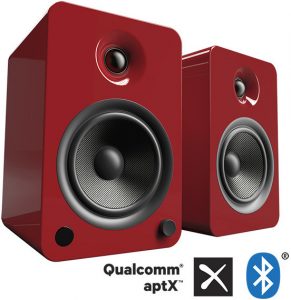
A must have for any true audiophile; the Kanto YU6 Bluetooth Speakers pack a serious punch. With 5.25” Kevlar drivers and a 1” silk dome tweeter, sound will be injected into every inch of surrounding space. The Kanto YU6 powered speakers’ formidable Class D amplifier pumps out up to 200W of power, completely covering you in high quality sound. Connect via optical inputs, 3.5mm AUX inputs, an RCA connector input, and Bluetooth with Qualcomm aptX technology to quickly connect any way you want. You’ll be feeling the pulse pounding bass and incredible sound imaging that comes with the YU6 bookshelf speakers.
Continuing the classically simple design of the lesser YU powered speakers, YU6 bring a simplistically savvy user interface and bright, fun colors to make these Bluetooth speakers a focal point of any room. A user friendly remote gives you complete control even when streaming via Bluetooth. The YU6 pairs perfectly with Kanto subwoofers like the sub8 so you can boost that bass and add phenomenal overall speaker value for your listening experience. If you crave an ultra-immersive listening experience then the Kanto YU6 powered speakers were built just for you.
What We Liked: Deep bass. Powerful audio. Class D amplifier. Built-in phono preamp. Connect via optical inputs, 3.5mm AUX inputs, an RCA connector input, and Bluetooth. Classic YU colors.
Kanto sub6 Powered Subwoofer
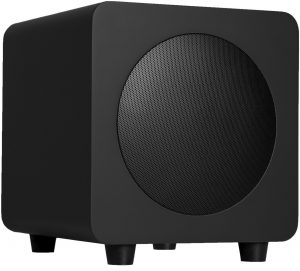
Looking for a bit more boom? The Kanto sub6 Subwoofer is adding deep bass tones to your speaker set-up. A perfect companion with the Kanto YU2 powered speakers, the sub6 powered subwoofer seamlessly connects to any speaker setup through the RCA input, instantly adding 200W of power to your audio arsenal. An adjustable low-pass filter and a phase adjustment switch give you complete control over every decibel of sound. The 6” paper-cone driver enables true bass reproduction with real weight. Available in Gloss Black, Gloss White, Matte Grey, Matte Black, and Matte White, the Kanto sub6 powered subwoofer is a stylish addition to any room in your house.
What We Liked: Adds deep bass. Connects to any speakers system through RCA input. Fun and simple style.
Kanto sub8 Powered Subwoofer
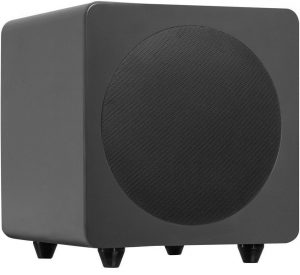
Precision control. Modern design. Bass that you can feel. The Kanto Audio sub8 Subwoofer is perfecting your music or home theater experience. Compatible with any speakers (including a perfect pairing with the YU6 speakers) through the stereo inputs, you’ll never have to sacrifice quality for convenience. An additional 250W gives you pulse pounding bass that is always clean and controlled. The sub8 has an acoustic MDF (medium-density fibreboard) enclosure that was engineered to reduce undesired resonance and reverberation inside the box to provide clean, deep bass and sound. The Kanto sub8 subwoofer employs an 8” paper cone driver to enable true sub-bass reproduction with real weight and resonance. Phase adjustment, power saving modes, and full L/R line level input in a fun, stylish, and high performance design make this subwoofer a must have for any music lover.
What We Liked: Deep bass tones. Compatible with any speaker. Powerful 250W and 8” driver. Acoustic enclosure.
Kanto SYD Powered Speaker
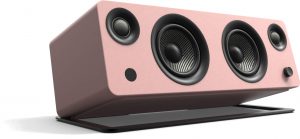
A dynamic all-in-one stereo music system, the Kanto SYD Powered Speaker will fill your whole house with sound. A true stereo device, the SYD is powered by a Class D amplifier that utilizes a pair of 4” Kevlar cone woofers and a pair of 1” silk dome tweeters to bring you clean, high-fidelity audio. A total of 140W peak power output gives you a 60Hz-20kHz frequency response for a wide range of tones and sounds. The Kanto SYD connects easily to most media sources with its wide selection of inputs, including Bluetooth with Qualcomm aptX technology, an optical digital input, a 3.5mm AUX input, and a set of RCA stereo audio inputs. Optional subwoofer outputs give you the option to attach a subwoofer to your powered speaker system. A built-in phono pre-amp ensure you get those deep tones and high quality audio when listening to vinyl.
Kanto Audio is supporting your digital lifestyle with the sleek and simple design of the SYD Bluetooth speakers. Continuing the classically simple design of other Kanto speakers, the SYD is available in pink, black, white, and burgundy. An easy-to-use remote control has complete access to every feature you would ever want from an audio system. Perfect for those who crave a complete stereo system in an intelligently designed package, the Kanto SYD speakers were made just for you.
What We Liked: All-in-one speaker system. Powerful bass and high-fidelity sound. Connect via optical inputs, 3.5mm AUX inputs, an RCA input, and Bluetooth. Stylish design.
From dynamic all-in-one sound systems to perfectly paired speaker and subwoofer combos, Kanto Audio has you covered. Upgrade your desktop audio with the YU2 speakers. Fill your life with sound with the YU4 and sub6 speaker/subwoofer combo. Immerse yourself in the music with the powerful pairing of the YU6 speakers and sub8 subwoofer. Bring it all in home the SYD stereo system. Whatever your needs, Kanto speakers are bringing you incredibly designed stereo equipment that is here to excel in your digital lifestyle.
Review: Sony Xperia XZ3 – the Photographer’s Phone, Now with OLED
The newest entrant into Sony’s XZ series of photographer-friendly smartphones, the Xperia XZ3 is the most impressive and powerful model yet. This new Sony flagship is the most capable Xperia, and it gives competitors a run for their money too. At $100 less than the price of the iPhone XS, the Sony Xperia XZ3 offers an incredible OLED display and a great camera to boot.
The OLED Screen
The OLED screen is the standout feature of the XZ3, but that is far from the only thing that makes it a worthwhile buy. Like its predecessor, the XZ3 features water-resistant Gorilla Glass 5 on the front and back. It also features Sony’s loudest speakers to date, a pair of stereo speakers powered by S-Force Front Surround, plus it’s the first phone to come with Android 9.0 Pie installed. It includes 64GB of internal memory; and no need to fret if that seems small because it can be expanded to up to 512GB with a microSDXC card.
Sony has also added a handy feature in Side sense, an AI-powered personalized menu that you activate by double-tapping either edge of the device. From this menu, you can access your most-used apps and one-handed operation, a function that becomes essential once you train yourself to use it regularly.
Now about that screen: it’s Sony’s first-ever OLED screen, providing beautiful, bright, QHD+ high-resolution picture on a curved-edge display. And with no notch, this phone wastes no real estate. The XZ3 is the first of the XZ line to feature an 18:9 aspect ratio, allowing for easier multitasking and gaming. The 6” display is large enough to comfortably browse the web, read and watch movies, and the extra-slim bezel keeps it pocket-friendly while maximizing the use of space.
Dual Cameras
Let’s not forget about the cameras (yes, multiple!). The XZ3 features dual cameras, including a front/selfie camera with a solid 13MP sensor; the front camera is great for video, capable of shooting in 1080p. The main camera is a 19MP Motion Eye intelligent camera that offers slow and super-slow motion options, Bokeh mode, A.R. effects, clear night shooting and a neat new feature called Smart launch, which pulls your camera up automatically when you turn the phone to landscape orientation. This is a godsend for action photographers who don’t always have time to unlock their device before capturing their shot.
The Sony Xperia XZ3 is available now. It won’t be for everybody at the $899 price tag, but it’s a great choice for anyone looking to upgrade to the next generation of Android phones. Oh, and let’s not forget that it can function as a reliable and effective backup camera for photographers.
Introducing: Fujifilm GFX 50R

The newest Fujifilm GFX 50R medium format mirrorless camera features a 51.4MP medium format CMOS sensor, 3.69M-dot OLED EVF, 3.2″ 2.36M-dot touch LCD that tilts up and down, AF-point-selection joystick, 3 fps continuous shooting, and more. It also weighs 145g less than the previous GFX 50S, with rugged, weather-sealed handling to accommodate a wide range of photographic needs. In short, this is a big, no-joke camera.
Complete with a 43.8 x 32.9mm sensor with a 51.4MP resolution and high-performance X-Processor Pro image processing engine, the GFX 50R produces outstanding color and tone reproduction. Moreover, it allows photographers to choose tonality of photographic films such as Velvia, PROVIA and ACROS. Plus, the sensor’s micro lenses are designed to promote light gathering performance and image resolution, which delivers precise reproduction of texture and feel.
Weather-sealed in 64 places, the robust magnesium alloy body operates at temperatures as low as 14 degrees Fahrenheit. It’s ergonomic and intuitive, equipped with a Focus Lever to allow quick focal point adjustment. There’s also extra space to hold the camera comfortably, thanks to the elimination of selector buttons. With a mechanical shutter, there’s an option to use an electronic first curtain in order to reduce the risk of shutter-induced vibration. The fully electronic shutter mode, on the other hand, has a too-slow readout. There are two dials at the top of the body, one for shutter speed and the other for exposure compensation.
It’s also just 66.4mm thick, 25.0mm thinner than the GFX 50S. However, there’s no dedicated headphone or mic sockets, probably because few plan to shoot video with this camera.
There’s also Bluetooth functionality, as seen in recent X-series cameras. It connects your smart device to the GFX 50R. This low bandwidth connection works as a remote shutter release or to quickly establish a full Wi-Fi connection for image transfer.
Like other Fujifilm cameras, the GFX 50R comes with three Auto ISO banks that let you choose the lowest and highest ISO settings along with with the shutter speed it should be dropped to. It’s then easy to cycle through these settings.
In addition, the GFX 50R system is compatible with a lineup of seven FUJINON GF Lenses for G Mount. From 23mm (equivalent to 18mm in the 35mm film format) to 250mm (equivalent to 198mm in the 35mm film format), the lineup offers focal lengths for a wide variety of purposes. They’re outdoor compatible, designed to be dust- and weather- resistant, and to withstand temperatures as low as 14 degrees Fahrenheit.
Available for pre-order now, the Fujifilm GFX 50R is slated for release sometime in late November.
What Gear You Need to Get Started With Vlogging

A vlog is just a blog that contains video content. Lots of people vlog nowadays, especially as equipment becomes cheaper and more accessible. While we can’t each you what to vlog, we can tell you what equipment you’ll need to get started.
Camera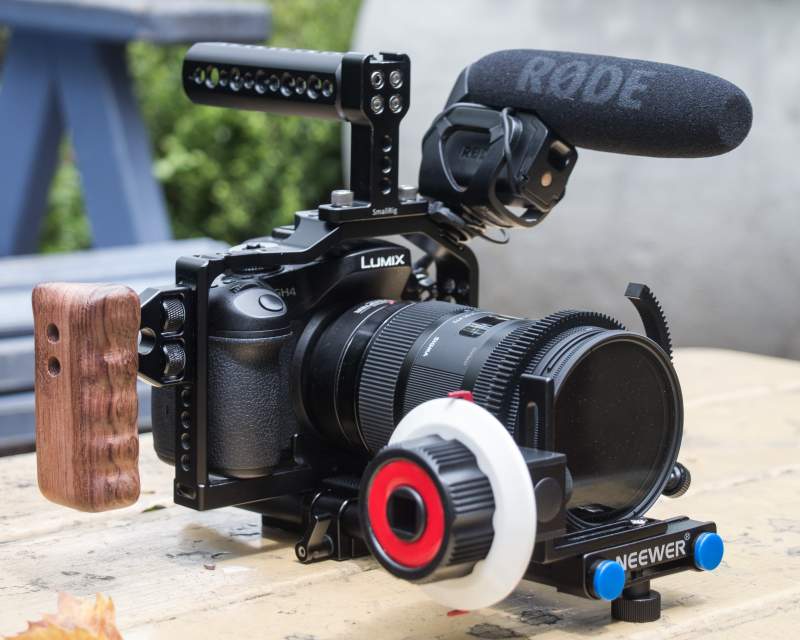
Obviously, you need a camera. While we tend to suggest cameras with 4K video and rotating screens, any camera will do to start. (As in, if you already own a camera, just experiment with that first!) However, if you’re in the market for a vlogging camera specifically, then we recommend one of these four.
RX100 Mark VI
While not a DSLR, mirrorless or an action camera, the RX100 Mark VI is a pocket-sized point and shoot with a full zoom range. In addition to 4K movies recorded at full pixel readout (with reduced moiré and jaggies), the Mark VI offers fast hybrid AF for precision tracking. While you won’t necessarily need to track fast movements in everyday vlogging, it always helps to have options. For B footage, you can also opt for super slow motion.
Panasonic Lumix G7
Jumping from beginner to intermediate blogger, the Panasonic Lumix G7 is another excellent choice. Super light at 14 ounces, it’s portable for vloggers on the go. It also shoots 30fps at UHD 4K and 60fps at 1080p, both as MP4s. With a fully articulating swivel screen, you can see yourself during the recording. Plus, the external microphone port on the left side lets you plug in external microphones to improve audio recording quality. The menus are also particularly accessible and easy to use.
GoPro Hero 7
As an adventure vlogger, you can’t go wrong with a GoPro Hero 7. There’s gimbal-like stabilization (without the gimbal) for very smooth 4K video. It’s also tough and waterproof down to 33ft. If you want to create vlogs for Instagram, this GoPro offers vertical video, too. For effects, there’s super smooth, stabilized time lapse video. However, audio without an external mic brick is lacking, so we recommend buying the attachment.
Canon EOS T6i
Great for recording videos at home, the Canon Rebel T6i marks a few improvements from the T5i with better autofocus and the addition of a WiFi feature. Plus, you have access to Canon’s STM silent lenses, so you won’t hear their lenses making noise in your recording. Like the Panasonic G7, the Canon EOS T6i features an articulating screen, so you can check yourself in the shot. For YouTube vloggers, there’s also a feature that lets you combine small clips together to save editing time.
Tripod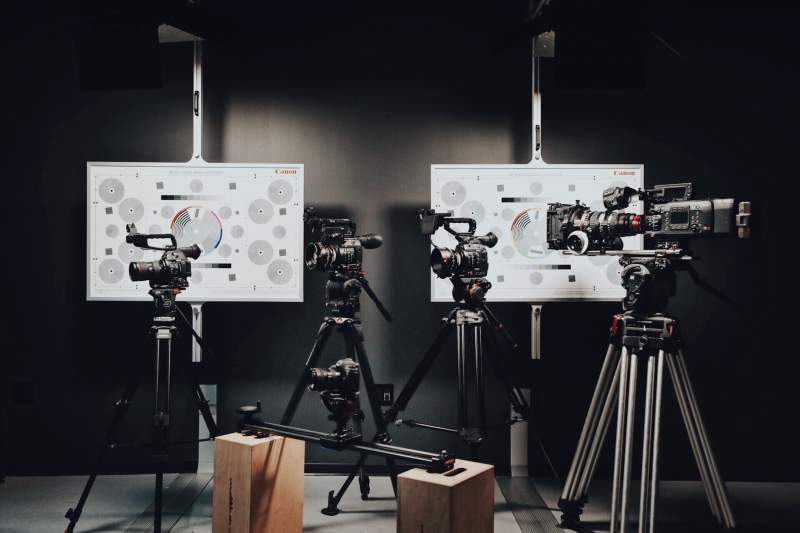
In addition to a camera, you need to invest in some other tools like a tripod. A tripod steadies the camera and makes the whole production look more professional, less like — erm, vlogging. If you invest in nothing else besides a camera, make it a tripod.
Sony VCT-SGR1 Shooting Grip and Tripod for Compact Cameras
While only for Cyber-shot cameras, the Sony VCT Shooting Grip and Tripod is perfect for vlogging, travel photography and video shooting. It converts easily from a hand grip to a stable mini tripod with adjustable shooting angles. Meanwhile, a multi USB terminal allows you to control capture and zoom, including the shutter button.
Slik U9000 Tripod
Ideal for video thanks to its smooth 3-way fluid effect pan head, the Slik U9000 Tripod features quick release shoe for easy mounting and removal. It’s also super light to carry traveling or filming outside the home.
Vanguard Alta Pro 2 264AP Aluminum Tripod with PH-32 3-Way Fluid Pan Head
With a 3-Way Fluid Pan Head, this Vanguard is another great option with fantastic ergonomics. It bears a maximum payload of up to 11 pounds, but extends to a generous height of 64-inches with 4 leg position angles. The advanced twist lock features “lock” or “unlock” to ensure instant leg extension/contraction.
Microphone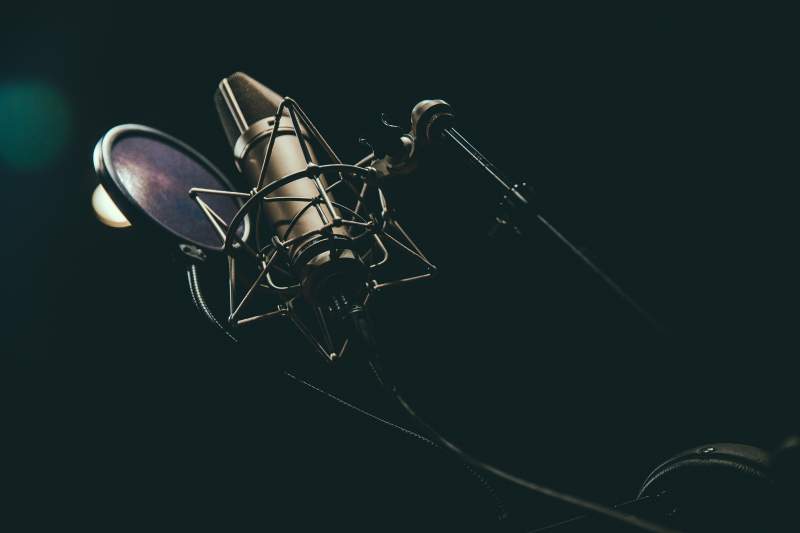
If possible, don’t rely on your camera microphone. Get a real microphone. Apart from video quality, sound quality is the next thing people pay attention to. Don’t let your wonderful content suffer because nobody can hear you!
Rode Microphones VideoMicro On-Camera Mic w/ Rycote Lyre Shock Mount
This compact microphone mounts to the top of a camera for better audio quality in videos. It utilizes a cardioid condenser microphone capsule to filter peripheral audio and hone in on what’s happening directly in front of the camera. It also includes a camera shoe mount that features a Rycote Lyre shock with a suspension structure composed of durable thermoplastic, which minimizes unwanted vibrations.
Tascam DR-10L Compact Digital Audio Recorder and Lavalier Mic Combo
As a lavalier, this microphone is great to track subjects on the move. It offers professional sound and simple clip-on construction. As a safety precaution, the Tascam DR-10L Compact Digital Audio Recorder captures two recordings simultaneously at different levels to guard against sound distortion.
Blue Microphone Yeti USB Microphone
For stationary vlogging, the Blue Yeti USB Microphone offers a sturdy stand, as well as gain control, mute button, zero-latency headphone output. It’s studio-quality, versatile, and lets the recorder select between stereo, cardioid, omnidirectional, or bi-directional polar patterns for optimal results.
Vlogging is a great way to edge into video content. You need a camera that specializes in video, a sturdy tripod, and a microphone to get started.
Panasonic Photokina Announcements: LUMIX S1 and S1R
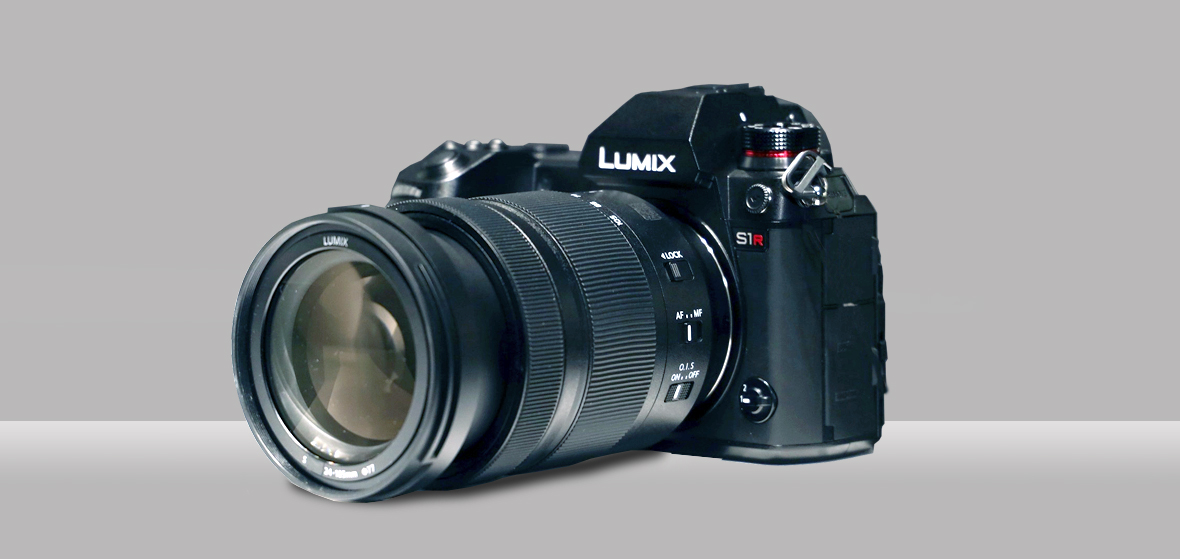
We expected big announcements from this year’s Photokina, and Panasonic did not disappoint. While mockups were already available, Panasonic released working prototypes of two professional full-frame mirrorless ILCs, LUMIX S1 and S1R, as well as lenses. Equipped with the world’s first 4K 60p/50p video recording function and the Dual I.S. image stabilization system in a full-frame digital single lens mirrorless camera, these models are slated for release in early 2019.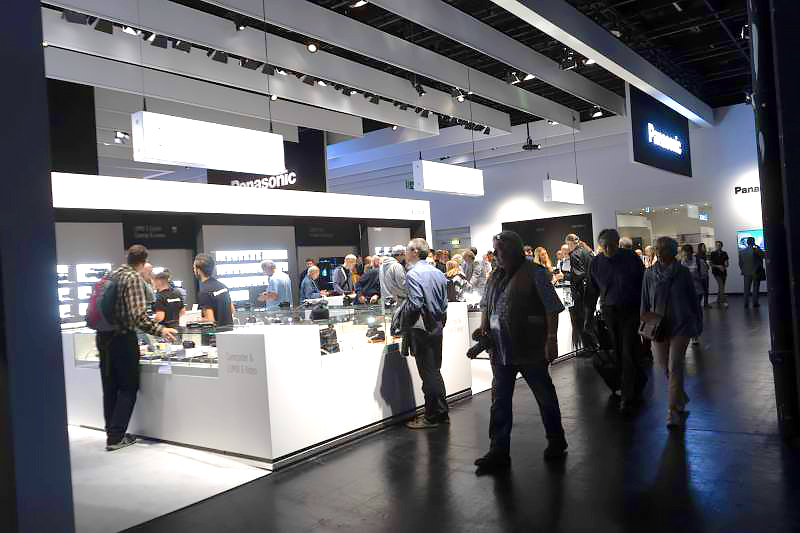
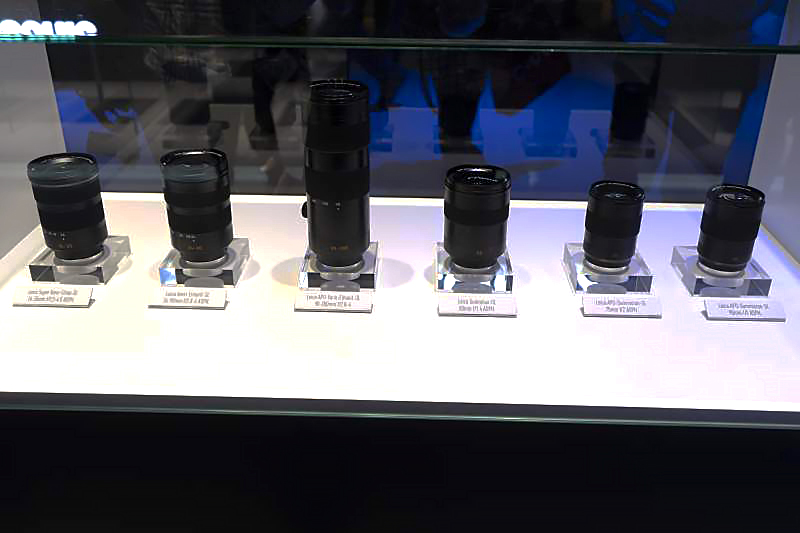
The S1R features a 47-megapixel sensor, while the S1 offers 24 megapixels. Both come with a “newly-developed 35 mm full-frame image sensor and image processing engine.” There’s also a “double slot” for XQD memory cards and SD memory cards. Both feature Leica’s L-mount, so you can use interchangeable lenses with L-Mount specifications from Panasonic partners Leica Camera and Sigma. Panasonic also plans to add ten new lenses by 2020, which includes the 50 mm/F1.4 single focal length lens, 24-105 mm standard zoom lens, and 70-200 mm telephoto zoom lens.
User friendly and durable for photography or videography by professionals, the S1R offers controls based on detailed user feedback, as well as a deep grip for better ergonomics. In fact, it actually looks a like a traditional DSLR. Moreover, both weather-sealed cameras come with ‘high resolution’ electronic viewfinders. Like Fujifilm, they feature dual-hinge tilting rear LCD panels that tilt up, down, and in a third axis. While the S1 is aimed to be used roughly two thirds for photography and one third for video, the S1R is more or less strictly for photography.
In addition to its gear, Panasonic also introduced LUMIX Pro Services, personalized LUMIX camera, lens and accessories support for imaging professionals. It’s designed to suit professional photographers, filmmakers, and cinematographers, and prioritizes their support with expedited delivery, repairs, discounts, and more. The annual membership fee is $199 dollars, but seems to include a lot of exclusives.
Photographing New Orleans with Erica Kane

As a Baton Rouge native, Erica Kane looked to New Orleans for inspiration. “To me it was like a real city,” she says. “I was introduced to so many new things that you don’t really have here in Baton Rouge.” When she moved to New Orleans right after high school, Kane started taking pictures. “I wanted to capture it. That’s’ when it started. I got my first digital camera, a Canon Rebel.”
With her ongoing series, A New Orleans Scene, Kane continues to document the ins and outs of New Orleans, especially its people. “People think [of New Orleans as] parties, second lines, festivals, having fun. You see a lot of pictures of second lines. You don’t really see everyday people in New Orleans walking to school or going to the corner store.” For Kane, the people are what make New Orleans what it is, particularly the Black community. “[I take pictures of the] Black community because that’s what New Orleans is to me. That’s what makes New Orleans so unique.”
While she documents the everyday life of New Orleans residents through the lens of street photography, Kane also gets invited into the community itself. “These are my neighbors,” she says. “Everywhere people are just so welcoming.” Once, a man stopped her on the street and asked about her camera. “He brought me into the neighborhood that he grew up in. They were having a party, sitting outside. They invited us to the back. They had free food, daiquiris. It’s really like going to your family member’s birthday party.”

Although some of the women at the party were hesitant to have their pictures taken, Kane quickly endeared herself to the group. “It’s fun,” she says. Many people on the street are interested in what she’s doing, and it isn’t difficult to involve the community directly in the project.
Even though she’s no longer a New Orleans resident, Kane is still drawn capture the unique character of New Orleans through her images. “I’m not connected to New Orleans like my hometown, but these are still my people.” As gentrification continues to shift the demographics of New Orleans since Katrina, it’s more important than ever to document and remember the city as it is. “I definitely want to capture the neighborhoods because they are changing from gentrification. I want to capture as much as I can before things are gone.”
4 Headshot Photography Guidelines from Ted Ely

As a former musical theater actor, headshot photographer Ted Ely understands the importance of story, energy, and human connection. “I want to connect with them as much as possible,” he says of his clients. While beginner headshot photographers tend to focus on things like getting the right gear (lights, modifiers, backgrounds, etc.) or the perfect f-stop, Ely recommends putting your effort into something else entirely.
“You need to have a handle on lighting, camera settings, exposure, and composition to capture the energy within the person, but there has to be to point where you don’t think about it. An intuition.” Once intuition takes over, that’s when you actually start to work. To learn how to unleash your headshot intuition, check out some of Ely’s guidelines below.
Focus on the Person
“You don’t need to get the ratios right, perfect lighting,” says Ely. While he was obsessed with f stops, exposures, and gear in his early days, Ely now insists that connection is more important than a technically perfect set up. “It’s scary, but that’s gonna get a better shot.” Even with his corporate clients, Ely takes at least five minutes to connect with every person. Otherwise, you run the risk of a ‘deer in the headlights’ headshot. (“It looks like you, but do you really want a DMV headshot to represent you in your business?”) Focus on the person, not just the shot.

Work Outside the Box
There are a lot of trends in photography, including headshot photography. As a beginner, it can be useful to experiment using other photographers’ techniques. Ely himself liked to test “styles and things that I saw” when he first started out. Ultimately, however, it’s important to find your own way. “You feel like there are these unwritten rules in photography. I wish I had looked at them as guidelines earlier on.” Instead of following techniques exactly, work outside the box to cultivate your own style.
Communication is Key
“Come at a headshot like a conversation,” says Ely. He explains everything up front, so his clients feel more relaxed. First, he runs through how the day is set up, and then asks them personal questions to cultivate some positive energy, and to form a real human connection. Then, as he shoots, Ely lets the clients know what works. “You need to let them know,” he says. “Yeah, that’s it! That works.” Or conversely, “let’s try this, but [say] it in a kind way.”

As a rule, older people and actors often already know how to narrativize their own story through photographs. They might be willing to go a little deeper communication-wise than younger people or corporate professionals. So plan accordingly! Better communication translates to better photographs as clients open up and experiment. “It really becomes a conversation, a sort of spinning force.”
Have Empathy
“I care so much,” says Ely. When you care, clients open up. For him, empathy translates to “an unwavering present focus on the person who is in front of you.” It’s truly caring about how your client feels in the moment, rather than just the outcome of the shoot. “A level of caring and presentness allows people to open up and not get caught up that’s going through their minds.” When people actually respond to empathy, it’s a “euphoric state,” says Ely.
Ultimately, making clients feel heard and comfortable is more important than the best gear or even the perfect exposure. “That’s the secret sauce,” says Ely. “It wouldn’t work if they didn’t feel open to play.” So, play! Experiment with new techniques, connect, communicate, and practice empathy. Don’t take yourself too seriously, either. The best headshots are about the shoot, not the perfect shot.