Home Blog Page 34

Surreal Photography with Julian Master

Julian Master never planned to become a photographer. “Growing up, I was more interested in recording music and recording albums,” he says. “At some point I started carrying a little camera around because I felt compelled to take photos of my friends all the time. It was hard to explain the urge.” Now a product photographer for kitchen electrics, Master is also an expert at capturing comical, weird and surreal photography. 

From a close up of a seagull scarfing down a french fry to a woman with rollers in her hair walking through Flushing in Queens, his photographs articulate something oddly foreign and uncannily familiar about American culture. “I think the surrealness factor is interesting. I’m interested in things that perhaps couldn’t exist in real life,” he says. From the thousands of pictures he takes every year, Master only shares 100 or less. “I wouldn’t say I see the world from a surreal lens exactly, but the photos that make it through the cut might come across as a little surreal because that’s what I’m interested in showing.”

surreal photography

While he often goes unnoticed (“It’s New York, and people are really busy.”), Master sometimes interacts with his subjects. “I’ll take a photo of somebody and I’ll talk to them a little bit after about what I’m doing,” he says. “I’ll explain it to them [that] they had a cool or funny hat or [were] trying to change their shoes.” Indeed, for all the strangeness in his photography, Master is determinedly down to earth. “If they see that you’re nice and don’t mean them harm, they will react kindly back.”

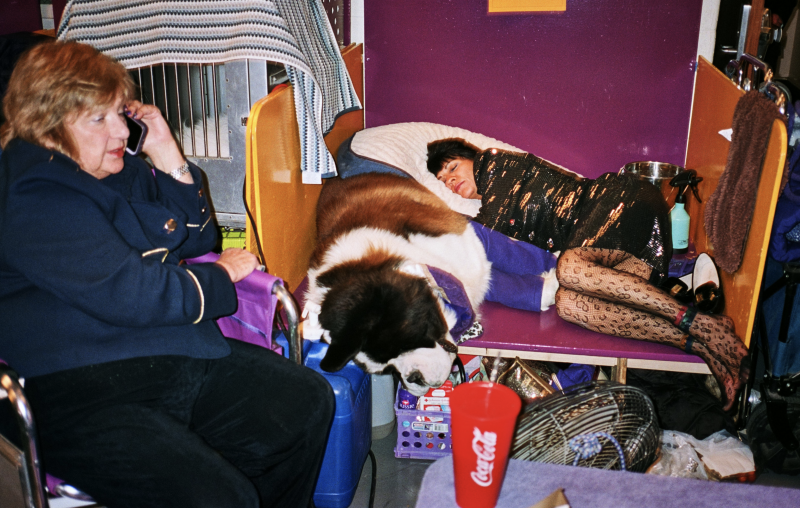
Apart from his own street photography, Master also photographs clients like American Apparel and VICE. Perhaps one of his most interesting shoots was for the Westminster Kennel Club Dog Show.surreal photogarphy

By no means a dog show authority (“I like to pet a nice dog, but I’m not in the dog show world at all except the one night we shot it.”), Master focused on the vulnerability of the handlers as well as the overall seriousness of the event. “It was interesting the manner and the way people went about making their dogs better than other dogs. A lot of it had to do with presentation of self, how they dressed, acted, and even what they were eating on the day. A lot of the trainers were getting made up. They were on display as well during competitions.”

In the future, Master plans to create a more cohesive series of work rather than individual “one-off” shots. “I’m interested in longer form work, which makes it a lot more vibrant. I’m not there yet.”


Polaroids of People Creates a Community for Polaroid Lovers

“It’s a great time for analog and Polaroid in general,” says photographer Phil V, who founded the thriving online community, Polaroids of People, in 2015. With a popular Instagram and website, Polaroids of People features instant photography from around the world. “I want to highlight as many [Polaroid photographers] as I can manage,” says V.

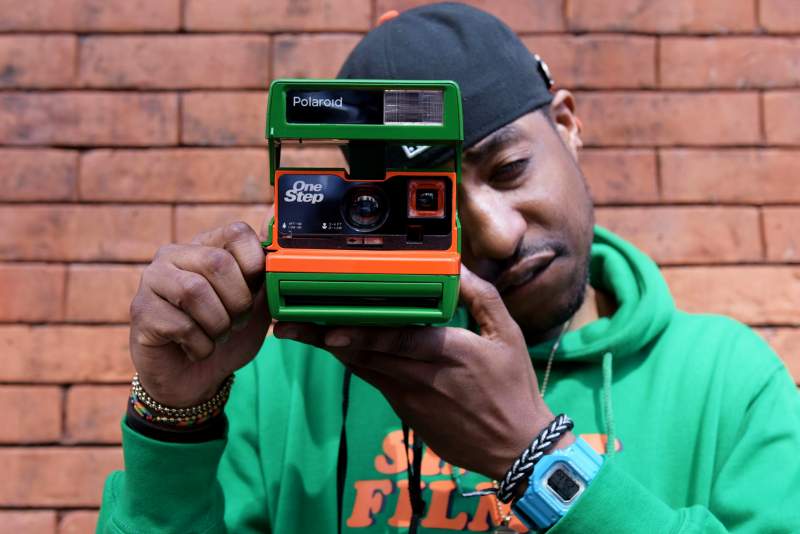
Unlike some photographers, who use Polaroid in addition to analog or digital SLR cameras, V works with Polaroid exclusively. “I always liked to take portraits, and speak to people,” he says. “I’ve always been into interacting with the actual person.” Though he got his feet wet experimenting with his friend’s digital camera 5 years ago, V chose to work with Polaroid (and Impossible film) because it allowed him to better engage with his subjects. “Approach people with the Polaroid, and they’re enticed at the camera itself.” It opens up a conversation.

Always ready to collaborate, V started photographing artists, which led him to incorporate mixed media into his work as well. “I was getting people to sign the Polaroids, interact with them,” he says. “It’s another extension of photography to help people express themselves. Someone could just write their signature. Or create an abstract piece on top of the Polaroid itself.” From there, V found graphic designers, journalists, and more to incorporate into the community, in addition to new Polaroid photographers. “It’s inclusive, and not limited to just photographers,” he says.polaroid

Plus, Polaroids of People will soon feature a magazine and now features a channel. “I want the print magazine to be traditional,” V says. “The market says print is dead, but it represents the nostalgic aspect. It’s so tangible and you can touch it.” The channel, meanwhile, launched September 5. The first episode highlights photographer Margartio De La Guetto from Barcelona. “We’ve been talking on the internet for a year now. We’ve been communicating so much, we already know the vibe.” However, De La Guetto doesn’t know English, and V doesn’t know Spanish. “I was walking around with Google Translate.”

In the future, V hopes to develop his community as a source of inspiration for other instant film affectionados. “Maybe this time next year we’ll have 100 photographers on the website,” he says. “One big source of inspiration.” He also hopes to continue curating exhibitions. “I’m not a curator. I like to make things happen. Whatever that’s called. I want to keep doing that.”

New Announcement: Fujifilm X-T3 Mirrorless

Fujifilm announces the fourth-generation APS-C X-T3 mirrorless camera. Featuring an all-new back-illuminated 26.1MP X-Trans CMOS 4 sensor and X-Processor 4 processor, it delivers excellent image quality and thorough AF performance, as well as quick tracking and burst shooting without blackout. As the “first APS-C mirrorless camera capable of 4K/60P 10bit recording,” it’s particularly spectacular for professional videographers.

The Fujifilm X-T3 mirrorless offers the “highest performance in the history of the X series.” It controls false colors and moiré with the color filter array in X-Trans CMOS sensors. Plus, the first back-illuminated structure improves image resolution thanks to its increased phase detection pixels. The X-T3 also offers a native ISO range of 160-12800, expandable up to 80-51200. This low ISO base is perfect for shooting beautiful bokeh in bright daylight.

Moreover, the new X-Processor 4 processes three times faster than previous X series models, and provides fast AF accuracy. At the same time, “the low-light phase detection AF limit has been increased over the X-T2 by 2 stops,” which makes it easier for photographers to focus at night or other low light conditions. Action photography is also easier with the X-Processor 4’s high processing speed and phase detection algorithm, which provides accurate AF “when shooting scenes that present fast, erratic movements across the frame.”

As for video, the X-T3 is “the first mirrorless digital camera capable of internal SD card 4K/60P 4:2:0 10bit recording.” It supports video formats H.264/MPEG-4 AVC as well as H.265/HEVC, and features an improved sensor read speed that reduces rolling shutter distortion. The 12 stops of dynamic range boast rich color gradation as well. There’s also a new algorithm for noise reduction.

In terms of design, the X-T3 inherits many features of the X-T2, like dials positioned on the top panel and an ergonomic, comfortable grip. However, there are also enhancements like a lockable EVF diopter adjustment that prevents mistakes in transit, as well as a higher contrast touchscreen panel with “wider viewing angles and better functionality for more intuitive operation.” On top of that, it’s “dust-resistant, water-resistant and capable of operating at temperatures as low as -10°C/14° F.”

All in all, the Fujifilm X-T3 mirrorless looks like an extraordinary camera for videographers and stills shooters alike. Available for pre-order on September 7, it comes in black and silver, as well as in kit form.

New Announcement: Canon EOS R Mirrorless System

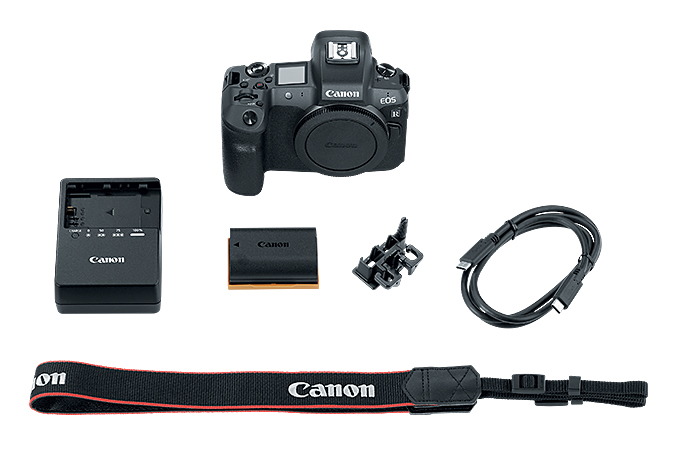
Canon makes history with the EOS R system, a mirrorless camera system “built for imagemakers who demand high-performance capture.” Featuring a 30.3 MP CMOS Sensor, the Canon R shoots stunning images, and features impressive 4K video, a Dual Pixel CMOS AF system for fast and accurate autofocus, and an intuitive design. With a 54mm diameter lens mount, RF lenses feature large rear elements as well as a sharp and compact lens design. The 12 pic electronic connection delivers ideal communication between camera and lens.

Mounted just 20mm from the image sensor, the limited distance between the rear lens element and sensor provides better image quality and performance. Like the current Canon EF mount, the EOS R features a large 54mm diameter so that “rear lens element can be much closer to the image plane.” This improves the quality at the corners of the frame, while the smaller front elements translate to “less strong refracting and bending of light rays” to enhance optical performance.

Meanwhile, the 30.3 MP EOS R is powered by a DIGIC 8 image processor with wide ISO range and enhanced image stabilization for impressive image quality. Excellent in low-light, it features an ISO sensitivity range of 100–40000 for stills and 100–25600 for video shooting. The wide autofocus area offers a stunning 5,655 manually selectable AF points to cover 88% horizontal and 100% vertical with RF lenses. It also delivers a focusing speed of .05 seconds, so fast action capture is possible with ease and accuracy.

From the consistent RF 28-70mm F2 L USM to the bright and sharp RF 50mm F1.2 L USM, new RF lenses offer supreme image quality with a control ring “that can directly adjust numerous settings including shutter speed, aperture, exposure compensation, and more.” With reliable image stabilization tech, RF lenses effectively reduce shake blur for video and stills. Plus, as another helpful feature, the EOS camera offers lens display information in the viewfinder, so you don’t have to look away from the subject.

The EOS R system is sure to change the game for Canon. Pre-order begins September 12.

Review: DJI Copilot, Great for Travelers and Videographers

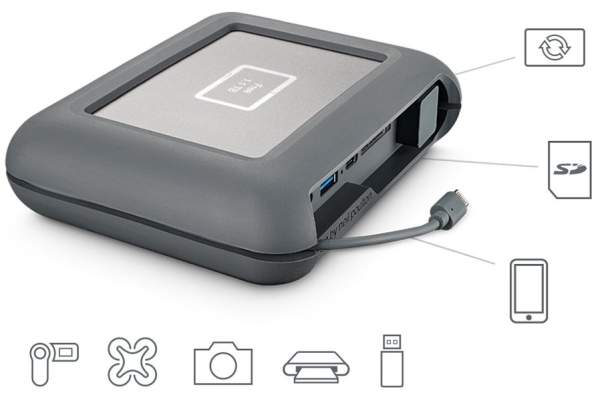
Great for travel and drone photographers, the LaCie DJI Copilot offers a practical solution to combat the difficulties of storage space and charging. It’s a small, lightweight external hard drive with built-in battery and LED display that connects to the LaCie DJI Copilot smartphone BOSS app. Unlike other LaCie storage devices like Rugged and Porsche, the DJI Copilot lets you copy media cards and device data without a laptop.

With a sturdy silicon rubber case, the DJI Copilot mimics the Rugged and protects your data from wear and tear. It’s splash, dust, and drop resistant. The case also surrounds a two-inch LCD screen that offers prompts and information. It comes with 5 ports and buttons: one for charger, USB, laptop, SD card, and smart device, along with an action button. There are cables for USB-C, Micro-USB, and Lightning to choose from to connect your smart device. (Then, just push the action button to detect it.) There’s even a special groove around the DJI Copilot to tuck the cord away during disuse. You can also transfer from one external hard drive to the DJI Copilot via the USB.lacie DJI CopilotAs for the BOSS app, it allows users to view files stored on the DJI Copilot. You can also organize them – put them into folders, move them around, etc. You can transfer images to your phone from an SD card via the DJI Copilot USB adapter.  This is particularly useful if your camera doesn’t have built-in WiFi.

We recommend the DJI Copilot especially for people who develop a lot of content, like videographers whose memory cards fill up fast – but not just DJI users either. You can charge not just your phone, but your camera, so it works as a double backup in a pinch. Plus, its small size makes the DJI Copilot ultra-portable for those who can’t afford to carry a lot of weight or take up too much space.

Over Coffee: Rachel Leiner, Happiness Photographer

We met with lifestyle, wedding, and travel photographer Rachel Leiner at Bluestone Lane in Manhattan to discuss travel, family, and photographing happiness. 

At twenty, Rachel Leiner combines the enthusiasm and joyousness of her age with the skill and savvy of someone much older. She started her business in Long Island five years ago as a way to get out of the suburbs. “I really wanted to go on this trip with [youth tour operator] Rustic Pathways,” she says. Her parents, while supportive, insisted that she pay for it herself. “Basically I had gotten the camera the year before, and was like, ‘I think I can try to do photography’ [as a way to make money]. I tend to have that kind of mindset.”

For Leiner, her trip to Southeast Asia was a turning point. By her own description, her hometown is a microcosm of the problem she sees in the country at large. “People in the States just think that if anyone had the opportunity to come to the United States they would. Like everybody wants to live here. When you travel to all these other places […] and see that people are happy where they are, it gives a whole new perspective.” Now, Leiner combines her love for travel with “the umbrella of happiness and optimism” to produce radiant images for her clients.

travel photographer

And word is spreading. Leiner recently returned from a trip to Spain working with influencers. Next summer, she’s covering a wedding in Italy.

With a warm, gregarious personality, Leiner naturally brings out the best in her clients, especially at wedding and engagement shoots. But it’s not all spontaneity. It’s also knowing how to act, what to say and when. “One of them is always nervous,” she says. “I tell them that their whole job is to look at her [or] look at him and make sure they’re smiling. Don’t look at the camera because I’m pretty irrelevant.” Another trick is to pretend to test the lighting at a distance. When they think she’s otherwise occupied, Leiner asks the couple to hold hands and walk toward her as if they’re “really drunk.”

travel photographer

Raised in a devoted family, Leiner certainly understands how her opportunity and privilege contribute to success as a photographer. “My dad is really supportive, my biggest fan. My mom too,” she says. Her first experience with photography was with her father’s camera on a cruise to Puerto Rico. When they docked in San Juan, her father asked if she wanted to wake up early to take pictures of the streets. She captured a beautiful image of a cat crossing the cobblestone street. “I took that picture and looked down into the viewfinder, and I was like ‘I think I like this, this is fun.’”

A Nikon user, her reliable D610 just died last week. “It made it to a shutter count of about 190,000, and the expected shutter count is 150,000. We made it a long way,” she says. Now onto the D750, she chose the lighter DSLR to accommodate travel. She plans to upgrade again after graduation.

For now, however, there’s still a lot to consider. “I have all the resources, so what is my next step? I’ve thought a lot about it,” she says. She’s young, so there’s plenty of time to figure it out. If she doesn’t go into corporate advertising, Leiner would love to become a full time photographer with a variety of clients. “As long as it’s all under the encompassing idea of travel, adventure, happiness and working with people that I like, then I’m happy.”

Buying Guide: What to Consider When Buying a Beginner DSLR

Old barn wall wood background

So, you want to move up from a smartphone or point and shoot, but are not sure where to start? We’re here to help! From sensor size to autofocus and megapixel madness, this guide gives you the rundown on important features to consider when buying your first beginner DSLR, as well as a few recommendations for cameras.

Sensor Size

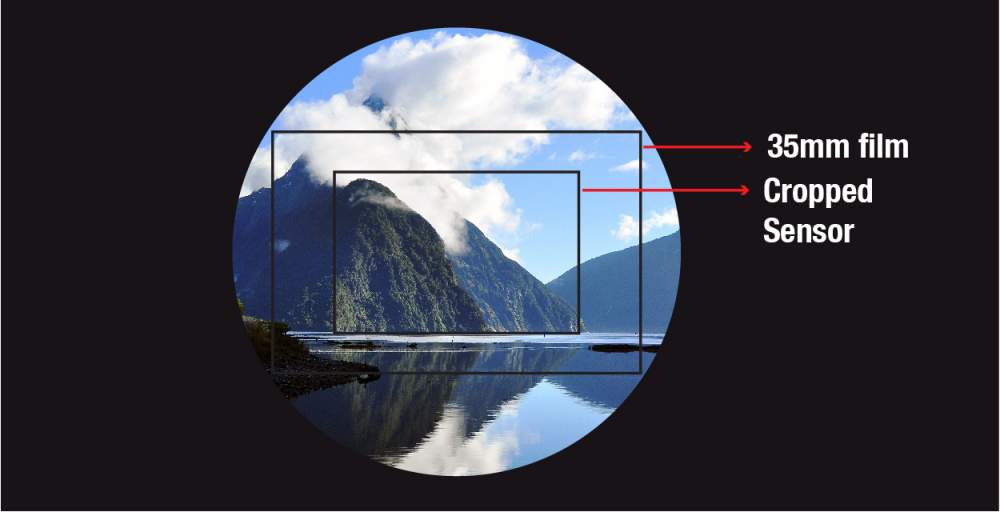
Sensor size matters. Sensors are made up of pixels called photosites that collect light as information through the lens opening, called an aperture. The bigger the sensor, the more “information” gets translated onto the image. There are two main types of sensors: full frame and cropped sensor. Full frame sensors are about 36 x 24mm, the same size as traditional 35mm film. Slightly smaller, cropped sensors are most commonly found in beginner to intermediate level DSLRs, and measure approximately 23.5 x 15.6mm. They’re sometimes called APS-C or APS-H.In addition to collecting less light, cropped sensors have a narrower apparent field of view that creates a crop of the image circle (compared to full frame).  Full frame sensors, meanwhile, offer more flexibility when it comes to print size since you’re able to crop and cut more of the image without sacrificing quality. They also do better in low light since they have more photodiodes, meaning you can shoot with a higher ISO without too much noise. Ultimately, however, crop sensors are simply less expensive than full frames. Most beginner level DSLRs feature crop sensors to cut down on price and size. Keep in mind, that while full frame lenses work on crop sensors, many crop lenses do not work on full frame sensors. If you continue on with photography and eventually upgrade to a full frame, you will need to buy new lenses.
Megapixels

Megapixels, on the other hand, get blown out of proportion – literally. More megapixels allow you to blow up your images very large at extra resolutions, rather than just sharing them online at smaller sizes. Especially if you just post to Instagram or the like, you shouldn’t need more than 16 or so megapixels – some say as few as 12. However, camera manufacturers like to flaunt more megapixels as if they translate to greater image quality (hint: they do not). If you’re making a career out of photographing things far away, like bird or wildlife photographers, then you need might need 24 or more megapixels to ‘zoom’ crop after the fact. As a beginner, megapixels won’t really matter, unless you plan to showcase your creations in galleries. Since you’re just starting out, you might want to hone your craft first.

Autofocus

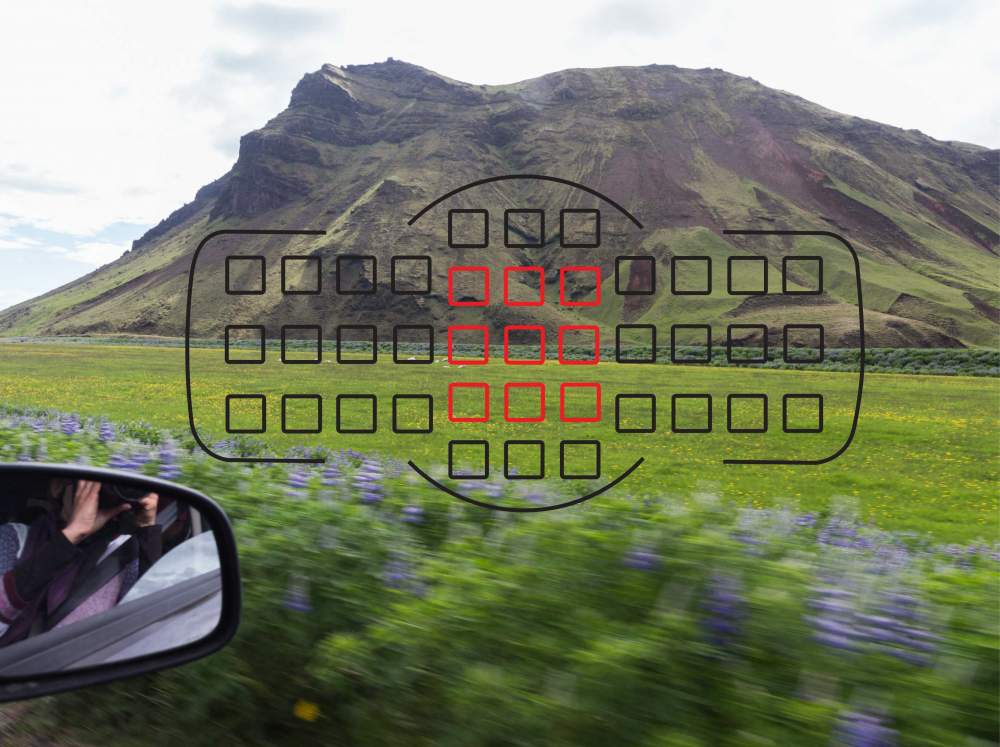
Autofocus does what it sounds like – it focuses your image with the click of a button. However, DSLRs vary with autofocus points, which the camera uses to focus on subjects. Beginner cameras have very few autofocus points. (Our most bare bones recommendation comes with 9.) The more autofocus points, the easier and more accurately the camera tracks a subject in motion. There are, however, different types of autofocus points: vertical and cross-type. Vertical points only sense in a vertical line, while cross-type points use both vertical and horizontal lines. Cross-type sensors are more accurate, but an autofocus system will likely features less of them. If you shoot motion, cross-type points are crucial. While something like the Nikon D850 features 153 autofocus points, beginners can aim for something closer to 11 through 51.  
ISO

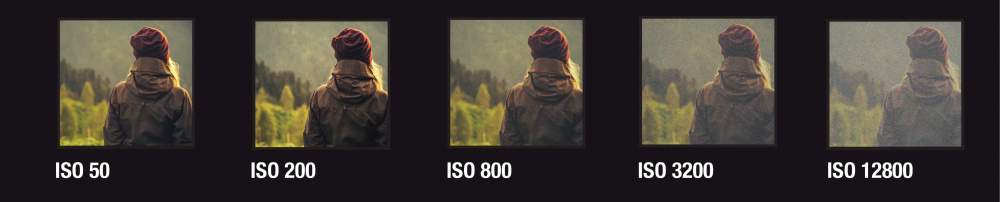
ISO is the sensitivity of the cameras sensor. . The higher the ISO, the more sensitive the camera is to light. In layman’s terms, it refers to a camera setting that brightens darkened photos. If you increase your ISO, your photographs will get brighter. For that reason, ISO is very useful in low light photography. However, raising ISO carries consequences in the form of “noise.” If you raise your ISO too high, your picture will show a lot of noise – or appear grainy. Whatever your lowest ISO setting is (usually 100), is your “base ISO.” Shooting at your base ISO minimizes noise as much as possible. Cameras with higher ISO ranges offer better low light capabilities. Of the cameras we recommend below, the Nikon D7500 offers the greatest range at 100 through 51,200.
Video

More and more videographers use DSLRs to shoot video rather than camcorders. While shooting more than 30 minutes of footage at a time will use up your battery, shooting clips is popular. Many DSLRs come with 4K, which is considerably high resolution, and more expensive beginner cameras sometimes offer that capability. However, for most beginners, 1080p at 24 fps or 30 fps will work just fine. You can also purchase different types of microphones (we recommend an on-camera mic) to improve audio. Vloggers often prefer DSLRs that come with articulated screens to watch themselves as they film. For better looking video, it’s important to match up your frame rate and shutter speed, meaning a shutter speed of 1/50th when shooting at 24 fps, 1/60th at 30 fps, and so on.

Brands

The Canon versus Nikon debate is old. Not as old as time, but definitely up there. The thing is, both Canon and Nikon are great brands. They wouldn’t have survived this long if they weren’t. They both offer great beginner DSLRs. Nikon tends to offer a slightly better frame rate, while Canon traditionally offers better video quality. As a rule, Nikon also has cheaper lenses than Canon. While that certainly shouldn’t be your only buying factor, it’s something to consider as you build your collection.

Lenses

Most DSLRs come with kit lenses, which are generally an inexpensive, slow options. They’re often zoom lenses, which means that they allow the user to switch between various focal lengths (example: 18-55mm). As a beginner DSLR user, kit lenses are okay. However, if you want a better quality lens without the enormous price tag, then we recommend a prime lens. Prime lenses feature a fixed focal length (example: 35mm) and offer better image quality. Often, something like a “nifty fifty” 50mm prime lens will suit beginners just fine. It comes closest to what your eye naturally sees, and so it’s a good length to train your eye at.

Our Recommendations: From Beginner to Enthusiast

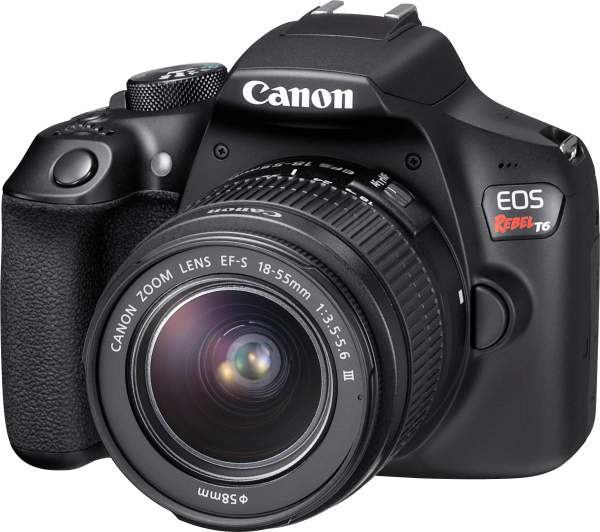
Canon T6

Key Features:

  • 18.0 Megapixel CMOS (APS-C) Sensor
  • DIGIC 4+ Image Processor
  • ISO 100–6,400 (Expandable to 12,800)
  • 9-point AF System
  • Large, Bright 3.0-inch LCD Monitor

The T6 is a bit of a bare bones camera that gets you into the Canon family for a low price. Its 18MP sensor is fine for most beginners, but doesn’t compete with the 24MP of the Nikon D3400. It offers a standard (and slow) 9-point AF module and a reasonable battery life at 500 shots per charge. Like the Nikon D3400, the viewfinder doesn’t cover 100% of the screen, which makes composing a little tricky (i.e. you might end up with some details you didn’t intend). However, the light plastic body is easy to handle, and the image quality is good in bright light – but lacking in low light. It features a 100-6,400 ISO range, with the option to expand the upper limit to 12,800. Ultimately, the Canon T6 is perfectly fine, but we mostly recommend it for beginners who are inheriting Canon lenses or determined to get into the Canon line at a very low price point.

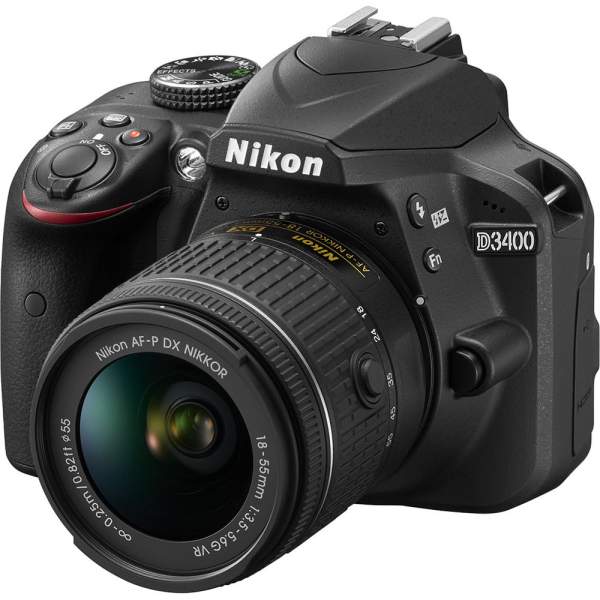
Nikon D3400

Key Features:

  • 24.2 Megapixel DX-format CMOS Sensor
  • EXPEED 4 Image Processor
  • ISO 100–25,600
  • 11-point AF System
  • 1080/60p Video Capture

The paired down controls of the 24 megapixel Nikon D3400 make it a great entry level camera, combined with a comfortable and deep handgrip that’s easy to learn on. While the viewfinder only covers 95 percent of the screen – so you’ll get details you didn’t intend in your final image – it’s large and bright. (Plus, the tiny autofocus points are tricky to make out through the viewfinder, so it’s difficult to determine if your shot is in focus.) Plus, a 3-inch LCD offers touch-screen capabilities. It has almost double the battery life of its predecessor.  Low light shooting with limited noise is solid with an ISO range from 100 to 25,600, and the image quality is excellent for its class. Although movie shooting is easier than with the D3300, Nikon removed the microphone jack – so the Nikon D3400 is not exactly for beginners looking to get serious about video.

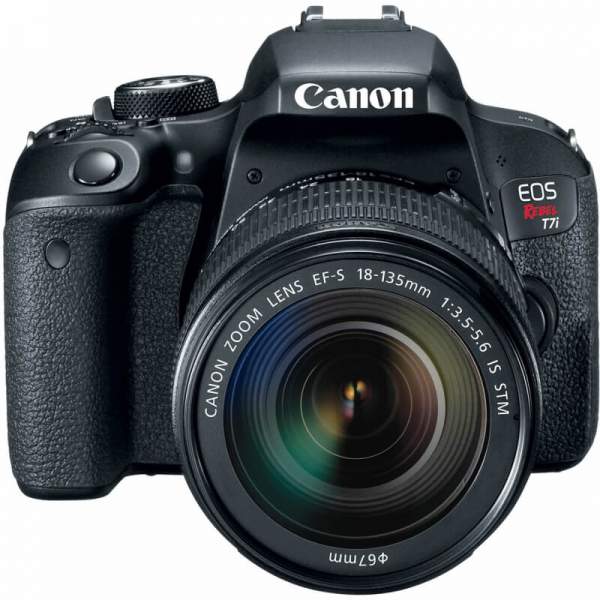
Canon T7i

Key Features:

  • 24 Megapixel APS-C Sensor
  • Digic 7 Image Processor
  • ISO 100–25,600 (Expandable to 51,200)
  • 45-point AF System
  • 1080/60p Video Capture

Great for family or casual photographers, the Canon T7i offers consistent shooting with a 24 MP APS-C Sensor. The Dual Pixel autofocus system provides a simplified user experience that tracks subjects around the frame. So while the video only features 1080/60p capture, it lets you track the subject in movement without hunting for focus. The respectable ISO range is comparable to both the Nikon D3400 and D5600, and well up from the Canon T6. Ultimately, however, the Canon T7i’s greatest strength is that it’s a camera to grow with. The user interface is straightforward and guided with a level of direct control once you get the hang of it.

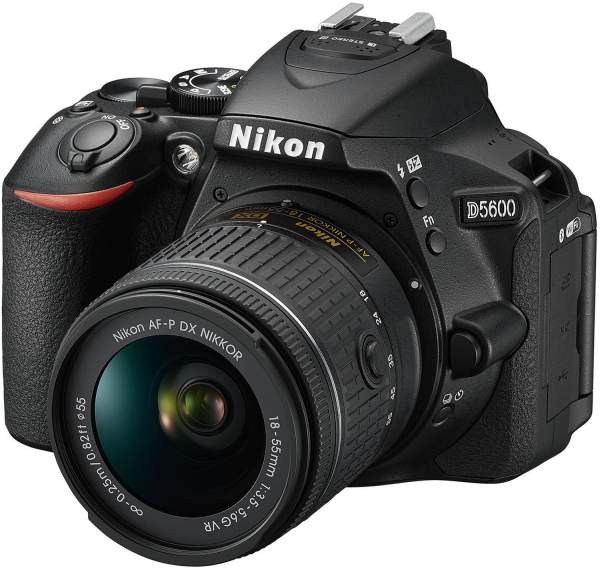
Nikon D5600

Key Features:

  • 24.2 Megapixel DX-format CMOS Sensor
  • EXPEED 4 Processor
  • ISO 100–25,600
  • 39-point AF System
  • 1080/60p Video Capture

This advanced entry level DSLR features 24.2MP, excellent image quality, articulating touch screen, and ergonomic handgrip without an overly cluttered design.  The native ISO sensitivity runs from 100-25,600, which makes the Nikon D5600 suitable for most low light conditions. As with many cameras on this list, the viewfinder provides less than 100% coverage, so you may end up with some unwanted details in the final shot. When it comes to video, this Nikon doesn’t offer 4K, though it does include 1080p capture and in-camera timelapse. The autofocus, meanwhile, is decent with 39 points and 9 cross-type AF points, down from the Canon 80D. Quick and accurate, both single and continuous autofocus lock easily onto static subjects and work well enough for moving subjects. The burst shooting speed is 5 fps, which is solid for its price bracket.

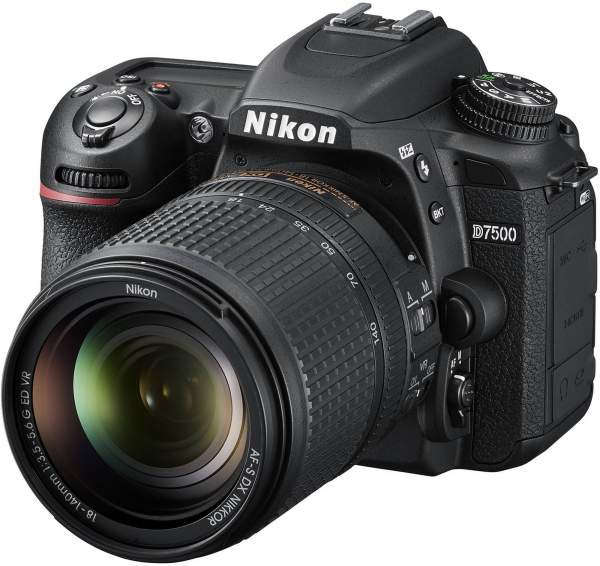
Nikon D7500

Key Features:

  • 20.9 Megapixel DX-format Sensor
  • EXPEED 5 Image Processor
  • ISO 100–51,200
  • 51-point AF System
  • 4K Video

Moving right along, the 20.9MP Nikon D7500 is an enthusiast’s DSLR with a price point over $1,000. It offers 950 shots per charge (though some users report upwards of 2000) with improved weather sealing compared to the beloved Nikon D7200. It’s also slightly smaller than its predecessor. The tilting touchscreen is responsive, and offers an easy and effective way to move around autofocus points. The Nikon D7500 has 51 autofocus points over the Canon 80D’s 45. Subject tracking is also reliable so long as the subject is visible in a major portion of the frame. The burst rate is up from the D7200 to 8 fps, which is 3fps more than the Canon D80. The Nikon D7500 also offers 4K video with a built-in microphone and headphone jack, though the autofocus is a bit too jumpy for video enthusiasts – it’s definitely tolerable for casual users.

Canon 80D

Key Features:

  • 24.2 Megapixel (APS-C) CMOS Sensor
  • DIGIC 6 Image Processor
  • ISO 100–16,000 (Expandable to 25,600)
  • 45-point All Cross-type AF System
  • 1080/60p Video Capture with Time-lapse Movie
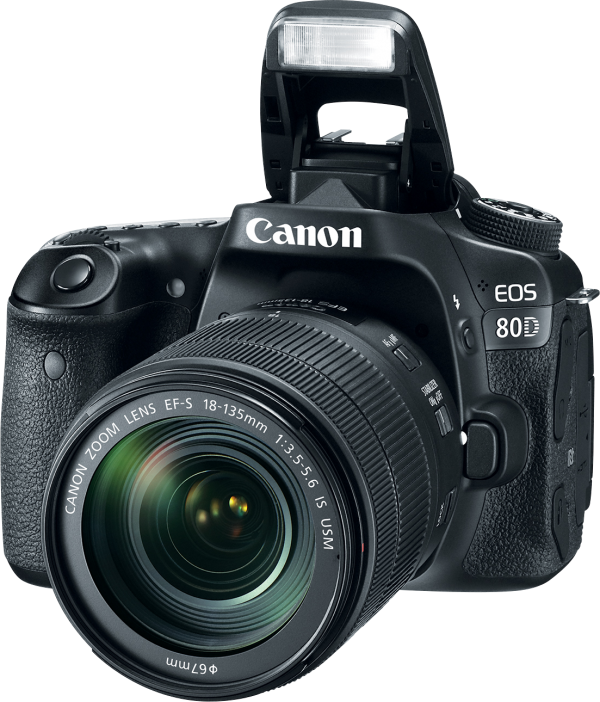
For a significantly better (but more expensive) Canon DSLR, go for the 24MP Canon 80D. We’re getting into the enthusiast branch of ‘beginner’ cameras now. The polycarbonate exterior and magnesium alloy chassis body is sealed against dust and moisture, while most controls are usable via the articulating rear touchscreen. The 45-point autofocus system with all cross-type points is up from the 19 all cross-type points of its predecessor. While it lacks 4K video, budding video enthusiasts might still find the Canon 80D suitable thanks to continuous autofocus during shooting and 1080/60p capture. Plus, there’s a microphone port! The camera offers an ISO range of 100-16,000 (expandable to 25,600) with reduced noise. So it may not be perfectly ISO-invariant, but it’s pretty darn good.

Getting started with DSLR photography is intimidating. With all the specifications to learn, it’s no wonder that many people get stuck. However, if you focus on sensor size, ISO, autofocus, megapixels, and video, it’s a little easier to digest all the terms. For beginners, we recommend a crop sensor to learn on. While megapixels don’t usually matter, you’ll want a camera with more of them (Nikon D3400, Canon 80D, or Nikon D5600) if you plan to show your images for galleries. For low light photography, choose something with a wider ISO range like the Nikon D7500, Nikon D5600 or even the Nikon D3400. If more accurate autofocus is important to you, then go for a camera with more points like the Nikon D7500. However, if you’re truly a beginner, than something like the bare bones Canon T6 (at only 9 AF points) is fine. Most beginner cameras don’t come with 4K, but if you plan to shoot a lot of video, then the Nikon D7500 is your best option.  If you have any questions about choosing a beginner DSLR, contact us. Our experts are happy to help!


Nikon Full-Frame Z Series Comparison: Nikon Z6 and Z7

z6 z7

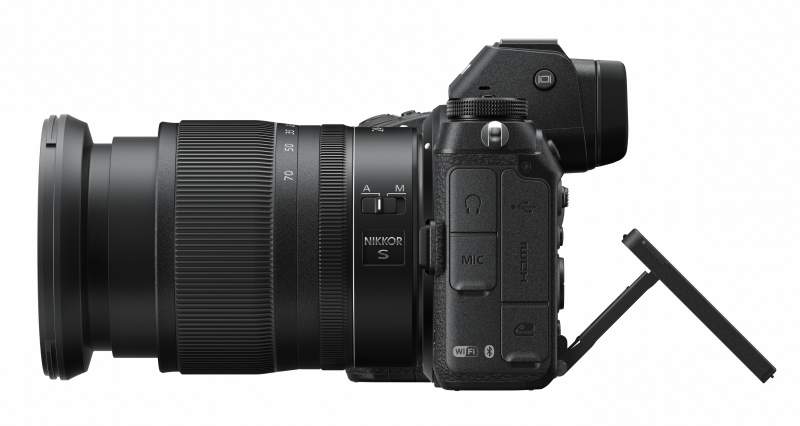
The long-awaited full-frame mirrorless Nikon Z series is finally here! With one high-end and one mid-range camera, Nikon offers limited but impressively solid and elegantly durable options for Nikon users and perhaps even a few converts.

As the ‘all-arounder,’ the versatile mid-range Nikon Z6 comes with a 24.5-megapixel BSI CMOS sensor, 273-point autofocus, and 100-51,200 ISO that does well in dim light. The ‘perfectionist’ Nikon Z7, meanwhile, features a 45.7-megapixel BSI CMOS sensor, 493-point autofocus, and 64-25,600 ISO that fairs better in bright light. Both come with the latest EXPEED 6 image processor.

Nikon Z 7

Build

Modeled after the ultra-popular D850 and other high-end DSLRs, the Nikon Z7 is extensively weather sealed with a nice deep grip design. At 26% lighter than the D850, it nevertheless feels comfortable and sturdy to shoot with an incredible strength-to-weight ratio.

On the other hand, the Z6 is “perhaps the most adaptable camera” Nikon has ever created. Similar to the D750, it also comes with weather sealing in an ultra-strong Magnesium Alloy body. Smaller and lighter than the D750, it nevertheless yields outstanding handling and balance with comfortably placed buttons and dials.

Autofocus

The 493 autofocus points cover 90% of the frame on the Z7 and lock onto subjects quickly. It also automatically switches between focal-planephase-detect AF and contrast-detect AF using an AF algorithm optimized for the FX-format sensor.

Additionally, the new subject tracking follows the subject’s face smoothly, even in a sea of other faces for both the Z7 and Z6. With the Z6, 273 on-sensor autofocus points cover 90% of the frame, while switching between focal-planephase-detect AF and contrast-detect AF for fine-tuning.

Image Stabilization

Both the Z7 and Z6 feature up to 5 stops of VR image stabilization. Applied to whatever NIKKOR Z lens you use, the Z series cameras stabilize in up to five 5 directions: yaw, pitch, roll, X and Y.

Plus, optical VR combines with electronic VR (e-VR) for steadier shots while shooting video footage. As an added bonus, F-Mount NIKKOR lenses can benefit from in-body 3-axis VR. 

Nikon Z Series

Lenses

There are also four new NIKKOR Z lenses to choose from: three primes and one zoom. The 58mm f/0.95 S Noct is the fastest NIKKOR lens ever with the largest maximum aperture. Thanks to its vast depth of field control, this camera is perfect for gorgeous portraiture and bokeh, as well as low-light performance (including astrophotography). It’s expected to land in early 2019.

The classic 35mm f/1.8 S and iconic 50mm f/1.8 S are both fast primes redesigned for the Z system. Plus, the workhorse 24-70mm f/4 S sweeps from wide-angle to close-up in a usable everyday zoom.

Inspired by past cameras but built to take Nikon into the future, there’s a lot of promise in the new Nikon Z series system. At $3,400, the Z7 ships at the end of September, while users will have to wait until late November for the $2,000 Z6.

Our 4 Fav Beginner Ibanez Guitars

Whether acoustic or electric, Ibanez produces quality guitars for all kinds of musicians, including beginners. We put together a short list of some of our favorite basses and guitars for musicians just starting out. Get ready to follow your dreams to musical glory!

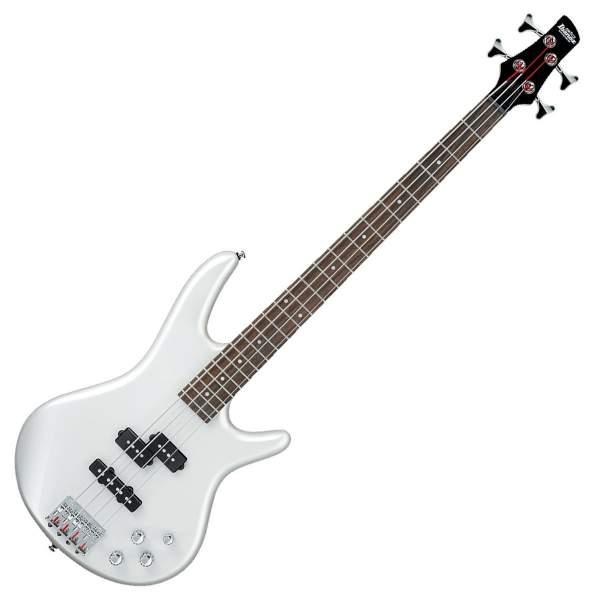
Ibanez GSR200 Bass Guitar in Pearl White

ibanez guitarsThis bass guitar mimics many of Ibanez’s more expensive models at a friendlier price. Gorgeous in pearl white, it features extraordinary sleekness, comfort, tone, and playability. The appealing reddish brown Jatoba Fretboard produces a rich mid-range, as well as a crisp high end. Lightweight, it’s great for beginners learning to play or more advanced musicians looking to practice with an instrument that’s better for the back and shoulders.

Ibanez PF15ECE Deadnought Cutaway Acoustic-Electric Guitar in BlackIbanez Guitars

Like the GSR200, the PF15ECE works as either a practice guitar for advanced musicians or an excellent beginner model. Distinguished with a gloss black finish and chrome die-cast tuners, this Ibanez features mahogany back and sides to deliver rich, warm lows and a sweet sustain. The single-cutaway dreadnought body produces a powerful and well balanced acoustic sound, whether unplugged or amplified. The Ibanez Advantage Bridge Pins are easier to remove and put in than ordinary pins thanks to the graspable bulb-shaped ends. Consider it for a solo performance or with a full band. It also sports rosewood fingerboard and bridge, chrome die-cast tuners, and ivory body binding.

Ibanez GRG121DX GIO Series Electric Guitar in Metallic Grey

With Ibanez quality in an affordable package, this popular guitar is supremely comfortable thanks to a smooth maple neck that enhances playable speeds. There are also powerful ceramic-magnet humbucking pickups that offer better tonal flexibility. Meanwhile, the Hardtail Bridge ensures absolute stability for a rock-solid performance. The shark tooth inlays sport an additional visual flair.

Ibanez GSRM20 Mikro Short-Scale Bass Guitar in Blue

ibanez guitars

Suited to young musicians thanks to its smaller scale, this guitar provides smooth playability from medium frets on the rosewood fingerboard.  The mahogany body creates a punchy tone with low overtone content and good high-end response, while the maple neck yields an even brighter sound. Expect the chrome hardware to hold up well overtime.

Small and lightweight, these guitars are great for beginners, as well as advanced musicians looking for practice guitars. Even if you don’t quite have the skills to match your vision (yet!) these guitars will help you along the road to musical stardom.

Photographing Industrial Wastelands

“There are a lot of names for the hobby,” says Vince Herbe. “I would say that I’m an ameture documentarian of industrial wastelands.” Herbe started photographing abandoned and decaying spaces like hospitals and factories fifteen years ago. “I was hanging out at a punk show. This guy came up to be and struck up a conversation. He asked me what I was into, and at the time I was just into music. He said he was into abandoned buildings.”

From there, he took Herbe to visit the abandoned Philadelphia State Hospital at Byberry, a former psychiatric institution for people ranging from the mentally challenged to criminally insane. “It was terrifying at first,” says Herbe. “Then I started going every weekend.”

A Trenton, New Jersey native who took frequent trips to Philadelphia as a kid, Herbe was accustomed to sites of urban industry. “I grew up in a family that worked in factories,” he says. “I worked in factories as a teenager. That history relates to me.” As an adult, he began to seek out other ameture historians to teach him more about Philadelphia and the industrial past. “They would show me history books and different places,” says Herbe. From there, he learned to “hold space for the past” through urban exploration and photography. It’s something he tries to impart on new photographers, too.industrial wastelands

“I love when I meet someone who is new and interested,” Herbe says. “I like to pick their brain and see where their heart is. One thing I emphasize is a respect for history and cautiousness. I see a lack of it in the hobby nowadays.”

Indeed, with the help of Instagram and social media, this type of industrial documentation has exploded in recent years. “I have seen many places get ruined fast by Instagram and other forms of social media,” says photographer Daniel Genuario. “Whether it be through vandalism, fire, or just being sealed because people have drawn too much attention to it.”

In an attempt to conserve the integrity of spaces, some photographers withhold their locations. “I have been called an “elitist” by other people because I wouldn’t give them locations,” says Genuario. “It’s sort of a dichotomy, so locations that I am really protective of I just won’t post photos of. I think the bottom line is if you have a place you care about and don’t want anyone to know about it, just don’t post it on any social media.”

The increase in new photographers unfortunately translates to an upswing in casualties as well. “I always emphasize the buddy system. Not everyone has respect or is safety minded,” says Herbe. “A girl died a couple of months ago when she went into a drain with her boyfriend to take pictures. They didn’t look at the weather. When it rains you don’t do drains. It dragged them both under.”

Herbe, for all his precautions, still comes away with a few scrapes and bruises. It’s the nature of the hobby. Once, he twisted an ankle at an abandoned subway station. “I was folding up my tripod while running and not looking, and I ran right off the edge of the train platform. I landed on the third rail.” Another time, he fell through a hole in the floor in a building in Cleveland. “I couldn’t lift myself out, so I just dropped into the basement.”

Photographer Chris Kiely agrees that just finding a safe way into abandoned spaces is tricky, let alone photographing them. “The most difficult aspect is physically getting yourself to these places.” It’s a long and involved process. Once inside, he tries to capture “the feeling of being there in person,” which includes conveying how the space was used before it was abandoned.  “For example, at an old factory, I’ll try to photograph machinery or architectural features specific to that type of industry. If I can accomplish this in a thought provoking way all wrapped up in an interesting composition, I’m happy.”

In addition to physical safety, there’s also the issue of keeping your gear clean. “Most surfaces in abandoned buildings are covered in years and years of grime,” says Kiely. “I often look at my lens before I shoot to make sure there is nothing on it. Then when I get home, I disassemble everything and clean piece by piece.”

Although photographers shoot to capture eerie and mysterious pictures of industrial wastelands, many prioritize the exploration itself. “I’m still more into the day to day rush than putting my stuff out there,” says Herbe. “With most people, if their heart’s not in it, they’re not going to keep doing it.”

Featured image and image 3 copyright Chris Kiely. Images 1 and 2 copyright Vince Herbe.