Home Blog Page 14

Sigma 28-70mm F2.8 DG DN Contemporary Lens Review

Sigma’s latest lens is the 28-70mm F2.8 DG DN, a powerful new addition to their Contemporary line of lenses. The lens offers remarkable performance capabilities housed within a lightweight, compact build. We had the chance to try out the new lens last week, and it did not disappoint. Here’s our Sigma 28-70mm F2.8 DG DN Contemporary lens review.

Build

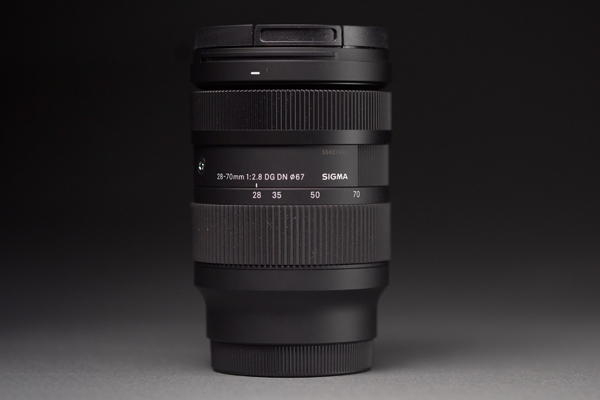
Sigma 28-70mm F2.8 DG DN Contemporary LensThe new lens is for full-frame, mirrorless cameras, and comes in Sony E-Mount and L-Mount. Its design was based on Sigma’s popular 24-70mm F2.8 DG DN Art lens. The slightly narrower focal range allows the new lens to have a significantly smaller build. At 16.6 oz (470g), it’s nearly a pound lighter than the 24-70mm.  

While not as wide as the Art lens, 28-70mm is still an incredibly versatile focal range. You can use it to shoot portraits, landscape, events, or on the street. Combined with the compact build, this lens is great for everyday use. 

The 28-70mm F2.8 lens has a durable polycarbonate body with a focus switch on the side. The lens doesn’t have a zoom lock switch like the 24-70, though the ability to push and pull the front of the lens to adjust the zoom is a nice touch. We confirmed the lens doesn’t suffer from lens creeping.

The 28-70mm F2.8 also features a dust and splash-proof mount, and a water and oil repellant coating on the front element. We put these to the test when we went outside to shoot during a snowfall in Brooklyn last week.

Performance

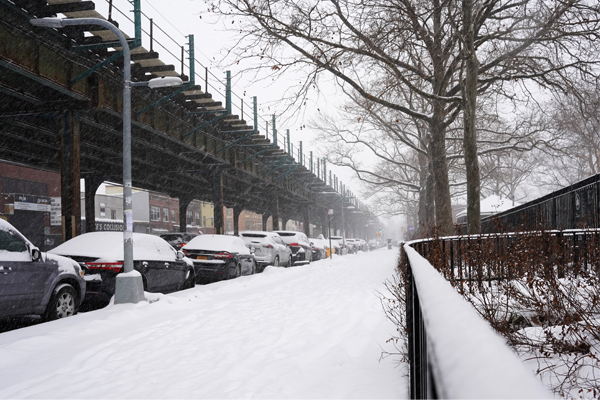
A snowy walkway photographed using the Sigma 28-70mm F2.8 DG DN Contemporary lens
A snowy walkway photographed using the Sigma 28-70mm F2.8 on a Sony a7 III | Photo by Jonny Carrillo

Sigma’s Art lenses are renowned for their high quality optical performance, while Contemporary lenses are designed to balance performance with portability. The Sigma 28-70mm F2.8 effectively blends the best of both lines. The construction of the lens includes three aspherical, two FLD, and two SLD glass elements. This allows it to rival the optical performance of the 24-70mm F2.8 Art lens, despite using fewer elements in total.  Like the 24-70, the 28-70 adeptly corrects chromatic and sagittal coma aberrations, allowing you to capture images with edge-to-edge sharpness.

We had a great time using this lens in the snow. The images we captured were consistently sharp, and the lens had no trouble keeping up with the Sony a7 III autofocus. The lightweight frame meant it was also comfortable to carry while walking through the snow. We didn’t need the F2.8 max aperture while shooting in the snow, but it’s good to know the lens would have performed just as well if we’d gone shooting later in the day during low-light.

Price & Competition

A snowy glove photographed using the Sigma 28-70mm F2.8 DG DN Contemporary lens
A snowy glove photographed using the Sigma 28-70mm F2.8 on a Sony a7 III | Photo by Jonny Carrillo

The Sigma 28-70mm F2.8 DG DN Contemporary is available for pre-order now for $899. That’s a great price considering it’s more portable than and performs comparably to the $1,099 Sigma 24-70 DG DN Art lens.

Another competitor is the Tamron 28-75mm F2.8 Di III RXD lens. It’s also heavier than the Sigma 28-70mm, and at $879, only slightly cheaper. We’ve previously compared the Tamron 28-75mm F2.8 vs Sigma 24-70mm F2.8. In that post, we concluded that the Sigma lens offers a slightly better optical performance due to a heavier, more sophisticated build.

The new Sigma 28-70mm F2.8 lens rivals the superior performance capabilities of the Sigma 24-70mm, while also matching the portability and value of the Tamron 28-75mm.

Should I Buy the Sigma 28-70mm F2.8 DG DN Contemporary Lens?

The Sigma 28-70mm F2.8 DG DN Contemporary lens is a great investment. The lens’ unique blend of portability and performance makes it a great choice for everyday use. That’s not to mention the price, which is low for a lens of its calibre. All in all, it’s a great value lens.

10 Black Photographers on Instagram You Should Be Following

Resting by Tawny Chatmon
The Redemption / Resting by Tawny Chatmon

February is Black History Month, so we’ve taken the opportunity to profile some of our favorite Black photographers on Instagram. The artists featured below are masters of their trade. Their Instagram profiles are filled with visually striking imagery, from captivating portraits to surrealist visual art. 

Here are 10 Black photographers on Instagram you should be following.

Tawny Chatmon


View this post on Instagram


A post shared by Tawny Chatmon (@tawnychatmon)

Tawny Chatmon (@tawnychatmon) is a self-taught photographer and visual artist based in Maryland. Her Instagram grid is filled with uniquely crafted portraits, mostly of children. More than photographs, each image is layered with patterns and textures that evoke Chatmon’s signature style. 

“Each portrait usually begins as someone that I am close to in some way,” Chatmon writes on her website. “By looking outside of traditional photography methods, and experimenting with various art practices, I am able to transform each piece into a new expression.”

Chatmon’s work is wholly original, yet her photos feel classic and timeless. In a statement on her website, Chatmon explains that she draws inspiration from artwork of the 19th century. However, Chatmon subverts the art from that time period by “bringing to the forefront faces that were often under-celebrated in this style of work.” 

“The primary theme that drives my art practice today is celebrating the beauty of black childhood.” 

Arielle Bobb-Willis

Originally from New York City but now based in Los Angeles, photographer Arielle Bobb-Willis (@ariellebobbwillis) is a nomadic artist. She loves travelling across the US, capturing the people she meets in abstract, brightly colored portraits. In most of her photos, the subject is dressed in vivid colors and twisting their body in an unusual pose, their face obscured or hidden.

Bobb-Willis developed her unique style in part due to depression. Suffering from the disease from an early age, Bobb-Willis found photography to be a therapeutic exercise. On her website, she explains that photographing people in “compromising and disjointed positions” highlights the complexities of life.  Meanwhile, the use of bright colors “speaks to a desire to claim power and joy in moments of sadness, confusion or confinement.” 

Unsurprisingly, Bobb-Willis’ visually arresting style has captured widespread attention. In 2020, she photographed musicians Billie Eilish, Megan Thee Stallion, and Lil Nas X for the cover of New York Times magazine. Like her auspicious celebrity subjects, Bobb-Willis is in her twenties and has already built an incredibly mature body of work. We can’t wait to follow along and see what she does next. 

Quil Lemons

Quil Lemons (@quillemons) is another early achiever. At 23 years old, the New York-based photographer is the youngest photographer to ever shoot a cover for Vanity Fair. The photograph, a commanding portrait of Billie Eilish, perfectly encapsulates Lemons’ style. 

Lemons shoots exclusively on film, and his portraits feel authentically intimate. In his grid you’ll find stunning pictures of artists including Spike Lee, Chloe X Halle, Ian Iasiah, and Kari Faux, along with work he’s created for brands like Gucci, Tiffany’s, Urban Outfitters, and Levi’s. 

Lemons grew up in south Philadelphia, and got his start by photographing musicians performing in the city. He attracted public attention in 2017 with a personal project called Glitterboy, inspired by musician Frank Ocean. The compelling photo series featured men of color wearing glitter, challenging stereotypes about Black masculinity. 

Masculinity and race continue to be strong themes in Lemons’ work. In a recent interview with the Philadelphia Inquirer, Lemons discussed the reflection of the Black experience in his work. “I’m conveying my version of Blackness and how I’ve come to understand that.” 

Elise Swopes


View this post on Instagram


A post shared by Elise Swopes (@swopes)

Elise Swopes (@swopes) is a unique blend of business woman and visual artist. An entreprenartist, if you will. Her hustle first started in the late nineties, when Swopes created a website that taught people how to build their own websites. She was in the sixth grade. As it turns out, empowering and inspiring others to create art would become a recurring theme in her career.

Swopes unassumingly joined Instagram in 2011 and started photographing the Chicago skyline on a broken iPhone 4. Eventually she started using her self-taught design skills to transform the photos into surrealist landscapes. Her unique visuals quickly garnered attention, and Swopes became an Instagram influencer. Soon enough she was working with major brands including McDonalds, Kellogg’s, UNIQLO, and Casamigos. 

Today, Swopes continues to post fascinating visuals on Instagram that she originally captured on her iPhone. However, she also hosts a podcast, recently released her own photo-editing app, and regularly works with brands like Adobe and Apple to inspire new artists to start creating. 

Follow Swopes on Instagram for regular doses of creativity and inspiration in your feed. If you’re not convinced yet, check out her TEDx Talk about being a child of the internet. Swopes is a natural-born storyteller.

Cam Hicks


View this post on Instagram


A post shared by cam hicks (@camhicks_)

Cam Hicks (@camhicks_) is another film photographer that has been embraced by the fashion world. His ethereal imagery has a gritty yet sophisticated look and feel. The New York based photographer also employs a vast color palette, with photos varying from dark and shadowy to vibrantly bright. 

Just 5 years ago, Hicks was living in Virginia and working in IT. After teaching himself the basics of photography online, Hicks started shooting, and his work quickly started attracting fans. Since then, he’s worked with brands like Louis Vutton, Nike, and Adidas, and recently released his own photo memoir, For The Porch

Speaking to i-D about the book, Hicks describes himself as a “really emotional person,” and says that his photos almost always reflect “my feelings and emotions at that given time.” Since writing the book, he’s dialed back attempts to constantly maintain a brand persona on Instagram. The result is more personal, authentic content that reflects Hicks’ true self. 

Buy Hicks’ memoir to learn about his journey so far, and follow him on Instagram to see what comes next for the talented artist.

Jessica Pettway


View this post on Instagram


A post shared by Jessica Pettway (@jesspettway)

Jessica Pettway (@jesspettway) is another photographer with a powerful and unique visual style. Every one of her bright, vividly colored images is brimming with energy.  It doesn’t matter if her subject is a flower arrangement or a can of Tecate, seeing one of her posts in your feed will immediately brighten your day. 

The Brooklyn-based still-life photographer is an Adobe stock contributor, and has worked for brands including Apple, Uber, and Unilever. However, some of Pettway’s best work is photos of food and drink. Perhaps because a love of food feels organically infused into every image.

Pettway’s vibrant, often abstract style also means she depicts food as you’ve never seen it before. Pizza riding on roller skates. A packet of Flamin’ Hot Cheetos transformed into a vase. Her photos will make you salivate, even as you question what you’re seeing.

Pettway’s style is consistent, yet every post feels unique and original. If your feed needs some more color and creativity, you won’t regret following @jesspettway. 

Miranda Barnes


View this post on Instagram


A post shared by Miranda Barnes (@mirandabarnes)

Miranda Barnes (@mirandabarnes) is a Caribbean American photographer that lives between Austin, Texas and New York. A captivating blend of artist and documentarian, her gorgeous film photography includes intimate portraits and exquisite glimpses into daily American life. 

In a guest post for Huck Magazine, Barnes gives credit to platforms like Instagram for making photography more accessible and inclusive for young, Black, female photographers. She got her start by sharing photos to Instagram and Tumblr. Since then, she’s produced work for the New York Times, The Atlantic, and Vanity Fair. That’s in addition to her work for brands like Apple, Adidas, Calvin Klein, and Leica.

Telling Black stories and challenging racial stereotypes is integral to Barnes’ work. Her first commission for the New York Times saw her travel to Memphis to cover the 50th anniversary of the assassination of Dr. Martin Luther King, Jr. Similar projects she’s contributed to prove she has a lot to be proud of as both an artist and an activist. 

Dana Scruggs


View this post on Instagram


A post shared by Dana Scruggs (@danascruggs)

Dana Scruggs (@danascruggs) is another incredible artist and activist breaking glass ceilings. In 2018, she was the first Black female photographer to shoot for ESPN’s Body Issue. In January 2019, Scruggs made history again as the first Black person to shoot the cover for Rolling Stone

Originally from the southside of Chicago, Scruggs has worked as a photographer and director in New York City for most of the last decade. While she’s seen success in recent years, she writes honestly on Instagram about the challenges she faced. 

“There was a time, when I first moved to NY, that I needed new shoes and could only afford $2.50 knock off Keds at Kmart.” Scruggs writes as part of the caption for a photo she shot for Refinery29. “For most people it takes a painful amount of sacrifice to even begin to garner success… Don’t give up.”

Scruggs regularly posts stunning imagery on Instagram, from celebrity portraits to powerful explorations of the human form. However, it’s her raw, inspiring captions that make Scruggs a photographer worth following on Instagram. 

“Everything that I’ve gone through, my struggles and my highs, has lead me to being the person and the Artist that I am today. I wouldn’t trade any part of my journey.”

Micaiah Carter


View this post on Instagram


A post shared by Micaiah Carter (@micaiahcarter)

Photographer Micaiah Carter (@micaiahcarter) lives between Brooklyn and Los Angeles, and has made a name for himself shooting for brands like Apple, Nike, Pepsi, and Netflix. He’s also worked for publications including Vanity Fair, The New York Times, Vogue, and Vice.  His grid is filled with masterful portraits of celebrities and compelling fashion photography.

Warmth is an important component of Carter’s visual language. In an interview with Emmazed, he explains that growing up in the Mojave Desert had a strong impact on the way he plays with light in his work. Warm tones have also helped him explore representations of Black people that have been absent in mainstream photography in the past.  “I try to have this color palette that allows all these types of beautiful, brown types of skin to glow.“

While the Black experience is currently being explored in the photography world more than ever before, Carter is cautious of posturing. “I don’t think Blackness should feel like a ‘trend’,” he tells Emmazed. “I want to make something timeless, something that can stand the test of times and make the viewer wonder when this was taken.” 

Follow @micaiahcarter for warm, colorful, classic-feeling photography that powerfully explores Black identity. 

Adrienne Raquel


View this post on Instagram


A post shared by ADRIENNE RAQUEL (@adrienneraquel)

Adrienne Raquel (@adrienneraquel) is New York based photographer and art director. Combining a bright color palette with soft lighting,  Raquel creates dazzling, retro-esque visuals that ooze with nostalgia. Motifs of Blackness and femininity are intrinsic to her work. 

Raquel’s unique visual style has been seized upon by the fashion world. She’s shot for publications including Vanity Fair, Harper’s Bazaar, and CR Fashion Book, and worked with brands including GANNI, Dior Beauty, and Saks Fifth Avenue. In 2018, Raquel photographed the February cover of Nylon, a special Black History Month edition.  In 2019, she was crowned the Ambassador of Aesthetics for Reebok’s Club C line of sneakers.

It’s impossible not to be enchanted by Raquel’s photography. Her grid glimmers with stylish, soulful imagery that makes it clear why she’s a highly-sought photographer and art director. Her mission to make fashion photography more inclusive for black women – in front of and behind the camera – makes her work all the more meaningful. 

___

While that concludes our list of 10 Black photographers on Instagram you should be following, there are countless more talented Black artists that deserve your attention. 

Following an artist on Instagram is also just one, small way you can show your support. This Black History Month, we encourage you to look for other ways you can champion the Black artists in your community. 

Everything You Need for a Valentine’s Day Photoshoot

There are plenty of ways to celebrate Valentine’s Day. Sharing a candlelit dinner, exchanging gifts, or travelling to a romantic getaway are some popular examples. However, if you’re looking to do something more unique, consider a Valentine’s Day photoshoot. 

Photos have the unique ability to transport us through time. They can both contain and evoke intense emotion, reminding us of everything we felt in a specific moment.  An intimate portrait of you and your significant other will forever remind you how you felt about each other at the moment the picture was taken. After all, there’s a reason most couples have a photoshoot on their wedding day.

However, you don’t need to hire a professional photographer for a Valentine’s Day photoshoot. Your wedding is an extremely special occasion. It makes sense to hire someone you can trust and rely on to capture the day. Valentine’s Day, on the other hand, happens every year.

A Valentine’s Day photoshoot is a special activity you can do as a couple. While you’ll hopefully get some nice photos out of it, it also provides an opportunity for you to have some fun together. We’ve listed everything you need to plan your own shoot below.

Camera

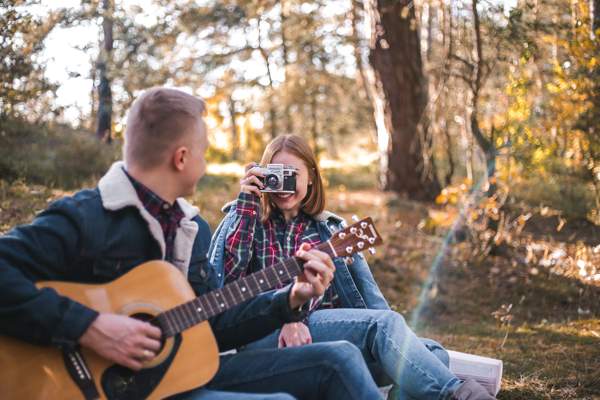
A couple using a camera in the woods
Photo by Taisiia Stupak

If you’re already a budding photographer, you likely have a camera you can use. For novices, we recommend investing in a beginner digital camera like the Sony a6000, or one of these great cameras under $1000.  Assuming you’re taking portraits, you’ll also want to use a lens with a longer focal length. A focal length between 50mm and 100mm is ideal for portraits. We recommend using an 85mm prime lens.

A simpler, more affordable option is using an instant camera like the Instax SQ1 or Mini 11. Instant cameras are already instilled with a sense of nostalgic romance. They make a great Valentine’s Day gift, even if you don’t plan on having a full photoshoot.

If you don’t own a camera, you could also use a smartphone. Most phones released in the past 10 years have decent built-in cameras. You don’t need a high-priced camera to capture a nice photo. Although, it may take more creative effort on your part to make the shoot feel special.

You also shouldn’t rely on finding a passerby to serve as your photographer. Even if you do find a willing participant, there’s no guarantee they’ll capture the photos you want. Additionally, giving orders to a stranger is not exactly conducive to romance. Two’s company, but three’s a crowd.

If you can, use a camera with a self timer. You could also team up with another couple to take photos of each other.

Gimbal or Tripod

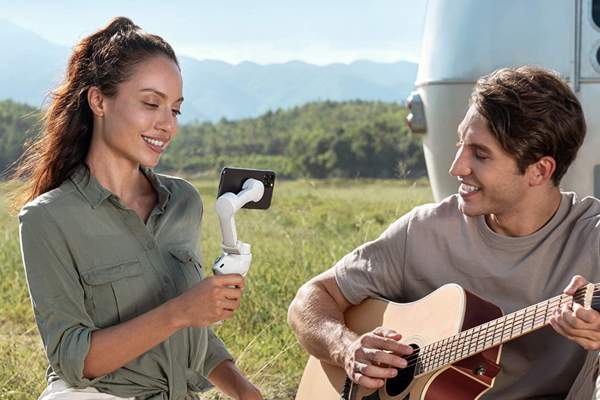
The DJI OM 4 Smartphone Gimbal
Courtesy of DJI

Whatever type of camera you use, you’ll need something to stabilize it. Self portraits can be endearing, but holding the camera yourself limits your options in terms of framing. You may also struggle to be emotionally present if you’re focused on holding the camera steady while pressing the shutter button.

If you have a camera with a self timer, we recommend using a tripod. You’ll have the flexibility to take photos of varying sizes, from scenic wide shots to intimate close-ups. The type of tripod you use depends on your camera, but there are models available at various price points. The Koah Aphelion Professional 6-Feet Tripod is a good quality low-cost option.

If you’re using a smartphone, you could use a selfie stick or smartphone gimbal. A smartphone gimbal like the DJI OM 4 will allow you to comfortably operate your phone camera and keep it steady while you and your significant other pose for the photo. You can hold it out in front of you or use it as a miniature tripod.

Setting & Props

Photo by Jonathan Borba

It will be challenging to make a photoshoot in your living room feel romantic. Try to find a remote, peaceful location. Outdoor options like a park, beach, or winery are classic photoshoot locales. Pack a picnic for added romance.

Alternatively, go somewhere that has personal significance for your relationship. You could shoot at the place where you first met, or photograph yourselves doing an activity you both enjoy.

You could also rent out a studio space. This will make the shoot feel more like a special occasion. Of course, a studio is a bare, cold space. It won’t be a problem if you’re taking close, intimate portraits. However, if you want wider photos, you’ll need some props to make your photos pop.

Balloons, flowers, and blankets are classic scenery fillers for a romance-themed shoot. The color red also has a long association with Valentine’s day. You could use red props, a red backdrop, or even just wear something with red tones. Use at your own discretion, while remembering that subtlety is a valuable quality in photography.

The ultimate prop for a Valentine’s Day photoshoot is an engagement ring. If you plan to pop the question at your photoshoot, be sure to check out our interview with proposal photography pro, Ash Morgan. If you’re in New York City, you should also read our post about romantic spots around the city for an engagement shoot.

Tell a Story

Photo by Artyom Kabajev

Like most art mediums, photography is a form of storytelling. The most compelling couple photos tells a story about their relationship. That’s why wedding photographers often like to get to know their clients before the big day. They want to learn more about the couple so they can weave their story into the photos they take.

When you’re planning your own photoshoot, you should do the same thing. Think about what you want the photos to convey, what story you want to tell. Arguably, this is the most important step in planning your shoot, as it will inform where and what you photograph.

What About Singles?

If you’re single on Valentine’s Day, there’s no reason why you can’t still have a photoshoot. Team up with another single and have fun taking photos of each other. Alternatively, spend some quality time with yourself. Given the proliferation of dating apps, you may even snap a picture you can use to help you meet someone.

That’s everything you need to plan your own Valentine’s Day photoshoot.  If you post your photos on Instagram, please tag us (@focuscamera) so we can see how they turn out.

Fujifilm GFX100S vs GFX100 | Camera Comparison

Last week Fujifilm announced the newest addition to their GFX line of mirrorless cameras, the GFX100S. At first glance, it appears to be a more compact version of the powerful yet portly, GFX100. Both models use the same image processor and medium format sensor. However, a closer look at the specs reveals considerable differences. Here’s our comparison of the Fujifilm GFX100S vs GFX100. 

Sensor & Image Processor

Photo taken using Fujifilm GFX100S
Both the GFX100S and GFX100 use a 55mm 102MP medium format sensor and quad-core processor to deliver incredibly detailed imagery | Courtesy of Fujifilm

The BSI-CMOS sensor shared by both cameras offers a whopping 102 million effective pixels. The sensor measures 55mm diagonally, and is technically a medium format sensor. However, given their effective pixel count, Fujifilm describes both cameras as large format.  

The GFX100 and GFX100S both use the X-Processor 4, the same quad-core processor used by the X-T4. In conjunction with the sensor, the processor enables the cameras to deliver stunningly detailed visuals. Both cameras output ultra high resolution 16-bit (RAW & TIFF) imagery. The level of detail in every photo is impressively intense. 

The wide dynamic range of these cameras means that every image is tonally rich, with low noise even at a high ISO setting. For stills, both cameras have an extended ISO range of 50-102,400. Meanwhile the continuous shooting rate is 5fps when using the mechanical shutter.

Fujifilm is known for their unique color reproduction, and both cameras also allow you to experiment with 19 film simulation modes for alternative coloring in your images. 

IBIS & Autofocus

Fujifilm marketed the GFX100 as the world’s first camera with a 55mm sensor to feature 5-axis in-body image stabilization (IBIS), and a hybrid autofocus system with 100% sensor coverage. The GFX100S shares these features, along with some enhancements.

Firstly, the IBIS has been upgraded for the GFX100S. The GFX100S IBIS system is 20% smaller and 10% lighter than the system used in the GFX100. It also offers up to six stops of compensation, versus 5.5 stops in the GFX100.

Meanwhile the autofocus is mostly unchanged, although still remarkably powerful. The hybrid contrast and phase-detection system covers 100% of the sensor for a fast, reliable autofocus. It enables the cameras to focus in very low-light conditions (-5EV). Additionally, face and eye detection is available for more accurate focus on your subject, even if they’re standing in a crowd of people.

There is however, one improvement to the GFX100S’ autofocus. Fujifilm have reportedly revised the focusing algorithm so that the camera does a better job of maintaining focus while tracking a moving subject. 

Build

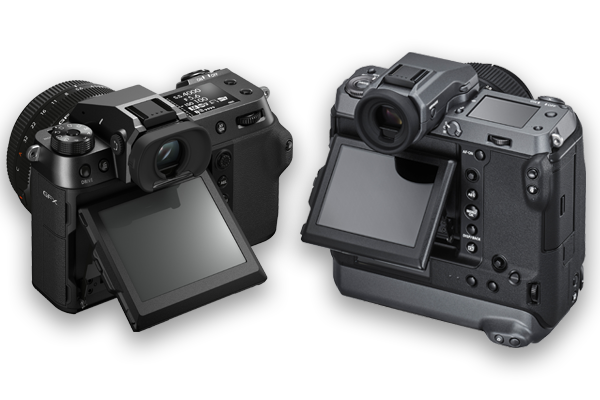
GFX100S vs GFX100 Build Comparison
The GFX100S and GFX100 have considerably different builds.

Build is the biggest distinction between the GFX100S vs GFX100. The GFX100 has a bulky, square body. When fitted with batteries, a memory card, and its removable, higher-resolution EVF, the camera weighs 49.4 oz (1.4kg). It’s slightly lighter than the Canon EOS-1DX and has a built-in vertical grip, yet it’s still not ideal for long periods of handheld use. However, it wasn’t really designed for that. Medium format cameras are typically reserved for professional application in a studio and on a tripod.

Conversely, the GFX100S offers the same high-grade capabilities in a more portable build. The camera weighs 31.7 oz (0.9kg) when fitted with a memory card and battery, and resembles a full-frame mirrorless camera more than the typical square-shaped medium format build. It also has a deep, ergonomic grip and intuitive button layout. With the GFX100S, it feels like Fujifilm is trying to redefine the expectations of medium format cameras. And they may have succeeded.

One benefit of the GFX100’s larger build is the rear sub monitor. The small OLED display complements the LCD, allowing you to use a separate screen to monitor the histogram or exposure compensation.

However, both cameras feature a tilting 3.2-inch LCD screen, along with an LCD monitor on top of the camera. It can also display the histogram and exposure compensation. Additionally, only the GFX100S features a customizable PASM dial.

Another advantage of the GFX100 is its battery life. The camera can use two NP-T125 li-ion batteries simultaneously, giving it an impressive 800-shot life. The GFX100S uses a single NP-W235 battery and has a 460-shot life.

Both cameras also feature a USB port, HDMI output, 2 SD card slots, and headphone and microphone ports.

Video

Ultra high resolution, medium format cameras like the GFX100 and GFX100S are primarily designed for still photography. However, they still offer great video capabilities.

Both cameras can capture full DCI 4K 10-bit 4:2:0 video at 30p.  When using the HDMI output, the cameras can deliver 4:2:2 10-bit video. Additionally, the cameras support F-Log and HLG for more color grading flexibility in post-production.

When the GFX100 was released in 2019, video specs like this were not found in medium format cameras. Nearly two years later, the GFX100S and GFX100 still offer the best video specs of all medium format cameras.

The video capabilities are perhaps more meaningful on the GFX100S. The lightweight body makes it far easier to carry around. By no means is it a vlogging camera. However, the portability makes it better suited for hybrid use. Especially when you consider its price tag.

Price

Other than build, price is the biggest difference between the Fujifilm GFX100S vs GFX100. The GFX100 costs $9,999, while the GFX100S can be pre-ordered for $5,999.95. Considering their similarities, this is a considerable price disparity.

The GFX100S is priced in the same range as high-end full frame cameras like the Nikon D5 and Canon EOS-1DX. In fact, it’s even slightly cheaper than Sony’s new full frame flagship, the Alpha 1. This immediately qualifies the GFX100S for a larger consumer market than a typical medium format camera.

The Verdict

Comparing the Fujifilm GFX100S vs the GFX100, it’s clear that the GFX100S is the better camera. It offers all the key advantages of the GFX100 in a more compact, ergonomic build. That’s not to mention the enhanced IBIS and significantly lower price tag.

Overall, it’s a fantastic medium format camera that offers unprecedented value. Available for pre-order now, it already promises to be one of 2021’s most exciting camera releases.

The 5 Best Lenses for the Sony a7 III

The Sony a7 III is a fantastic full-frame camera. When paired with an equally impressive lens, the camera can deliver truly stunning visuals. Below we’ve compiled a list of the 5 best lenses for the Sony a7 III. 

The lenses were selected based on their performance, price, build, and versatility. Three of the lenses included make up a lens trifecta. That is, three zoom lenses that share an aperture and together cover a large focal range. Investing in a lens trifecta is a great way to ensure you have a lens with an appropriate focal length for every style of photography. The remaining two lenses are primes. 

Let’s get into the 5 best lenses for the Sony a7 III.

Sony 12-24mm F2.8 GM

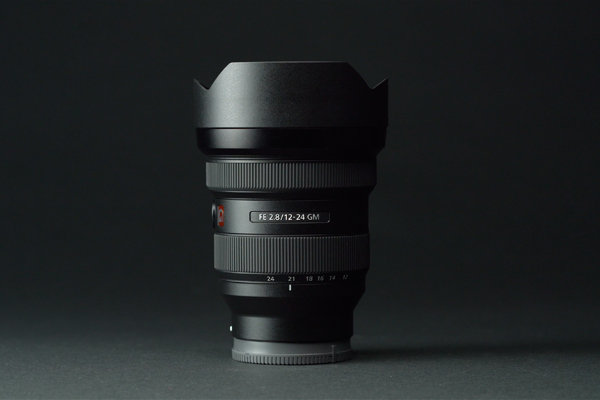
Sony 12-24mm F2.8 GM LensSony’s G Master lenses are known for their high quality performance and build. The Sony 12-24mm F2.8 is the widest lens in the series, and one of the finest. The lens captures incredibly wide, high resolution visuals with edge-to-edge sharpness. At $2,998, it’s not the most affordable lens on our list. However, you won’t find a better lens at the 12mm focal length.
Despite housing a sophisticated optical design, the lens is relatively small and light. Combined with its dust and moisture-resistant build, you won’t have any problems using it outdoors. This is convenient, considering the ultra-wide focal length makes it a great choice for photographing architecture or vast, scenic landscapes.

The Sony 12-24mm is the first lens in our F2.8 zoom lens trifecta. As a powerful wide-angle lens, it’s an ideal choice for your widest lens. 

The Sony 16-35mm F2.8 GM is another popular wide-angle choice for a lens trifecta. We previously touted its impressive qualities in our list of the 5 best lenses for the Sony a7S III. Currently priced at $2,098, it’s also more affordable than the 12-24mm lens. However, the additional 4mm offered by the 12-24mm is more significant than you think, and makes it well worth the price difference. If you’re looking for another affordable alternative, the Sigma 14-24mm F2.8 Art lens is also a great option. 

Sigma 24-70mm F2.8 DG DN Art

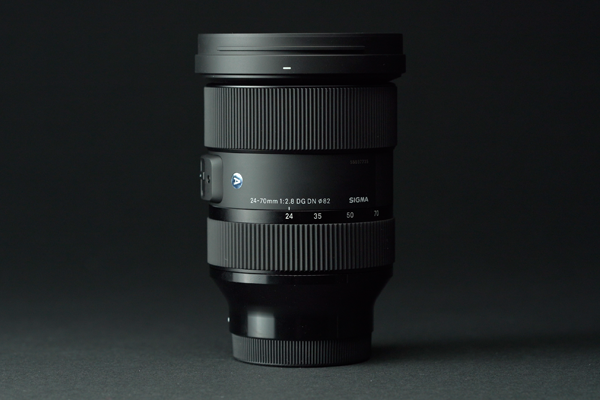
Sigma 24-70mm F2.8 Art LensOur second lens, and the second of the trifecta, is Sigma’s 24-70mm F2.8 DG DN Art lens. With a versatile focal range that can be used for most styles, it’s an excellent default lens to leave on your camera.  You can use this lens to photograph everything from vast scenery to intimate portraits.
Typically, a lens trifecta includes lenses of the same brand. However, Sony’s 24-70mm F2.8 GM lens will cost you $2,098. The Sigma 24-70mm F2.8 is significantly cheaper at $1099. There is plenty of debate in the photography community over which lens is better. However, it’s clear that if there is a difference in performance, it’s barely noticeable.

If you’re planning to use a consistent focal length for a shoot, a prime lens is always recommended. However, if you need a lens that can handle variety, the Sigma 24-70mm F2.8 is a great choice. Despite the large focal range, the lens consistently captures sharp, high resolution imagery. The F2.8 aperture means it also works well in low-light. Overall, a great lens to have at your disposal.

Sony 70-200mm F2.8 GM OSS

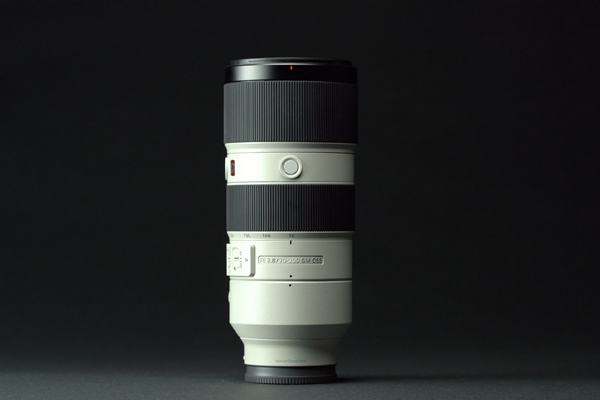
Sony 70-200mm F2.8 GM OSS LensThe third zoom lens in our trifecta is the Sony 70-200mm F2.8 GM OSS. Like the 24-70mm, the 70-200mm offers a dynamic focal length. You can use it for a variety of styles. It’s a great choice for nature, sports, or portrait photography.
One of the Sony a7 III’s best features is its incredible autofocus. Specifically, the Eye AF feature which helps you maintain focus on your subject by locking onto their eyes. The Sony 70-200mm F2.8 works great in conjunction with the a7 III autofocus. You’ll have no trouble keeping your subject sharp, even if they’re moving while you track them from a distance. The lens also has three focus hold buttons and a range limiter switch for added control.

The lens offers excellent stabilization. When paired with the a7 III, the system has 5-axis image stabilization. The lens also benefits from Sony’s Optical SteadyShot modes. This includes Mode 2, which helps stabilize your image while panning. Meanwhile, the removable tripod mount makes it easy to quickly remove the system from your tripod. This is helpful when you need to switch to handheld quickly.

Housing a complex optical design, the Sony 70-200mm F2.8 is a large lens. It weighs 52.21 oz (1.48kg). The $2,398 price tag may also be too steep for some. More affordable alternatives include the Sony 70-200mm F4 G OSS, and the Tamron 70-180mm F2.8 Di III VXD. However, they don’t quite compare to the remarkable power of the Sony 70-200mm F2.8.

The 70-200mm F2.8 makes it very easy for you to capture sharp, stable, and high resolution visuals throughout its long focal range. The 11-bladed F2.8 aperture also means a great low-light performance and creamy, pleasant bokeh. It’s a fantastic telephoto lens to complete your trifecta.

Sony Sonnar T* 55mm F1.8 ZA

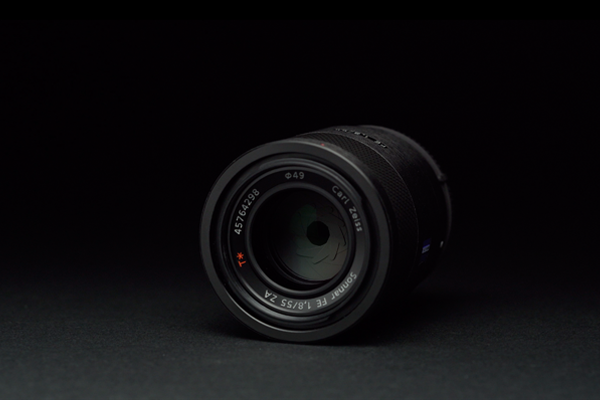
Sony Sonnar T 55mm F1.8 ZA LensAlmost every photographer owns a ‘nifty-fifty’ millimeter lens because they are affordable and versatile. However, the low price tag often means a cheap build and a slow or noisy autofocus. The Sony Sonnar T* FE 55mm F1.8 ZA does not have these issues.
Made with Zeiss optics and housed within a compact, all-metal build, the 55mm F1.8 looks and feels great.  Weighing just 10 oz (281g), you’ll barely notice the weight on your a7 III. At 55mm, it’s slightly longer than a nifty-fifty, yet still incredibly versatile. You’ll be comfortable using it for portraits, events, and on the street.

The lens has a concave front element and superior optics that effectively minimize aberrations. The focus is both fast and quiet, and you can capture incredibly sharp visuals with high contrast. Meanwhile, the F1.8 aperture lets in plenty of light, delivering smooth, visually pleasing bokeh.

There’s a wide price range for prime lenses around the 50mm focal length. At $898, the Sony Sonnar T* 55mm F1.8 is firmly mid-range.  Below it, you’ll find nifty-fifty lenses like the $248 Sony FE 50mm F1.8. Above, there’s the Sony Planar T* FE 50mm F1.4 ZA. Another Sony-Zeiss lens that arguably outperforms the 55mm F1.8. However, it costs $1,498 and is nearly 3 times as heavy.

The Sony Sonnar T* 55mm F1.8 ZA is the perfect blend of power and affordability. It will make an excellent addition to your camera bag.

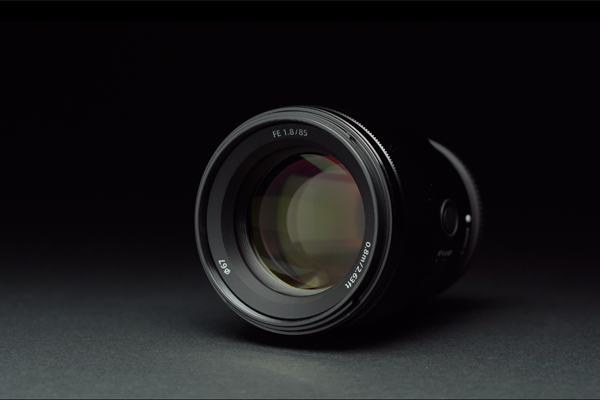
Sony FE 85mm F1.8

Sony FE 85mm F1.8 LensOur fifth and final lens is the Sony FE 85mm F1.8. It’s a great value lens that’s ideal for portraits. 

The lens outputs crisp visuals with corner-to-corner resolution. Additionally, the wide 1.8 aperture ensures bright imagery and produces creamy, deep bokeh that pleasantly separates your subject from the background.

At $548, the 85mm F1.8 is the most affordable lens in this list. Despite its low price, the lens performs remarkably well in comparison to high-end alternatives such as the Sony FE 85mm F1.4 GM ($1,798) and the Sigma 85mm F1.4 DG DN Art ($1,199).

Compact and lightweight, the lens weighs just 13.1 oz (371g) and pairs very comfortably with the Sony a7 III. Don’t sleep on the Sony FE 85mm F1.8.

That concludes our list of the 5 best lenses for the Sony a7 III.  Let us know in the comments below what lenses you like to use with your a7 III, or if there’s another camera model you’d like us to write about next.

Sony Xperia PRO Review | Sony Unleashes the Power of 5G

Sony’s latest smartphone, the Xperia PRO, is now available for pre-order. The PRO was actually announced last year, along with Sony’s flagship smartphone, the Xperia 1 II. The phones are very similar, yet there are some differences, including a $1300 price disparity. We compare the two phones in our Sony Xperia PRO review below.

When the Xperia 1 II was released last year, it quickly attracted wide acclaim for its incredible photo and video capabilities. However, one major setback was that it didn’t support 5G (in the US only). Considering its $1,198 price tag, that made it difficult for the phone to compete with the latest iPhone and Samsung devices.

The Xperia PRO does not have the same problem. Featuring 5G mmWave and 5G Sub-6 technology, the PRO offers a remarkably fast, reliable signal. This enables the phone to support high speed data transfers and wireless live video streaming.

However, before we get into that, let’s take a look at what the new phone has in common with the Xperia 1 II. 

Another Smartphone for Photographers

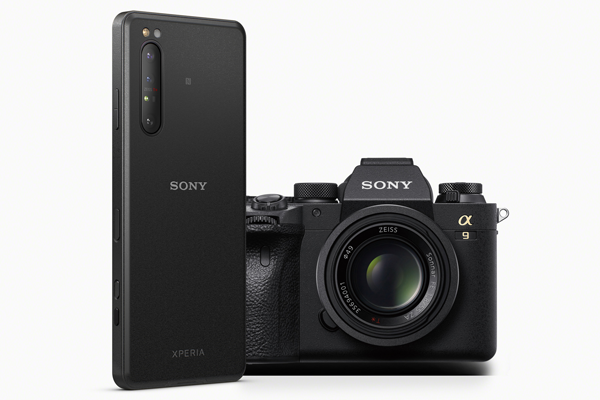
Sony Xperia PRO was co-developed with the engineers behind the a9 cameras
Sony Xperia PRO was co-developed with the engineers behind the Sony a9 and a9 II cameras | Courtesy of Sony

In our Sony Xperia 1 II review, we called it the perfect smartphone for photographers and videographers.  The same can be said of the Xperia PRO. In fact, it has everything the Xperia 1 II has, along with some major enhancements. 

The phones were co-developed with the engineers behind Sony’s a9 and a9 II cameras. They’re equipped with the same triple lens camera and powerful back-illuminated Exmor RS image sensor. The camera uses Zeiss optics and can handle up to 20fps continuous shooting, with autofocus and auto exposure continuously calculated up to 60 times per second.  The 247 point phase-detection autofocus system covers 70% of the sensor, making it incredibly fast and reliable. Sony’s signature Eye-AF is also supported for both people and animals.

Unusual for smartphones, both models allow you to manually control camera settings such as the ISO, aperture, and shutter speed. Additionally, you can output to RAW and shoot 4K video at up to 120fps. There are also multiple apps you can download that further expand each phone’s photo and video capabilities. If you’re looking for a device that blurs the line between cellphone and professional-grade camera, you’ll be very happy with either one. 

The Xperia 1 II and PRO share more than a camera. Both phones use a powerful Snapdragon 865 processor, 4000 mAh battery, and have IP65/68 weather sealing. They also each have a 6.5’’ 21:9 CinemaWide™ 4K HDR OLED display, headphone jack, and front-facing stereo speakers. 

The phones compare favorably to their competitors. However, their advanced camera capabilities equate to a premium price tag. You could almost place them in a different product category. They aren’t camera phones so much as they’re camera-phone hybrids. 

Unique Features of the Xperia PRO

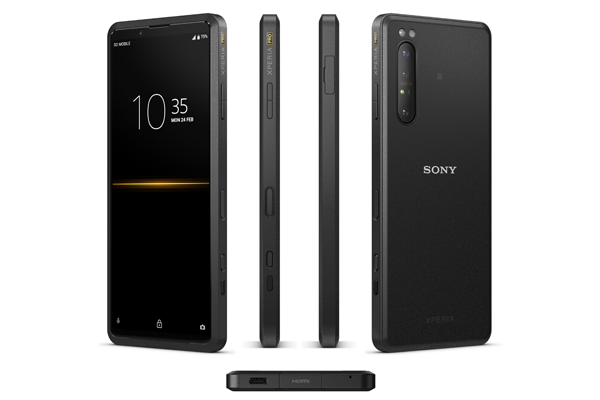
Sony Xperia PRO
Courtesy of Sony

The pre-order price of the Xperia PRO is $2,498.99. While steeper than the Xperia 1 II, additional features on the phone make it clear it was designed for professional content creators and broadcasters. 

As mentioned, the Xperia PRO features state of the art 5G technology. The phone’s 5G mmWave antenna utilizes a 360 degree design. This allows it to capture high-band frequency signals from all four sides of the phone. Together with beamforming technology and low dielectric constant material in the chassis, the phone is optimized for an ultra-fast and reliable 5G signal. Unsurprisingly, this means the Xperia PRO is a little larger than the Xperia 1 II.

The Xperia PRO is also the world’s first smartphone to support HDMI input. This enables you to tether the PRO to your camera and use it as a viewfinder or external monitor. The 4K OLED display offers excellent image and color accuracy, and there are controls for zooming, adjusting the brightness, and adding grid lines.

You can also use the HDMI connection to live stream a clean video feed from your camera straight to YouTube (or another platform) via 5G. The aptly named Endurance Mode feature ensures efficient data transfer via 5G for longer periods of time. The phone even helps you find the best signal spot for a livestream when recording on location.

Should I buy the Xperia PRO?

Like the Xperia 1 II, the PRO offers incredible photo and video functionality for a smartphone. Additional features such as the 5G mmWave four-way antenna and HDMI input further qualify the Xperia PRO as the perfect smartphone for professional photographers and videographers.

The price may be high, but if you consider that the Xperia PRO is effectively a smartphone, high-grade camera, external monitor, and 5G livestreaming tool in one device, it’s a great value deal.

Life in Pictures of Martin Luther King Jr.

In observance of Martin Luther King Jr. day, we’d like to take a look at the civil rights leader’s life through photographs. The pictures of Martin Luther King Jr. below provide a fascinating glimpse into his incredible life.

Martin Luther King Jr.’s Early Life

Martin Luther King Jr. was born in Atlanta, Georgia, in 1929. He was the second of three children to Reverend Martin Luther King Sr and Alberta King. While King would not become a public figure until his mid-twenties, earlier incidents in his childhood hinted at the man he would become. 

At the age of 15, King won a statewide public speaking contest in Dublin, Georgia. In his speech, he spoke about how the treatment of Black Americans was inconsistent with the Constitution. Travelling home afterwards by bus, King was verbally abused and forced to give up his seat for a white man. Years later, he wrote “that night will never leave my memory. It was the angriest I have ever been in my life.” 

After high school, King followed in his father’s footsteps and entered the Baptist ministry at age 18. He also continued his education, completing two degrees and eventually receiving his PhD from Boston University. While completing his doctorate, King met his future wife, Coretta Scott, who also had a history with activism. 

In 1954, King became a pastor of the Dexter Avenue Baptist Church in Montgomery, Alabama.

1955 – Montgomery Bus Boycott

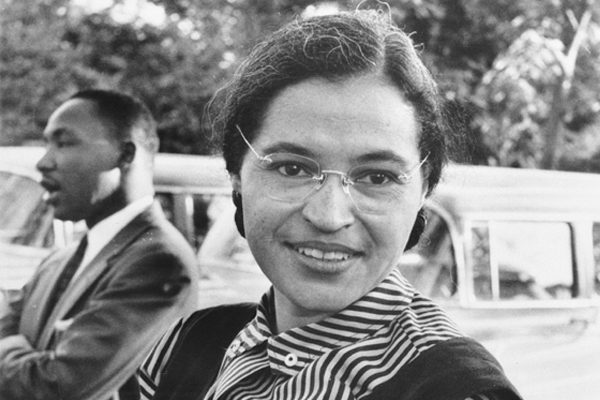
Photograph of Rosa Parks with Dr. Martin Luther King Jr. (ca. 1955)
Photograph of Rosa Parks with Dr. Martin Luther King Jr. (ca. 1955) via Wikimedia

On December 1st, 1955, a 42 year old seamstress named Rosa Parks boarded a bus in Montgomery, Alabama. Her now famous act of civil disobedience – refusing to give up her seat for a white passenger – led to the Montgomery Bus Boycott, and eventually helped to end racial segregation on buses across the US.

At the time, over 70% of Montgomery’s bus patrons were Black, and the first day of the boycott was 90% effective. That day, leaders of the Black community gathered together and formed the Montgomery Improvement Association (MIA). The pastor of Dexter Avenue Baptist Church, Dr. Martin Luther King Jr., was elected president of the MIA.

Under King’s leadership, the boycott continued, causing economic strain on the city. Car pools were organized to help boycotters travel to and from work, while many Black cab drivers also offered heavily discounted fares. Opposition to the boycott was swift and violent. Boycotters were regularly attacked, and the homes of King and other leaders were firebombed. 

1956 –  The End of Bus Segregation in Montgomery, Alabama

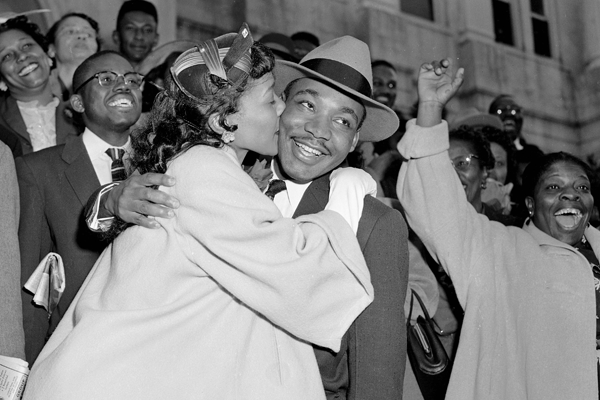
The Rev. Martin Luther King Jr. is welcomed with a kiss by his wife Coretta after leaving court in Montgomery, Ala., March 22, 1956. King was found guilty of conspiracy to boycott city buses in a campaign to desegregate the bus system, but a judge suspended his $500 fine pending appeal. (AP Photo/Gene Herrick)

King and 89 others were eventually charged with violating a statute that outlawed boycotts against businesses. King was found guilty and fined $500, although he appealed the verdict. The sentence was changed to 386 days of jail time, however, King only spent two weeks in jail.

Outside the courthouse, he was greeted by his wife and a cheerful crowd of supporters. In response to the verdict, King is quoted as saying “This will not mar or diminish in any way my interest in the protest. We will continue to protest in the same spirit of nonviolence and passive resistance, using the weapon of love.”

The decision to indict King and the others ultimately backfired. It gave the boycott national attention, and King became a popular public figure. King continued to organize nonviolent protests, now on a much larger scale. Drawing inspiration from Gandhi, King wrote in 1959 that he was the “guiding light of our technique of nonviolent social change.”

A federal lawsuit was eventually filed by Fred Gray, the MIA’s chief counsel. Browder v. Gayle went before the District Court, where it was ruled that bus segregation is unconstitutional under the 14th Amendment. The decision was subsequently affirmed by the Supreme Court. Montgomery’s buses were officially integrated on December 21, 1956. Exactly 386 days after Parks refused to give up her seat. 

1963 – March on Washington

Martin Luther King Jr. addresses a crowd from the steps of the Lincoln Memorial where he delivered his famous, “I Have a Dream,” speech during the Aug. 28, 1963, march on Washington, D.C.
Martin Luther King Jr. addresses a crowd from the steps of the Lincoln Memorial where he delivered his famous, “I Have a Dream,” speech during the Aug. 28, 1963, march on Washington, D.C. via Wikimedia

Following the Browder v Gayle ruling, Dr. King’s public profile continued to grow. In 1957, he helped found the Southern Christian Leadership Conference (SCLC). The organization was established to organize more nonviolent, civil rights protests across the country.

King’s momentum attracted a lot of negative attention. In 1958, he was stabbed while signing copies of his book, Stride Towards Freedom. In 1960, he was indicted on two counts of felony perjury for allegedly signing fraudulent tax returns. King was later acquitted by an all-white jury.

By 1963, King was being extensively surveilled by the FBI.  This year, he also helped organize the March on Washington. Approximately 250,000 people gathered in front of the Lincoln Memorial to advocate for the rights of Black Americans. Speaking to the crowd, King delivered his most famous speech. You can read or listen to the entire 17-minute ‘I Have a Dream’ speech here

1964 – Meeting with Malcolm X

Martin Luther King and Malcolm X waiting for press conference.
Martin Luther King and Malcolm X waiting for press conference. Via Wikimedia

In March 1964, Dr. King met Malcolm X outside of a news conference on Capitol Hill. Like King, Malcolm X had become a prominent civil rights activist in the last 10 years. The men were often depicted as adversaries with differing visions for the civil rights movement. However, there is little evidence to suggest there was animosity between them. On the contrary, their first and only meeting was as cordial as it was brief.

More recent analysis of both leaders beliefs suggests they had moved towards each other by the time of their deaths. Tragically, both men were assassinated before they could meet again. Speculation continues about what both men could have achieved – separately and together – had they lived longer.

1964 – The Civil Rights Act of 1964

President Lyndon B. Johnson signs the 1964 Civil Rights Act as Martin Luther King, Jr., and others, look on.
President Lyndon B. Johnson signs the 1964 Civil Rights Act as Martin Luther King, Jr., and others, look on. Via Wikimedia

Following the March on Washington in August of 1963, Dr. King and other civil rights leaders met with President John F. Kennedy and Vice President Lyndon B. Johnson.  President Kennedy had previously proposed legislation that would strengthen civil rights and voting rights. However, it was defeated in the senate. 

Following President Kennedy’s assassination, President Johnson resurrected the legislation. It was eventually signed into law on July 2, 1964. The Civil Rights Act of 1964 remains the nation’s “benchmark civil rights legislation”. It “prohibits discrimination on the basis of race, color, religion, sex or national origin.” Additionally, it “strengthened the enforcement of voting rights and the desegregation of schools.”

Dr. King was present at the signing of the bill, considered a significant culmination of his work over the previous 10 years. In October 1964, King was awarded the Nobel Peace Prize for his “non-violent struggle for civil rights for the Afro-American population.”

2011 – Martin Luther King Jr. Memorial Dedication

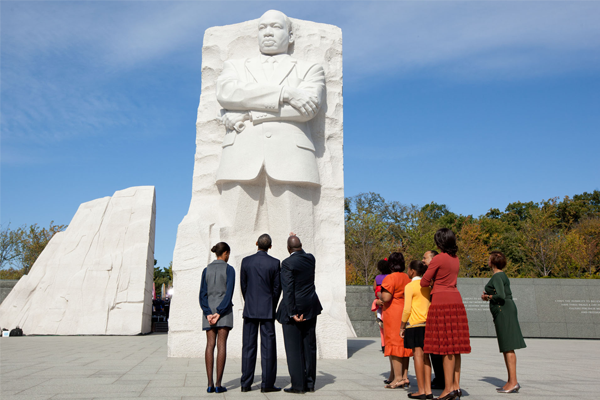
President Barack Obama, First Lady Michelle Obama, daughters Sasha and Malia, and Marian Robinson tour the Martin Luther King Jr. National Memorial before the dedication ceremony in Washington, D.C., Sunday, Oct. 16, 2011. (Official White House Photo by Chuck Kennedy)

Dr. Martin Luther King Jr. was assassinated on March 29, 1968, at the age of 39. However, his legacy lives on.  Coretta Scott King and other Black leaders continued to grow the movement after Dr. King’s death. 

In August 2011, a 4-acre memorial dedicated to Dr. King opened to the public. The memorial features The Stone of Hope, a large granite statue of the Nobel laureate. 

In October 2011, President Barack Obama attended the memorial dedication. Speaking in front of the monument, the President said, “As tough as times may be, I know we will overcome… I know this because of the man towering over us.  I know this because all he and his generation endured – we are here today in a country that dedicated a monument to that legacy.”

2021 – Martin Luther King Jr. Day

The pictures of Martin Luther King Jr. above tell a powerful story. However, Dr. King’s dream has not yet been fully realized. The New York Times estimates that half a million people joined Black Lives Matter protests across the US on a single day in June of last year. Additionally, people of color are at increased risk of getting sick and dying from COVID-19 as a result of systemic health and social inequities

The pictures of Martin Luther King Jr. above remind us that the quest for racial justice has been long and painful. However, through love, hard work, and determination, progress is possible.

We must keep going. If you can’t fly, run, if you can’t run, walk. If you can’t walk, crawl, but by all means, keep moving.” Martin Luther King Jr.

6 Outdoor & Indoor Hobbies to Try in 2021

As the first month of the year, January is a great time to refresh and recalibrate your goals for the future. Perhaps unsurprisingly, it’s also National Hobby month! After all, is there a better time to try out something new? To celebrate the occasion, we’ve put together a list of outdoor and indoor hobbies you might be interested in trying in 2021.

Indoor Hobbies

While the COVID-19 pandemic continues, many of us will be spending a lot of time at home in 2021.  If the prospect of more time inside sounds daunting, you’re not the only one.

The Centers for Disease Control and Prevention (CDC) advise that public health actions like social distancing can “make people feel isolated and lonely and can increase stress and anxiety.” Because the precautions are necessary, they recommend taking healthy measures to cope with any stress. This includes taking “time to unwind” and doing “activities that you enjoy.”

So there you have it. Hobbies are officially recommended by the CDC for your mental health. With that endorsement, let’s take a look at some fun indoor hobbies that are great for alleviating stress.

Podcasting

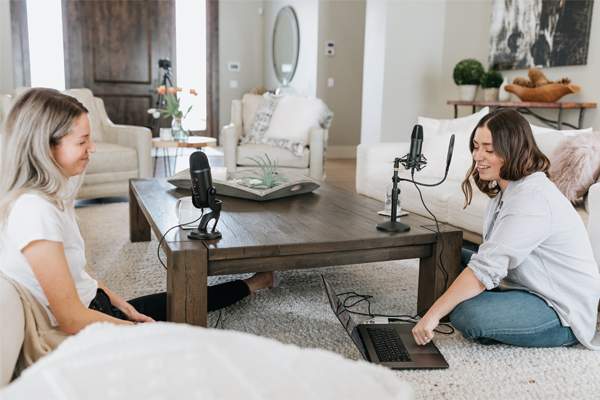
podcasting
Photo by Kate Oseen

If you’ve thought about getting into podcasting recently, you’re not the only one. Podcasting consumption on Spotify has reportedly doubled since the start of the pandemic. More podcasts are also being produced. As of January 2021, it’s estimated there are nearly 2 million podcast shows, and over 40 million episodes. That’s up from approximately half a million shows and 19 million episodes in 2018. 

One of the best things about podcasts is that it’s remarkably easy to make your own. Many of the most popular podcasts in the world are just people talking about their interests. All you need to get started is a microphone, computer, and something to talk about.

USB microphones are recommended for beginners. A USB microphone will allow you to record audio directly into your computer. We recommend the Yeti Blue USB microphone.  

Alternatively, an XLR microphone will record higher quality sound. However, you will need to record via an audio interface, or use an audio recorder. The Shure SM7B is a dynamic cardioid microphone that’s great for recording vocals. Popular podcasts that use this model include The Joe Rogan Experience, WTF Podcast with Marc Maron, and Armchair Expert with Dax Shepard.

If you plan to record with a co-host, or regularly interview guests, you may require more equipment. The PodTrak P4 from Zoom is an audio recorder designed specifically for podcasts. As we discuss in our review, the P4 is loaded with features that make it easy for anyone to record a professional grade podcast. Focusrite also offers a great podcasting bundle

Check out our post about starting your own podcast for more tips. 

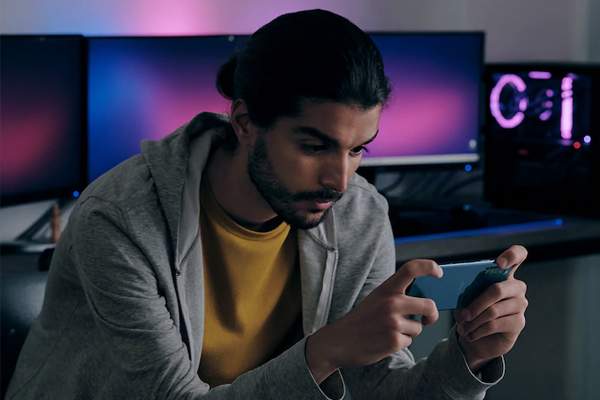
Gaming

Sony Xperia 5 II
Courtesy of Sony

Gaming isn’t just for kids. In fact, a 2020 report by the Entertainment Software Association (ESA) found that 64% of US adults play video games, while the average age of a gamer is between 35-44 years old. More older Americans are getting into gaming as well. 46% of men and 63% of women players aged 65 or older have been gaming for 10 years or less.

Gaming has only become more popular since the pandemic started. That’s not surprising, given it’s an increasingly social activity. Gaming provides an excellent opportunity to have fun with friends, family, or strangers, even if they’re not physically nearby. The ESA reports that 65% of gamers play with others, online or in person. 

If you’d prefer to play alone, there are other benefits to gaming. The ESA reports that 79% of players “say games provide relaxation and stress relief” and 80% say they “provide mental stimulation.” 

November 2020 saw the release of two new major consoles, The PlayStation 5 and the Xbox Series X/S. However, the Nintendo Switch, which came out in 2017, was the best-selling console of the month and the year. According to the ESA, though, only 52% of gamers use a console. 61% of gamers use a smartphone, like the Sony Xperia 5 II which also came out in 2020. 49% of gamers use a personal computer.

However you choose to play, there’s no reason why gaming shouldn’t be your next hobby. 

Music

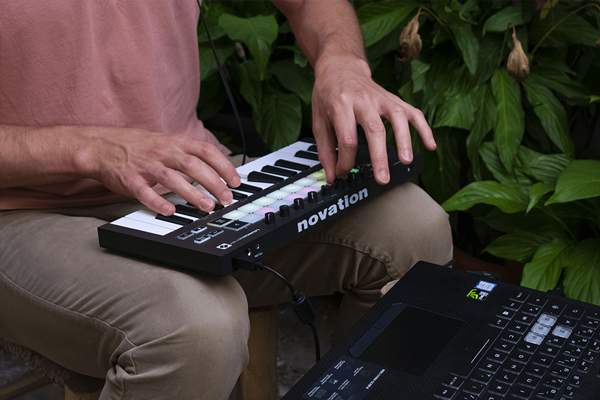
Novation Launchkey Mini MK3
Courtesy of Novation

Everyone loves music. We’re physiologically predispositioned to do so. So maybe you’ve considered making your own kind of music

The benefits of playing music are extraordinary. Numerous studies have shown a correlation between participating in music lessons as a child and enhanced academic performance. Musicians also tend to be more mentally alert, and have faster reaction times. While learning at a young age reaps the most benefits, it’s never too late to start. Playing music is a healthy brain exercise regardless of your age.

Most people think of a guitar or keyboard when they think about taking up music. However, there is an assortment of musical instruments available at various price points. You also don’t need to use a traditional instrument to make music. For example, Novation’s Launchkey Mini MK3 is a great option for beginners who don’t have any experience with a specific instrument.

The Launchkey Mini MK3 is a MIDI keyboard controller.  It’s used to make electronic music, and is similar to a synthesizer. Unlike a synthesizer, though, it needs to be used in conjunction with an audio editing software. The Launchkey Mini MK3 connects to your computer via USB, and comes with the Ableton Live Lite software. It’s great for beginners because it’s easy to learn and use, and allows you to create music using a variety of different sounds. It’s also more portable and affordable than most instruments. Check out our comparison of the Launchkey Mini MK3 and the Mini MK2 to learn more.

Outdoor Hobbies

During a pandemic, the safest place you can be is inside your home. The second safest place is outside in the sun, alone or away from others. An outdoor hobby is a great excuse to leave the house and take in some fresh air. The outdoor hobbies we recommend below are all pandemic-friendly. That is, you can do them by yourself or while social-distancing.

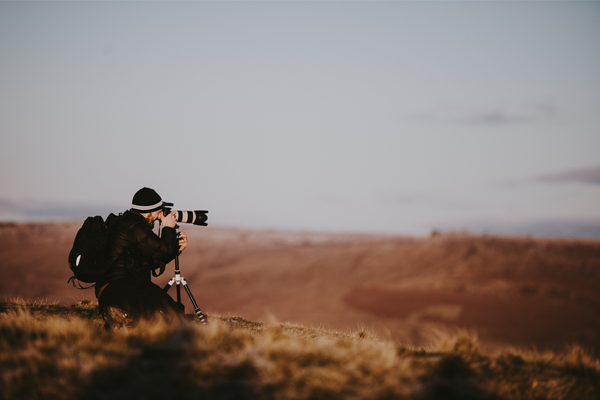
Photography

Photo by Annie Spratt

The great outdoors is full of natural wonders. Photography is an art form that will help you appreciate the natural beauty that surrounds you. You might be surprised what looks beautiful when viewed through a lens.

It can feel a little overwhelming when starting out. There’s a plethora of camera gear available. So if you’re a beginner, you should start simple. Invest in a camera that’s lightweight, easy to use, and won’t break your budget.

The Sony a6000 is a great option. It’s an older model, but you wouldn’t know it based on its specs. It’s compact, easy to use, and captures great quality photos and video. Check out our 2020 post on the best cameras for beginners for more recommendations.

We also recommend doing some research into the basics of photography before you start shooting. Three of the most important settings on any camera are the aperture, ISO, and shutter speed. Together, they control how much light is exposed to your camera’s sensor. The exposure of light to the sensor is how a photo is created, so these settings are critical to how your images will turn out. Check out our post explaining the exposure triangle to learn more.

You may also want to look into the different styles of photography. If you’re interested in photographing scenery, click here for some landscape photography tips.

Bird Watching

Photo by Pawel Janiak

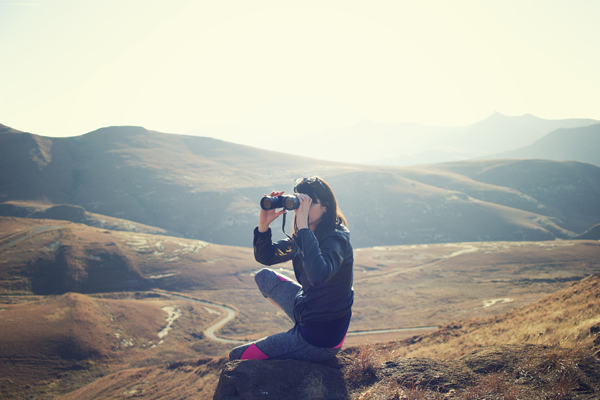
If you have an appreciation for nature and wildlife, consider birding. Also called bird watching, it’s an activity that involves finding and observing birds in the wild. The hobby provides a great opportunity to leave your house, get some exercise, and learn more about the fascinating world of birds.

According to the National Audubon Society, a non-profit dedicated to the conservation of birds and their habitats, you don’t have to travel far to go birding. Try a nearby park or open water source, such as a lake or river. Before you go, though, they advise doing some research. “Birding can be an adventure, but it should never be reckless.”

If you’re in the US, be sure to read the American Birding Association’s Code of Birding Ethics. Ultimately, the ethos of the hobby is about respecting birds and their environment. The code states that birding “should be fun and help build a better future for birds, for birders, and for all people.”

Try to observe birds from a distance to minimize disruption. Many birders utilize binoculars for this reason. Celestron’s Nature DX series of binoculars are great for birding. We recommend the 8×42 model for beginners. The binoculars are affordable, durable, and rival the optics of more expensive models. 

Birding is a pandemic friendly hobby that allows you to escape the confines of your home and reconnect with nature. While the birding community is large, it’s an activity you can do completely alone. The benefits of spending time in nature are also well-documented. Many birders find it to be immensely calming and peaceful, almost meditative.

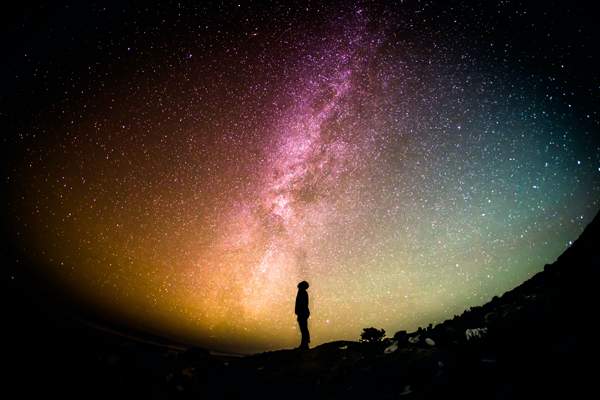
Astronomy

Photo by Greg Rakozy

Humans have been looking up at the stars in wonder for millennia. While the night sky we see today may not be exactly the same as the one gazed upon by Galileo, it still holds immense mystery and beauty.

Professional astronomers study space and use mathematics, physics, and chemistry to try and solve the mysteries of the universe.  Amateur astronomy is primarily about observing objects in the night sky using a telescope. This includes stars, moons, planets, and other celestial phenomena. 

The Celestron PowerSeeker 114EQ is a great entry level telescope.  It’s affordable, portable, and its 114mm aperture is very appropriate for viewing the night sky. Some people also try to make their own telescope, but that’s a separate craft. 

Alternatively, astrophotography involves using a camera to capture images of the night sky. Traditionally, it involved attaching a camera to a telescope. However, most mirrorless or DSLR cameras are powerful enough to capture the night sky without additional equipment. A Canon T8i or Nikon D3500 are great options for beginners. 

Whatever gear you use to star-gaze, amateur astronomy is another great outdoor hobby you should try in 2021.

It’s a Hobby, Not a Side Hustle

While the outdoor and indoor hobbies above have the potential to become career pursuits, it doesn’t mean they should. By definition, a hobby is an activity you do for fun in your spare time. Once you monetize a hobby, it becomes work, and is less likely to relax you or alleviate stress.

You shouldn’t feel pressured to be constantly productive during a pandemic. It’s important to prioritize your health. Heed the advice of the CDC and take some time for yourself. Try one of the outdoor or indoor hobbies above and you might be surprised how rewarding it can be.

The Best Outdoor Speakers 2021

As a result of the COVID-19 pandemic, it’s never been more important to have a reliable outdoor speaker. We’re all spending more time outside, whether exercising, outdoor dining, or socially-distant socializing. Thankfully, innovations in wireless connectivity and weather sealing mean that the best outdoor speakers currently available are remarkably portable, durable, and sound great.  We’ve rounded up some of our favorite models below. 

Before we take a look at the best outdoor speakers of 2021, let’s review what you should look out for. All the models listed below share similar traits, yet no two speakers are exactly alike. It’s important to consider which qualities are most important to you so you can choose an outdoor speaker that will best suit your needs. 

What to Look For in an Outdoor Speaker

Courtesy of Logitech

Before buying an outdoor speaker you should check its IP rating. It’s a 4-character code that indicates the speaker’s level of protection against dust, dirt, and water. If you want a speaker you can use at the beach or a pool party, you’ll need one with a high rating. Check out our recent post about the IP Code to learn more about how the standard works. 

It’s also worth confirming the type of wireless technology the speaker uses. While Wi-Fi offers the strongest wireless connection, it’s not applicable for speakers that will be primarily used outside. Most outdoor speakers only offer Bluetooth or a wired connection. 

Bluetooth technology has been updated multiple times over the past 20 years. The most recent major upgrade, Bluetooth 5.0, has several advantages over the previous version (4.2). Bluetooth 5.0 was released in December 2016, and most wireless electronics released since then should use this version. Click here to search for a specific speaker model’s Bluetooth version. 

Some speakers also use Near Field Communication (NFC) technology to establish a Bluetooth connection faster. NFC is the same technology used in credit cards to enable contactless payment. NFC can connect two devices in close proximity almost instantly, whereas pairing via Bluetooth alone can sometimes take a few minutes. However, both the speaker and the device it’s connecting to must have NFC technology. 

Also check the speaker’s battery life, dimensions, and weight, especially if you’re ordering online. These specifications are easy to forget about, but can make all the difference once you start using it.

The outdoor speakers featured below are popular, high quality models. However, there are enough differences between them that one may be better suited to you over the others. 

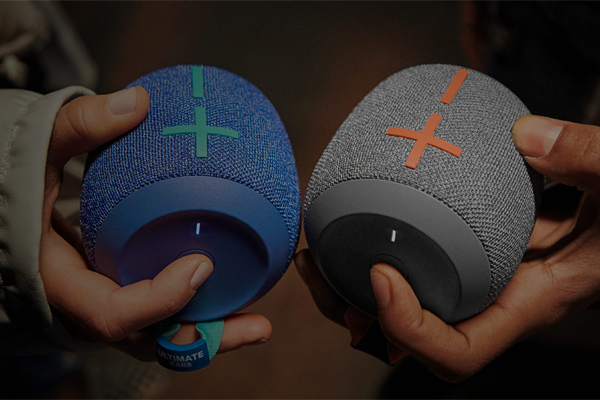
Ultimate Ears WONDERBOOM 2

Ultimate Ears Wonderboom 2
Courtesy of Logitech

There’s no such thing as the perfect outdoor speaker, yet the UE WONDERBOOM 2 gets pretty close. The small, cylindrical speaker is remarkably lightweight and durable. It weighs just 420g (14.8 oz), and can withstand a drop from 5 feet. Meanwhile its IP67 rating means its 100% protected against dust and dirt, and can withstand immersion in up to 3 feet of water for 30 minutes. It also floats, so it’s great for pool parties.

Equipped with two 1.57-inch active drivers and two passive radiators, the WONDERBOOM 2 outputs loud, crisp sound in 360 degrees. The speaker has a frequency range of 75 Hz – 20 kHz, and can reach 86 dBC, or 87 dBC when the Outdoor Boost feature is enabled. Additionally, you can pair the speaker with another WONDERBOOM 2 for twice the sound. Bluetooth 5.0 connectivity ensures a smooth wireless listening experience. 

Bonus features include 13-hour battery life, a built-in hang loop, and 2-year limited warranty. Not bad for a speaker under $100. Check out our comparison of the UE Wonderboom 2 with the original Wonderboom above to learn more about the outdoor speaker. 

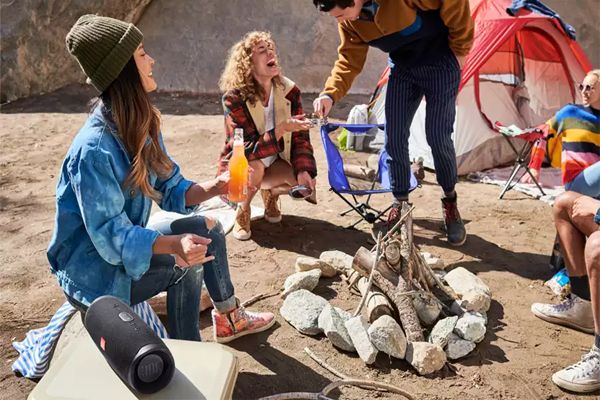
JBL Charge 4

JBL Charge 4
Courtesy of JBL

JBL is known for making good quality, affordable sound gear. They have multiple outdoor speaker models that are high-functioning and low-cost. However, the Charge 4 offers the best blend of performance capabilities and affordability.

The Charge 4’s powerful driver and dual passive radiators deliver impressive sound and bass.  The speaker has a 30W output, frequency response of 60Hz – 20kHz, and uses Bluetooth 4.2 for wireless connectivity. You can also use the Connect+ feature to wirelessly pair it with other JBL speakers that have this feature. Unfortunately, it can’t pair with some of JBL’s more recent models that use the PartyBoost pairing feature instead.

The Charge 4 also has a whopping 20 hour battery life. Most people can’t stay awake that long, let alone continuously listen to music. Additionally, you can charge your phone via the speaker’s USB port. 

With an IPX7 rating, the Charge 4 has great water resistance. You can use it in 3 feet of water for up to 30 minutes. The dust/dirt resistance isn’t specified, nor is its drop protection. However, the speaker’s fabric and rubber housing inspires confidence. At 960g (2.12 lb), it has a little weight to it, but it’s still very portable. The Charge 4 costs $124.95 and is available in a variety of colors.  

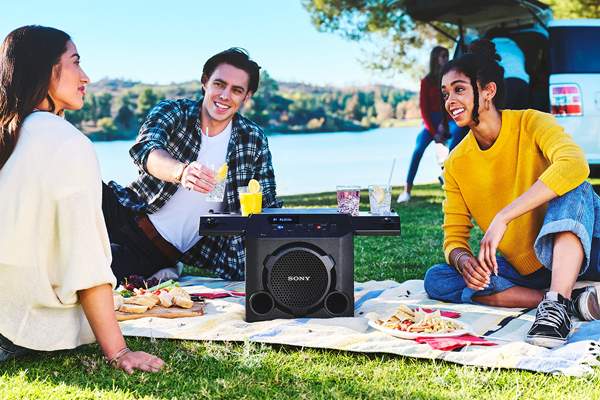
Sony GTK-PG10

Sony GTK-PG10
Courtesy of Sony

A list of the best outdoor speakers wouldn’t be complete without Sony. The GTK-PG10 is the first of two Sony speakers in this list, both available at the same price point of $248. However, they are very different speakers.

Compared to the other speakers on this list, the GTK-PG10 is a juggernaut.  Weighing 6.7kg (14.8 lb), this isn’t the type of speaker you take on a hike. This powerhouse of a speaker is better suited for blasting music at a picnic or beach party. It even has a splashproof top panel with built-in cup holders. The speaker also has a microphone input, FM tuner, and can be mounted to a tripod.

What it sacrifices in portability, the GTK-PG10 makes up for with an incredible sound performance. The speaker uses a Digital Signal Processor (DSP) to automatically enhance the sound based on your surroundings. You can close the top panel to project the sound forward, or open it to allow the built-in tweeters to spread the sound in multiple directions.

The GTK-PG10 has a 13 hour battery life, uses Bluetooth 4.2, and has built-in handles that make it easy to carry. If you need an outdoor speaker with added oomph, you won’t be disappointed by the Sony GTK-PG10. 

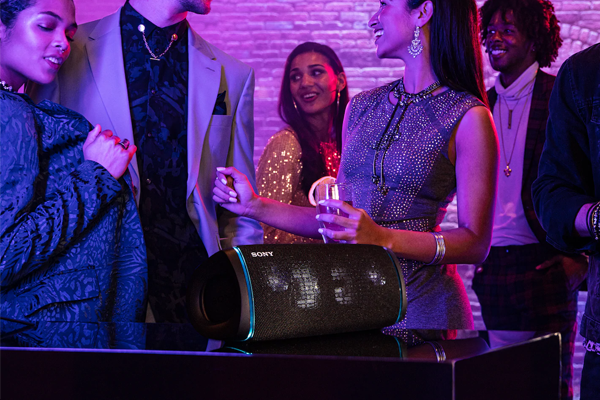
Sony SRS-XB43

Sony SRS-XB43
Courtesy of Sony

The second Sony speaker in our list is the Sony SRS-XB43. As mentioned, it shares the $248 price tag with the Sony GTK-PG10 while offering different advantages.

Weighing 2.95kg (6.5 lb), the SRS-XB43 is considerably lighter than the GTK-PG10. However, the bottle-sized speaker is still one of the larger models in this list. Like the GTK-PG10, it makes up for it with impressive sound quality. 

The SRS-XB43 uses a woofer for low and mid-range frequencies and a tweeter for high-range frequencies to ensure clear sound. A Mica Reinforced Cellular (MRC) speaker cone and dust cap further improve sound quality. Additionally, a rectangular diaphragm and a passive radiator on each end of the speaker ensure optimal bass output.  The bass can be further enhanced using Extra Bass mode. Bluetooth 5.0 and NFC means the speaker’s wireless connectivity is as good as it gets. 

The Sony SRS-XB43 also has great weather sealing. Its IP67 rating means it can handle dust, dirt, and immersion in 3 feet of water for up to 30 minutes. 

Marketed as a party speaker, the SRS-XB43 has built-in lights that can change color and flash in-sync to the beat. If you use Sony’s Party Connect feature to pair multiple SRSX-B43s, the lights on each model will also sync. Meanwhile the 24 hour battery life – or 14 hours with the lights and Extra Bass mode on – ensures the speaker will outlast any event. 

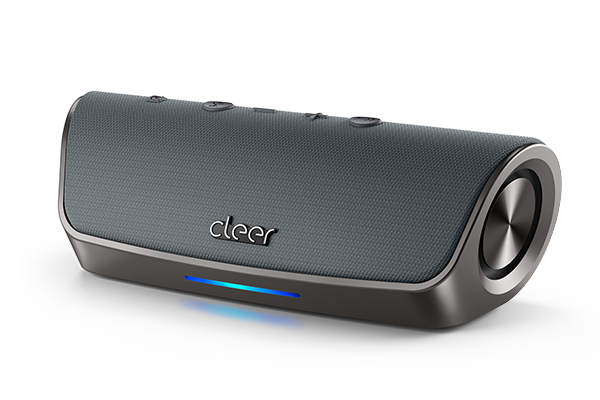
Cleer Stage

Cleer Stage
Courtesy of Cleer

The Cleer Stage is an underrated outdoor speaker. Cleer doesn’t get the same recognition as other brands in this list, but their products hold up in comparison. At $79.99, The Cleer Stage is the most affordable speaker included in this list, and far from inferior to the other models featured. 

The 740g (26.1 oz) speaker uses Bluetooth 4.2 and NFC, has a built-in microphone, and is compatible with Amazon Alexa. It also has shockproof housing, while its IPX7 rating means it can handle immersion in 3 feet of water for 30 minutes. The ‘X’ in the rating indicates the speaker’s protection against dust and dirt hasn’t been tested. 

The Cleer Stage uses a digital amplifier to boost its dual 1.89-inch drivers and passive radiators. This results in remarkably powerful, distortion-free sound. Using the Cleer Connect app, you can further amplify the sound by pairing it with a second Stage speaker. The 15 hour battery life means it can outlast 2 of the more expensive speakers listed above. 

Portable, affordable, and offering a great overall performance, the Cleer Stage’s inclusion in our list of the best outdoor speakers is well deserved, even if you’ve never heard of it.

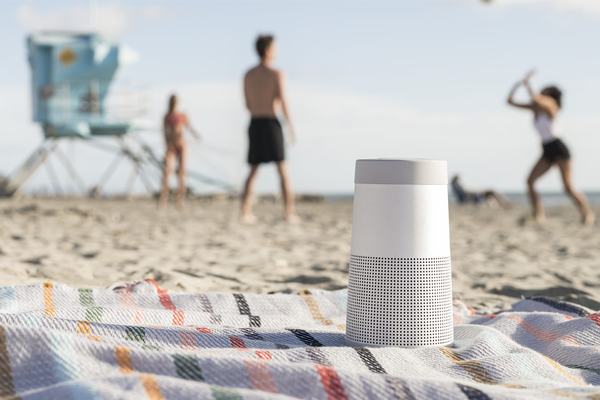
Bose Soundlink Revolve+

Bose SoundLink Revolve+
Courtesy of Bose

Currently priced $289.95, the Bose SoundLink Revolve+ is the second most expensive speaker in this list. However, the price is justified by its exceptional abilities. 

Like most Bose speakers, the SoundLink Revolve+ has impeccable sound quality. Equipped with an efficient transducer, dual passive radiators, and an omnidirectional acoustic deflector, the speaker projects incredible sound and bass in 360 degrees.  The speaker uses Bluetooth 4.2, and can be paired wirelessly to other Bose speakers via the Bose SimpleSync feature

The SoundLink Revolve+ is also compatible with Siri or Google Assistant, and can be used to make and receive phone calls. The built-in microphone ensures the recipient hears you as clearly as you hear them.

The 907.2g (2 lb), pint-sized speaker has a decent 16 hour battery life, and IPX4 weather sealing. That is, it can handle splashing or rain, but shouldn’t be submerged in water. The soft, fabric-based build means it can also handle bumps without issue. 

The Bose SoundLink+ offers the advantages of a home speaker in a portable, durable build. It’s a great value option for anyone looking for a speaker they can use inside and outside the house.

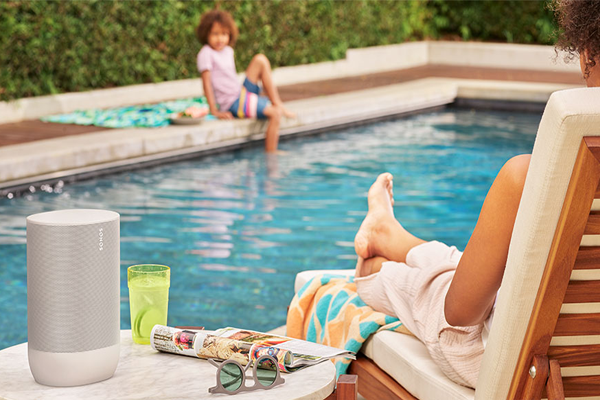
Sonos Move

Sonos Move
Courtesy of Sonos

The Sonos Move is another great speaker for indoor and outdoor use. The speaker uses both WiFi and Bluetooth 4.2, and is compatible with Amazon Alexa, Google Assistant, and Apple Airplay 2. A built-in array of far-field microphones with advanced beamforming and echo cancellation means the speaker can detect voice commands from a distance, even in a loud room.

The Sonos Move offers 11 hours of battery life and is housed within a shock-resistant case. It’s IP56 rating means it’s protected against dust, although not dust-tight, and can handle some exposure to water (splashing and rain).  The speaker comes in two color options, black or white

The sound quality of the Sonos Move is fantastic. The speaker uses two Class-D digital amplifiers to boost its drivers and deliver rich, detailed sound. An integrated mid-woofer adeptly handles mid-range frequencies and bass, while a downward-firing tweeter ensures a clear high-frequency response. Meanwhile, the Trueplay feature automatically optimizes the sound output based on your surroundings.

At $399.95, the Sonos Move is the most expensive speaker in this list. However, considering it offers all the features of a high quality home speaker in a portable, durable build, the price seems justified. The Sonos Move will keep you happy at home and away.

Which Speaker Should I Buy?

The models listed above are just some of the best outdoor speakers currently on the market. The best outdoor speaker for you ultimately comes down to personal preference. Whether your priority is sound quality, portability, or durability, there’s a speaker above that will meet your needs.

What Does ‘IPX7 Waterproof’ Mean? | Understanding The IP Code

If you’ve purchased a waterproof speaker or smartphone recently, you may have noticed its IP Code rating. For example, you may have seen ‘IPX7 Waterproof’ printed on the packaging of a JBL Flip 5, or ‘IP65/68’ on the box of a Sony Xperia 5 II.

As you may have guessed, the IP Code indicates the level of weather sealing each device has. As consumer demand for dust and waterproof electronics has increased, the code has featured prominently in the marketing of these models, and plenty of others. 

However, while terms like water-resistant and dust-resistant leave room for interpretation, the IP Code does not. It’s an independent classification system, not a marketing phrase. And in a market obsessed with weather sealing, it’s helpful to know a device’s dust and waterproofing grade before you buy it.  

Who Created the IP Code

YouTube player

The first edition of the code was created in 1976 by the International Electrotechnical Commission (IEC). The IEC is a global, not-for-profit organization founded in London in 1906. Today, the IEC has 6 offices around the world and members from over 170 countries. According to their website, the IEC is the “world’s leading organization for the preparation and publication of international standards for all electrical, electronic and related technologies.” 

The IP Code is one of over 10,000 standards the IEC has created. It was developed to grade the protection provided by the casing or enclosure of electrical equipment with a rated voltage below 72,5 kV. The code also stipulates the tests that need to be performed to verify an enclosure meets the requirements of each grade. 

 How the IP Code Works

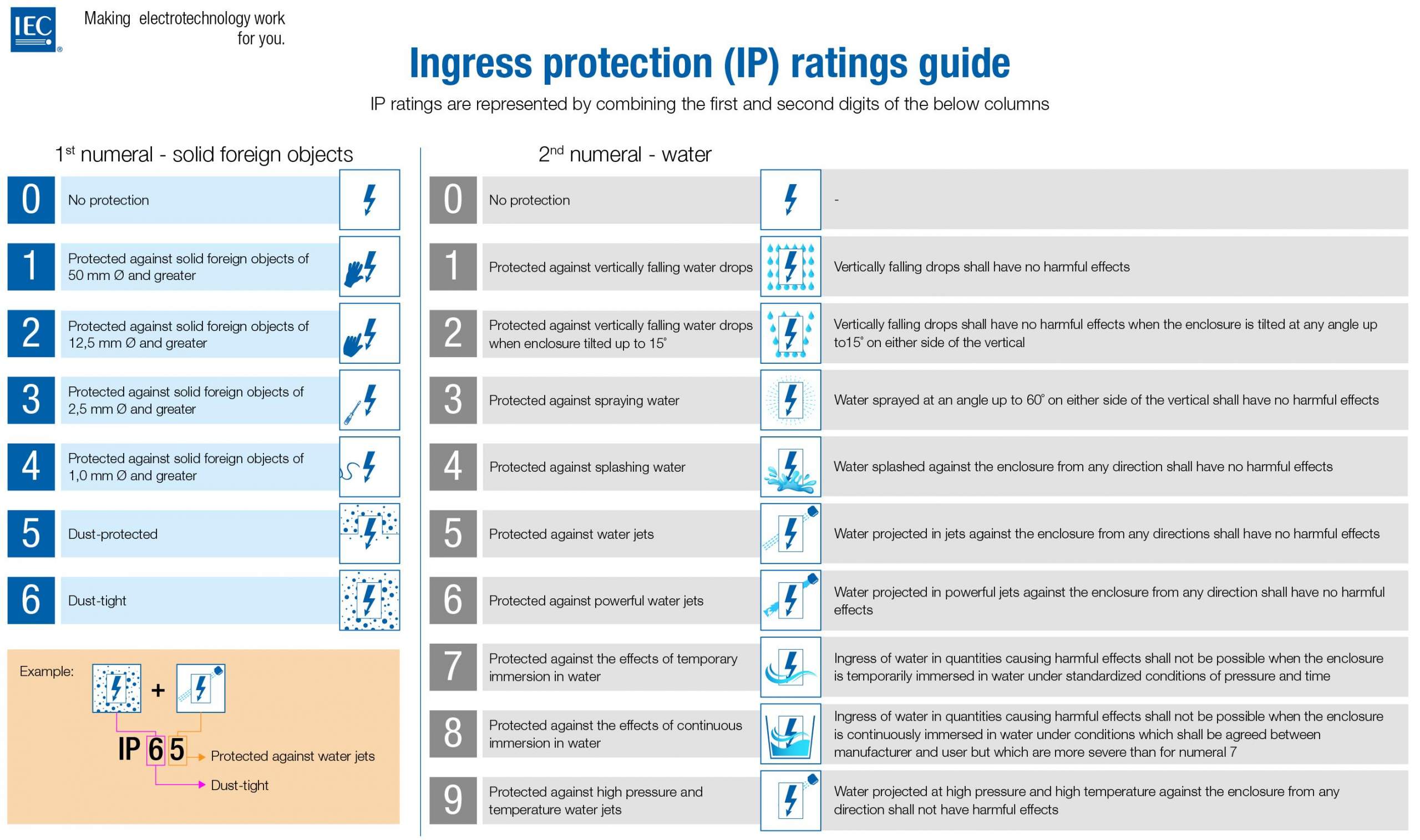
IPX7 Explained - Ingress Protection (IP) Ratings Guide
Courtesy of the International Electrotechnical Commission

The code typically includes four characters – two letters and two numerals. The first two characters are always IP, which stand for Ingress Protection. 

The first numeral after IP indicates the device enclosure’s protection against dust and dirt. On a scale from 0 to 6, 0 indicates there is no protection.  6 means the enclosure is 100% dustproof. 

 The second number indicates the enclosure’s protection against water, on a scale from 0 to 9. Again, 0 indicates there is no protection. 9 means the enclosure can withstand high pressure hot water from different angles. 

What Does IPX7 Waterproof Mean? 

The graphic above displays what each numeral represents on each scale. Sometimes, the level of protection is unknown or hasn’t been tested. In these cases, an ‘X’ replaces the numeral.

IPX7 Waterproof means the device has level 7 water sealing, while its protection against dust is unknown. This rating is common on recent outdoor speaker models, including the JBL Flip 5

What Does IP65/68 Mean? 

A high water grade does not imply the device also meets the standards of all lower grades. As the graphic above shows, some of the water grades have two different standards.

For example, a smartphone with an IP68 rating means the device is “protected against the effects of continuous immersion in water” and the “ingress of water is not possible when the enclosure is continuously immersed in water” under specific conditions. However, the phone may not be protected from “water projected in jets… from any direction” as a device with level 5 proofing would. 

The Sony Xperia 5 II has a rating of IP65/68. This means it meets the standards for both grade 5 and grade 8 waterproofing. 

What to Look Out For

If you don’t see an IP Code in the messaging or packaging of an electronics device, it doesn’t mean it offers no weather proofing. The IP Code has only prominently featured in consumer marketing in the last 10 years. 

If you’re specifically looking for a smartphone or speaker that can withstand exposure to water, dust, and dirt, the IP Code will be immensely helpful. It allows you to compare the weatherproofing of competing models, and make an informed decision about which device is right for you. While weatherproofing is just one factor to consider, it’s good to know exactly what level of protection a device has before you buy it.

If you’re interested in learning more about the IP Code, you can access a consolidated version of the code here.