Home Blog Page 21

Best Sigma Lenses For Landscape, Portrait & Street Photography

Photography is a notoriously expensive career and hobby. Yet you’ll often hear experienced photographers say that interesting work isn’t about the equipment—it’s about the person behind the camera.

For example, let’s say Annie Leibovitz ditched her medium format camera and picked up a two-pack of 35mm disposables at her local Duane Reade. Regardless of the cameras’ quality, the end result would still be a meticulously executed vision guided by 50 years of experience.

That said, having great gear definitely doesn’t hurt. This is one of the many reasons why we love Sigma, a third-party lens manufacturer that lives in the sweet spot where high quality meets (relative) affordability. In this post, we give you the Sigma essentials for landscape, portrait, and street photography.

Best Sigma Landscape Lenses

“Landscape Lenses” is a tricky category because it is so incredibly broad. As with any gear, the lens you choose should come down to use-cases and personal preference. Take a look at the three lenses below to figure out which one is right for you.

Still not sure? Check your Lightroom settings the next time you’re editing to see which focal lengths you favor most.

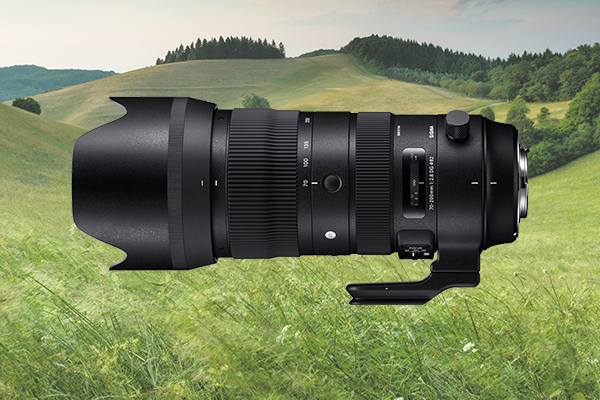
70-200mm f/2.8 DG OS HSM S
Best sigma lenses for landscapes Sigma 70-200mm

Cover almost all of your needs with one hefty lens! The Sigma 70-200mm is favored by sport and outdoor photographers like Liam Doran because of its versatility and speed. We highly recommend the 70-200 if you often shoot action and/or animal shots from a distance.

  • Focal Length: 70-200mm
  • Aperture Range: f/2.8 to f/22
  • Price: $1,259.00
  • Mounts: Canon EF, Nikon F, Sigma SA

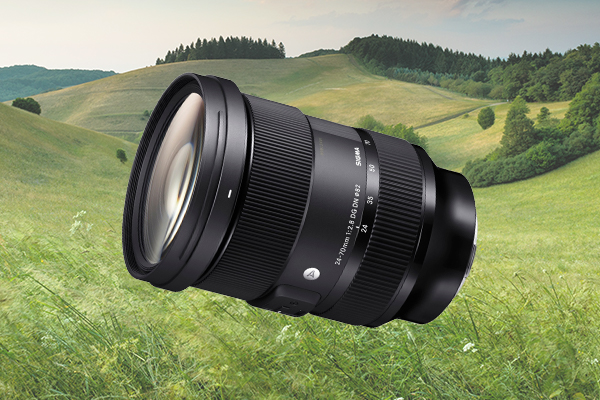
24-70mm f/2.8 DG DN Art
Best sigma lenses for landscapes Sigma 24-70mm

A standard, reliable, middle ground lens. We wouldn’t recommend this for wildlife photography because of the restricted zoom. However, it’s aperture range and clarity make it a safe bet for a great landscape shot or animal close-up (if you dare).

  • Focal Length: 24-70mm
  • Aperture Range: f/2.8-22
  • Price: $1,099.00
  • Mounts: Canon EF, Nikon F, Sigma SA, Leica L, Sony E

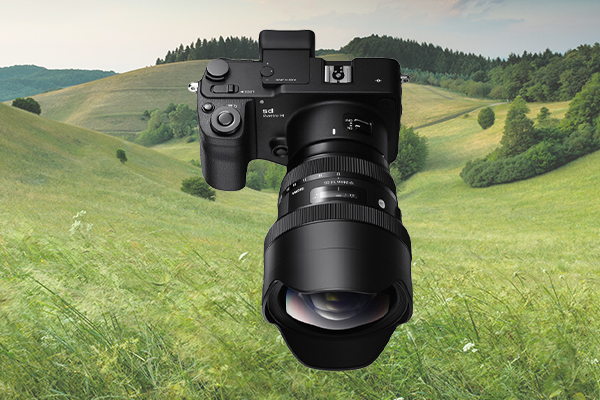
12-24mm f/4 DG HSM Art
Best sigma lenses for landscapes Sigma 12-24mm

This full-frame, wide-angle zoom lens is for moments when the scene is so beautiful, you need to capture the whole thing. As you can see from the sample photos, this lens is designed to have minimal distortion—a classic pitfall of wide-angle photography.

  • Focal Length: f/4 – f/22
  • Aperture Range: 12-24mm
  • Price: $1,599.00
  • Mounts: Canon EF, Nikon F, Sigma SA

Best Sigma Portrait Lenses

Sigma has a ton of great portrait lenses and we’ve written a lot about them. In fact, we made a video about the three lenses below. All of them boast exceptional bokeh and fit well in any wedding or portrait photographer’s arsenal.

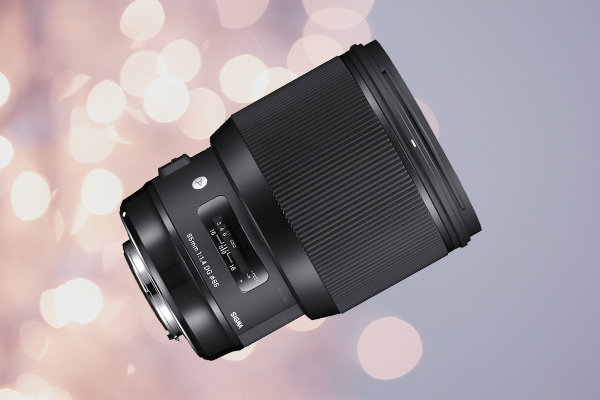
85mm f/1.4 DG HSM Art Lens
Best sigma lenses for landscapes Sigma 85mm

This lens is great for full-body portrait shots that still have a decent amount of bokeh. It’s also great for taking very personal headshots without getting too close to your subject. As a result, it’s a darling of both the wedding and fashion industries.

  • Focal Length: 85mm
  • Aperture Range: f/1.4 – f/16
  • Price: $1,079.00
  • Mounts: Canon EF, Nikon F, Sigma SA, Sony E

105mm f/1.4 DG HSM Art Lens
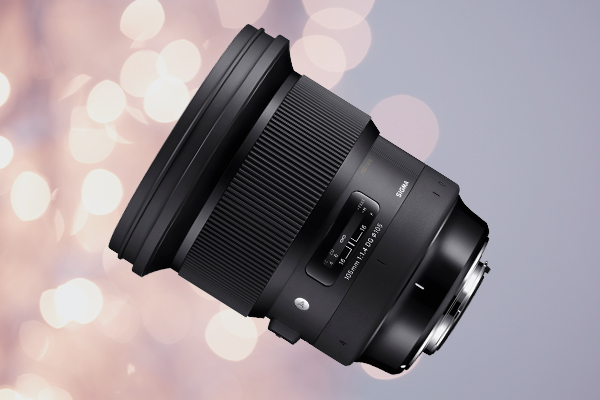
Best sigma lenses for landscapes Sigma 105mm

This 4 pound beast of a lens is worth carrying around for the beautiful bokeh alone. However, it’s also a favorite of portrait and wedding photographers because of its exceptional low-light capabilities.

  • Focal Length: 105mm
  • Aperture Range: f/1.4 – f/16
  • Price: $1,599.00
  • Mounts: Canon EF, Nikon F, Sigma SA, Sony E

135mm f/1.8 DG HSM Art Lens
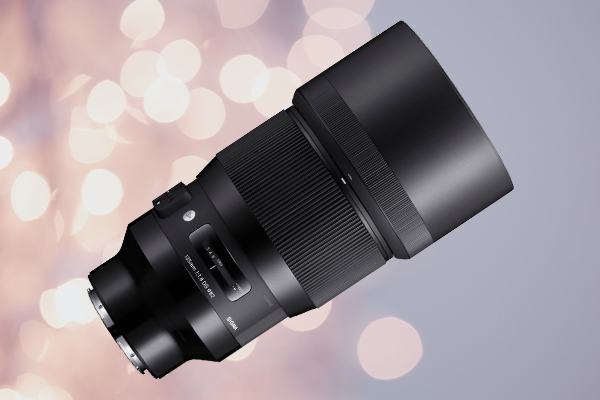
Best sigma lenses for landscapes Sigma 135mm

This 135mm is a great lens for separating your subject from the background and adding depth to your images. Plus, it’s swirly, beautiful bokeh is arguably the best of the bunch.

  • Focal Length: 135mm 
  • Aperture Range: f/1.8 – f/16 
  • Price: $1,399.00
  • Mounts: Canon EF, Nikon F, Sigma SA, Sony E

Honorable mention: Sigma 70-200mm f/2.8 DG OS HSM S

Portrait and outdoor photographers are both obsessed with this lens. The only reason it isn’t officially included in this category is that we already detailed it in the section above. If a portrait prime makes you nervous then this is the lens for you.

Best Sigma Street Photography Lenses

Street photography means one thing: lightning-fast prime lenses. Whether you’re shooting from the hip or favor a more personal approach, these three lenses are up to the challenge.

28mm f/1.4 DG HSM
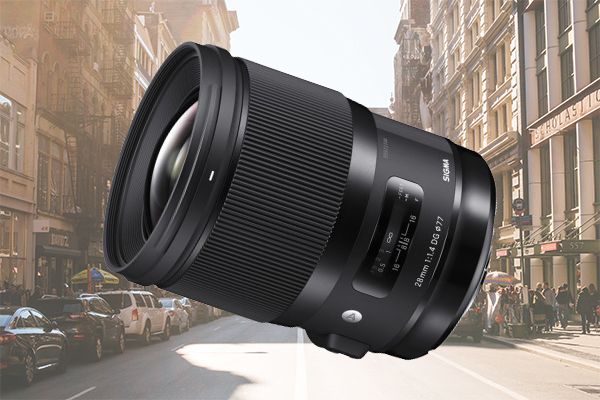
Sigma 28mm

This wide-angle art lens will help you capture both your subject and the scene around them. It’s also designed to minimize flare and ghosting for extra crisp shots. If you’re still not convinced, check out the work of legendary street and lifestyle photographer Garry Winogrand who heavily favored a 28mm prime.

  • Focal Length: 28mm
  • Aperture Range: f/1.4 – f/16
  • Price: $1,079.00

Mounts: Canon EF, Nikon F, Sigma SA, Sony E

35mm f/1.2 DG DN Art
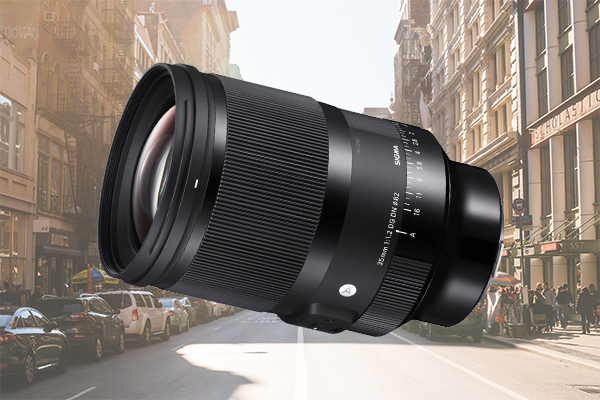
Sigma 35mm

The 35mm is a classic in the world of both street photography and photojournalism because it forces you to get just a little closer to your subjects without shoving your camera in their face.

  • Focal Length: 35mm
  • Aperture Range: f/1.2 – f/16
  • Price: $1,499.00
  • Mounts: Leica L, Sony E

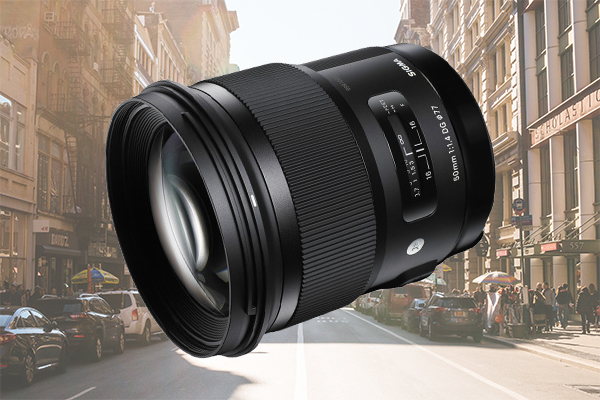
50mm f/1.4 DG HSM Art
Sigma 50mm

The last lens on our list of best Sigma lenses for street photography is the nifty fifty. The view of a 50mm is very close to what we perceive with the human eye which makes it a very popular option for street photography.

  • Focal Length: 50mm
  • Aperture Range: f/1.4 – f/16
  • Price: $829.00
  • Mounts: Canon EF, Nikon F, Sigma SA, Sony E, Sony A

Ricoh THETA SC2 vs SC – Comparison Chart & Photos

Ricoh THETA SC2

Looking for the perfect stocking stuffer? Ricoh, an established pioneer of 360° camera tech, just announced their latest model: the THETA SC2. This mini powerhouse boasts a collection of THETA’s most popular features in a more colorful, entry-level package.

Keep scrolling for availability, specs, features, and photos of the SC2’s candy-like look.

Should I get the THETA SC2?

Let’s jump right in, shall we? The SC2’s streamlined usability and reasonable price tag indicate that this model is for more casual and entry-level 360° photographers. We recommend investing in the SC2 if you want an easy way to dabble in 360° and create cool social media content without breaking the bank (plus, they’re cute).

You can find our comprehensive Ricoh THETA buying guide here if you’re interested in learning about THETA’s professional-grade cameras.

Price & Availability

You can pre-order all four colors of the new Ricoh THETA SC2 here for $299.95. It’s slated to ship in early December just in time for holiday shopping madness.

In terms of look and feel, this is one of the THETA line’s more colorful models; it comes in pink, blue, beige, and white. This is a far cry from the grey and…well…slightly darker gray of the THETA Z1 and THETA V.

The original SC was released way back in November 2016. The new model offers major upgrades on video resolution, memory, and connectivity. Here is an at-a-glance look at the differences.

THETA SC2 Specs vs SC

SC2

SC

Resolution

12 MP x 2

12 MP x 2

Still Image Resolution

5376 x 2688

5376 x 2688

Video Resolution

4k x 2k @ 30fps

1920 x 960 @ 30fps

Format

Equi

Dual Fisheye

Audio

1 ch (built-in)

1 ch (built-in)

Built-in Memory

14 GB

8 GB

Max. Recording Time

3 mins

5 mins

Size

130.6 x 45.2 x 22.9 mm

130.6 x 45.2 x 22.9 mm

Weight

About 104 g (.23 lbs)

About 105 g (.23 lbs)

Colors

Pink, Blue, Beige & White

Pink, Blue, Beige & White

Bluetooth

X

Bluetooth Remote Connectivity

X

OLED Display

X

Live Streaming

X

X

Ricoh THETA SC2 New & Notable Features

Face Detection

Many of these specialized 360° cameras aren’t built to detect human faces. The results are often incredibly awkward and frustrating.

To fix this problem, the THETA SC2 is designed to detect faces and center them in the image. Plus, it offers exposure compensation and noise3 reduction to bring faces out of the shadows and into focus.

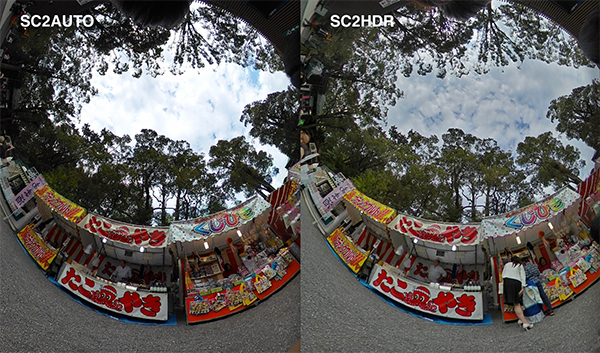
Lens-By-Lens Exposure

A major usability upgrade in the THETA SC2 is lens-by-lens exposure. This will save users countless hours in their photo editing app of choice trying to balance highlights and shadows in a single shot.

To accomplish this, the SC2 independently controls the auto exposure and auto white balance of the front and back cameras. See below for a side-by-side example.

HDR Upgrades

We have officially reached a point in the 360° evolution where an entry-level option can hold its own against some of the pricer models. This is especially evident when you look at the HDR algorithm changes for the SC2.

It has faster processing (23 seconds for the SC vs 9.5 seconds for the SC2), improved contrast/highlights, and chromatic aberration and fringing are relatively nonexistent. Plus, there isn’t any extreme color saturation to make up for the aforementioned aberration and fringing.

Comparison SC2 HDR vs Auto

That concludes our first look at the Ricoh Theta SC2! Keep an eye out for more comparison posts and see our full Ricoh THETA rundown here.

Canon EOS Ra – Astrophotography Camera or Gimmick?

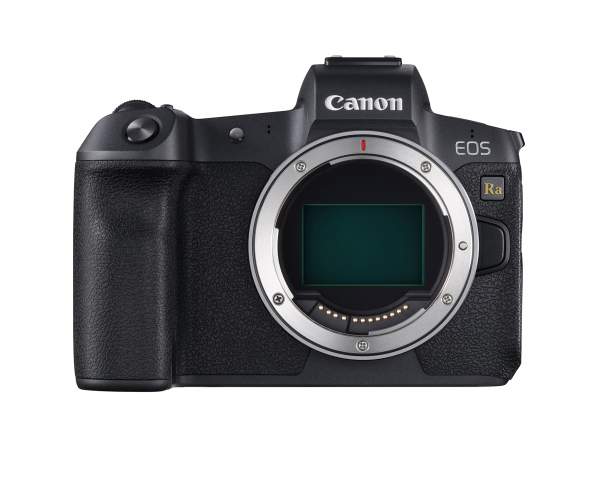
Canon EOS Ra

There has been a slue of high-powered, full-frame cameras hitting the market this fall. As camera nerds, we’re excited to have the flexibility that another 20+ megapixels provide. As pragmatists, we can’t help but wonder who the heck needs this much detail? Wanting it is one thing, but requiring it for your livelihood is quite another. We finally got our answer with the new Canon EOS Ra, the company’s first full-frame camera made specifically for astrophotography.

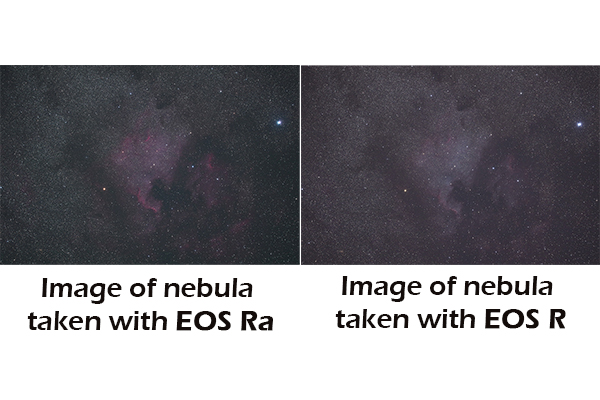
Nebula Side-by-side Canon EOS Ra

Canon EOS Ra Specs & Features

Is the astrophotography angle a gimmick?

Short answer: no. Canon does not recommend this camera for casual, terrestrial use. In fact, internal modifications were made to customize it for sky-based photography.

Brace yourself, friends, we’re about to talk about science.

Compared to the Canon EOS R, the EOS Ra’s infrared-cutting filter is modified to let in about 4x as many hydrogen-alpha rays at the 656nm wavelength. Now, if you’re anything like us, the first thing you thought after reading that sentence was, excuse me, what? 

Basically, that means the Canon Ra facilitates a higher transmission of the deep red infrared rays commonly emitted by nebulae. Think of it as a built-in aid that automatically increases contrast and ruby red luminance without the help of other special accessories.


Magnification Ratio

As you might imagine, focusing on a small star 4.3 light-years away can be a bit challenging. As a result, the Canon Ra is the first-ever Canon EOS model with a 30x magnification ratio—it’s viewable through the electronic viewfinder and LCD screen for Live View operation.

You can also choose standard, full-frame, or 5x viewing if 30x is a bit much for your astrophotography needs.

Canon EOS Ra front without lens

Sensor Size

The sensor technically isn’t astro-fitted. However, 30.3 effective megapixels and a Digic 8 processor definitely won’t hurt. The Ra’s 35mm full-frame CMOS sensor combined with the power of its processor facilitates a fast, efficient performance that results in image quality that’s out of this world (sorry we had to).

An overview of the specs is as follows:

  • Full-frame 30.3MP CMOS image sensor
  • DIGIC 8 image processor
  • Dual pixel CMOS AF with 5,655 manually selectable AF positions
  • 4K 30p with Canon Log and 10-bit 4:2:2 HDMI output
  • Built-in EVF with 3.69 million dots
  • Vari-angle touchscreen LCD and Dot-matrix LCD panel
  • Lightweight, compact size
  • High magnification ratio of 30x in Live View
  • Silent shutter
  • USB charge compatible

Pricing & Availablity

The Canon Ra costs $2,499.00 and is currently available for pre-order. Sadly, we don’t have a ship-date yet but will certainly keep you posted. 

We can’t wait to see what our stargazing friends create with this new beast of a full-frame! In the meantime, you can pre-order your own here.

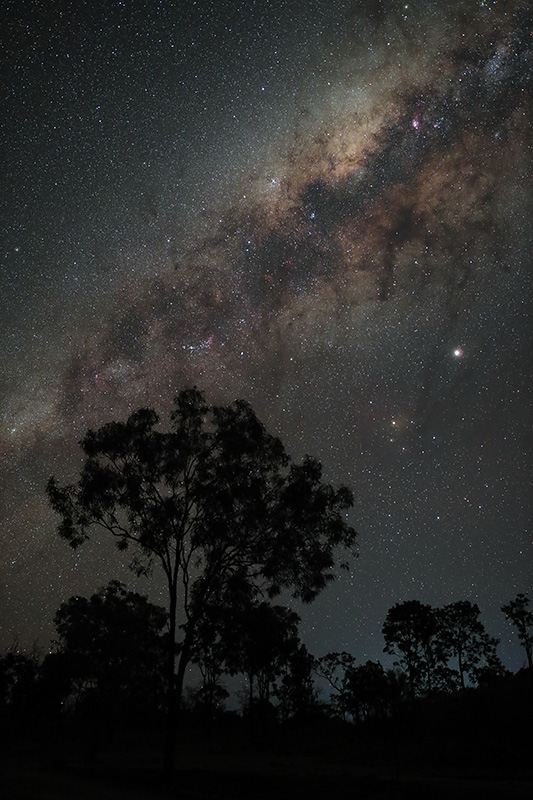
EOS Ra Sample Image

Leica SL2 vs Leica SL – Sample Photos, Comparison Chart, Specs & More

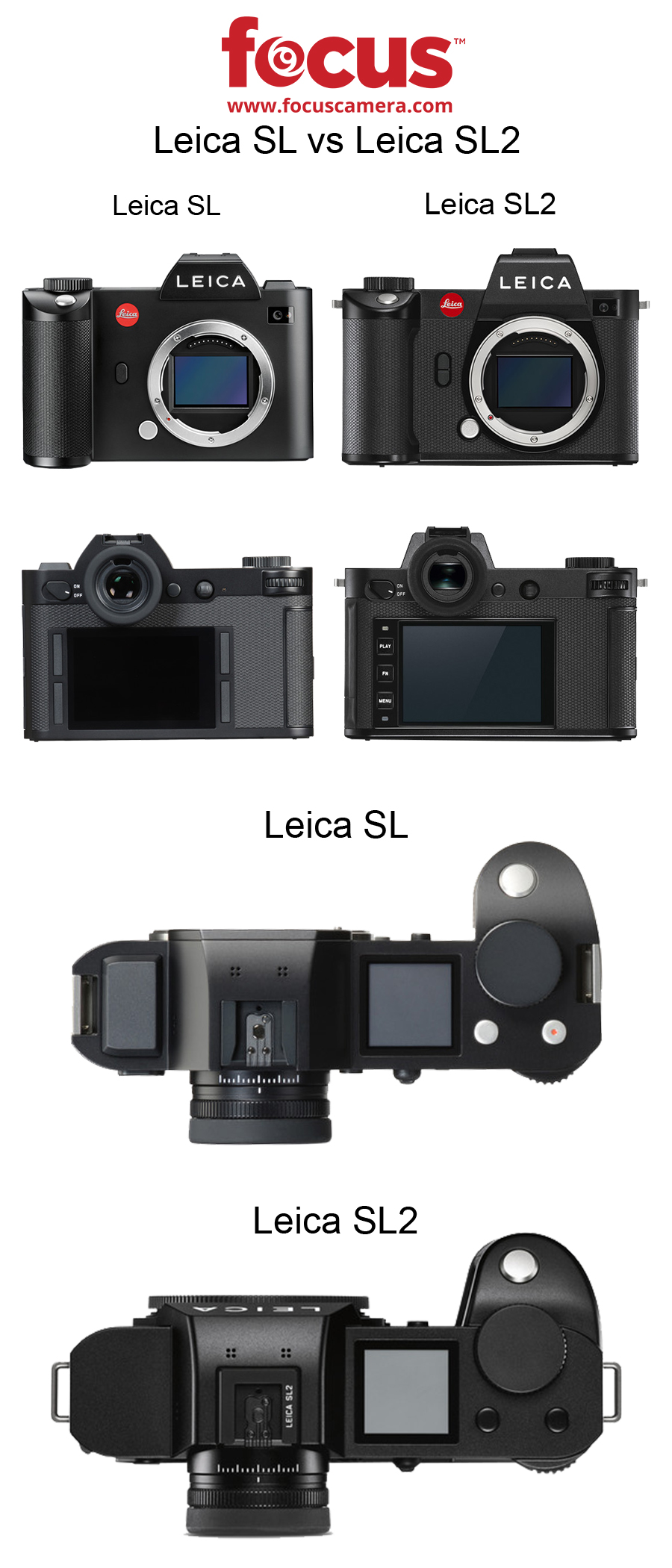
It’s been four long years since Leica released the popular Leica SL in November 2015. Today, the company announced the release of the next generation: the Leica SL2. From our initial glance at the specs, it doesn’t look like fans of the original model will be disappointed. Take a look at the Leica SL2 vs Leica SL and decide for yourself!

Leica SL2 Specs & Features

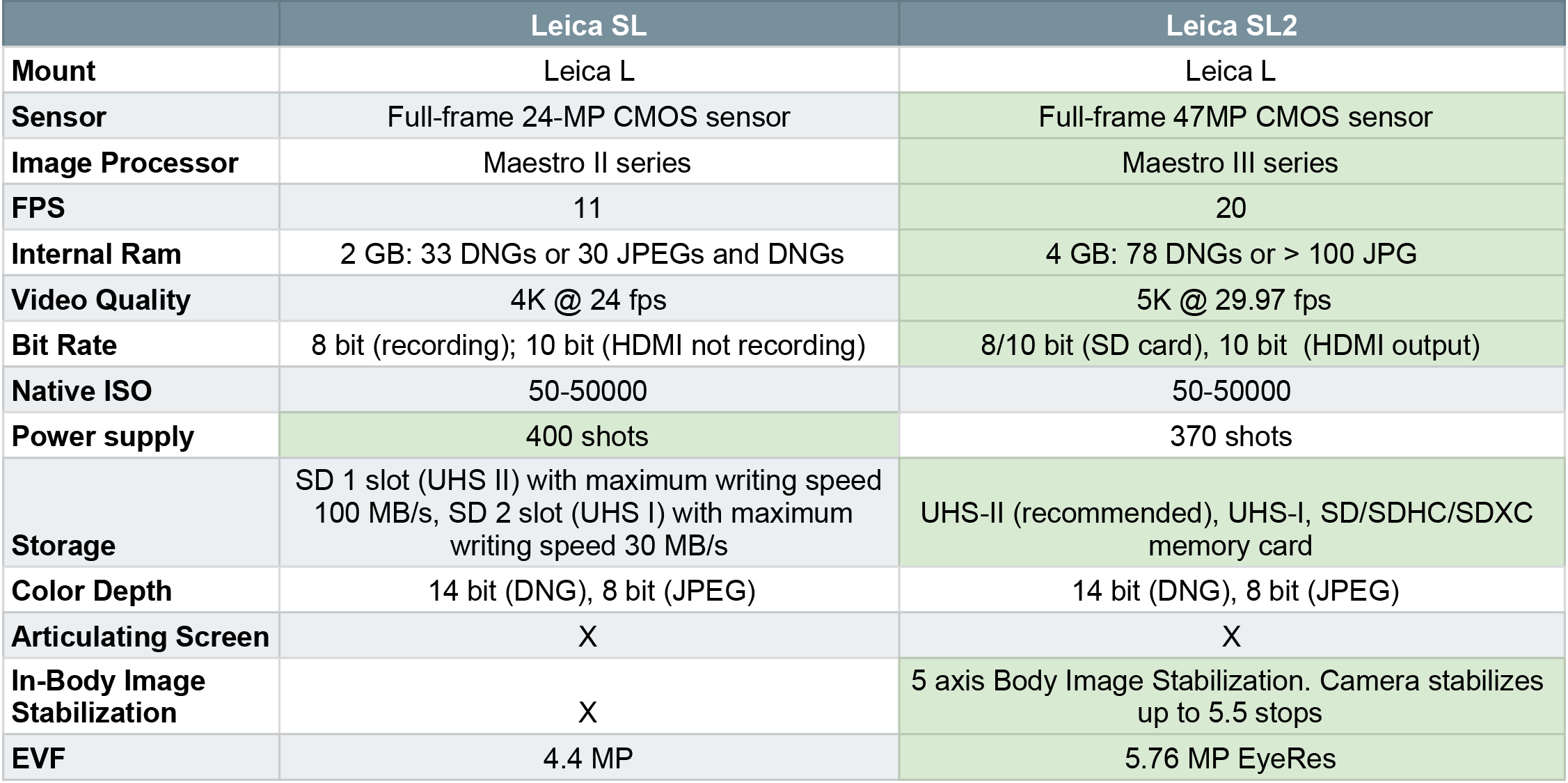
The Leica SL2’s most obvious and important updates come in the form of its sensor quality, image processor, in-body image stabilization, and video capabilities. All-in-all, it holds its own in the wave of full-frame mirrorless cameras that have hit the market this fall including the newly announced Canon Ra.

Leica SL2 vs SL

Leica SL2 vs Leica SL Chart

The highlights are as follows:
  • 47MP full-frame CMOS sensor
  • Maestro III processor
  • Up to 4K/60p and 5K/30p (cropped) video
  • Up to 20 fps and 10 fps still-capture speed
  • Upgraded 5.76 MP EyeRes EVF
  • 3.2-inch 2.1M-dot resolution rear LCD
  • Dual UHS-II SDXC card slots
  • Built-in body image stabilization for steady shots
  • ISO range 50 – 50,000 / 14-stop dynamic range
  • HDMI output for full 10-bit 4:2:2 recording

Pricing & Availability

The Leica SL2 will go on sale for the tune $5,995.00 (Leica is always consistent with its quality and pricing). It’s slated officially go on sale 11/21/19 just in time for the start of holiday shopping.

Materials

It shouldn’t come as a surprise that this new Leica offering is sleek, sturdy, and classic. It’s constructed with a full-metal housing made of aluminum and magnesium. It’s also splash-water protected with an IP54 rating, making it significantly more durable than its predecessor. That said, if you’re investing in a new Leica for almost $6k we don’t recommend taking it out in a hurricane.

We’re going to learn a lot more about the Leica SL2 in the coming days so keep an eye out for updates!

Novation Launchpad Mini MK2 vs MK3

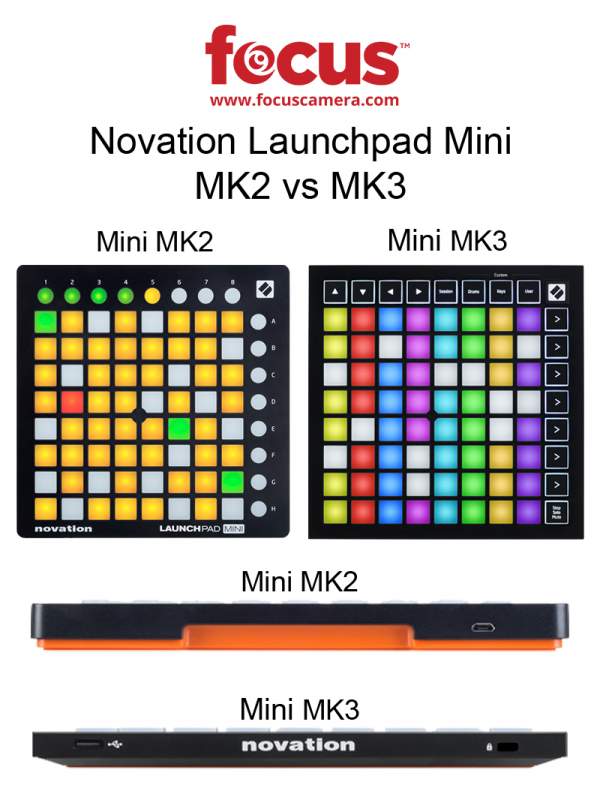
One of Focus’s favorite MIDI brands just released an updated mini model: the Novation Launchpad Mini MK3 (currently on pre-order). We are so excited to see all of the updates to this board including some major UI changes, streamlined usability, and improved portability. In this post, we do a deep-dive comparison between the Launchpad Mini MK2 vs MK3.

Click here if you’re also interested in comparing the Mini MK3 with the Pro and MK2.

Key Differences | Launchpad Mini MK2 vs MK3

What is a MIDI controller?

MIDI boards are a relatively niche item. So, when we talk about them, we like to review the basics and make sure newbies are on the same page as the pros. With that in mind, a MIDI controller is a standard piece of hardware often found in the electronic music scene. When “played” it triggers sounds assigned to the device’s individual touchpads by the user.  

In essence, a MIDI a large remote control; it is useless without the device it interacts with. It’s akin to having a TV remote and no television. To make music, a MIDI controller must be connected to your computer and synced with your choice of music editing software.

You can also record your own music and assign it to MIDI pads but that’s a completely different conversation.

Look & Feel

A Colorful Upgrade

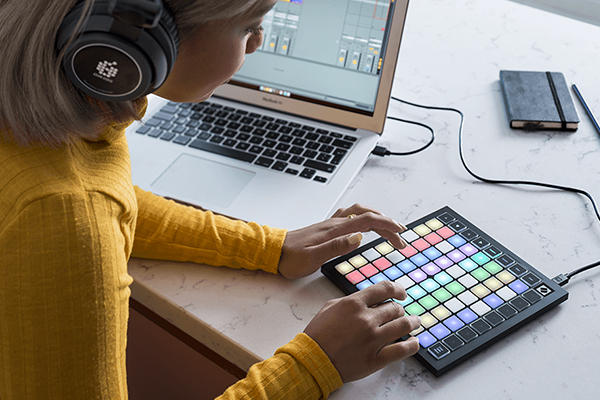
At first glance, the most obvious update to this model is the button shape—they’re now square instead of round. However, the more important visual change is that this is the first Launchpad Mini to feature color-matching feedback! 

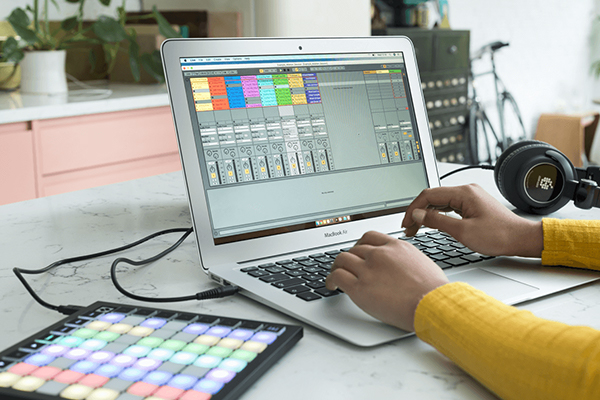
Color-matching refers to the coordination of colors between your board and Ableton Live. In previous models, there were limited tones available on Launchpad Minis. Thus, it was harder to intuitively choose sounds on your board. 

For example, a beat might be blue on your desktop but appear yellow on the MK2. Now, you have one-to-one color matching so there’s greater consistency between the device and Ableton Live. That means less hesitation, a better workflow, and less time spent messing around on your computer.

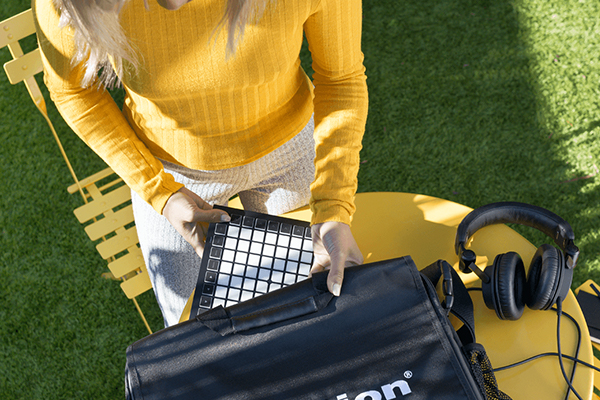
Launchpad Mini MK2 vs MK3 Lifestyle

Size & Weight

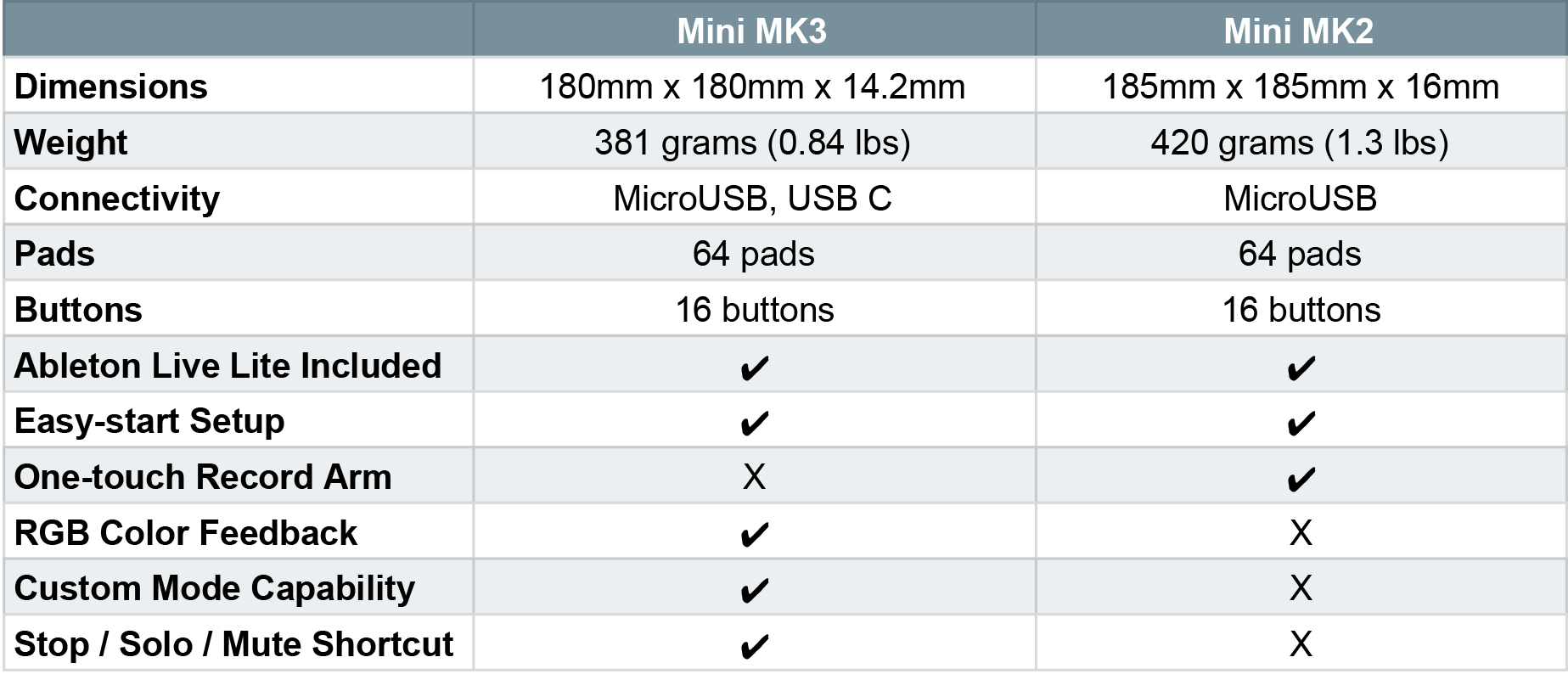
Next on the list of superlatives are size and weight. On the surface, the MK3 looks objectively sleeker than the MK2. In fact, the Launchpad Mini MK3 is Novation’s smallest and most portable 64 RGB MIDI grid controller. It’s 180mm x 180mm x 14.2mm and weighs 381 grams (0.84 lbs). Alternatively, the MK2 is 185mm x 185mm x 16mm and tips the scales at 420 grams (1.3 lbs). 

While this might not seem like a lot on paper, those spare millimeters go a long way when you’re hauling around recording gear.

Launchpad Mini MK2 vs MK3 in-use image

Functionality

Custom Modes

Novation included three new custom mode buttons: “Drums”, “Keys”, and “User”. Tapping these buttons allows you to record sounds either alone or over an in-progress session. 

As previously mentioned, all three of them are modular and customizable. However, both the “Drums” and “Keys” buttons are pre-formatted to accommodate drum and piano sound libraries. On the other hand, “User” comes completely blank. You can fill it in with your own mappings using the handy Novation component software or website.

Launchpad Mini MK2 vs MK3 Ableton Live

Stop, Solo, and Mute

There is a new button on the bottom right of the MK3 labeled “Stop Solo Mute.” You might already be familiar with this feature if you’ve used the Launchkey Mini MK3

Novation honestly couldn’t have made the button’s purpose clearer, but we’ll give it a try.

“Stop Solo Mute” lets you simultaneously make changes to your Ableton Live performance while keeping an eye on your session. Simply tap the button to switch through the three distinct modes that stop, isolate, and mute channels at your discretion. This on-board streamlining is incredibly advantageous for quick changes during a live set or recording.

To avoid confusion, the bottom row changes colors as you move through the different modes. Here’s the basic breakdown but we suggest you watch the video below as well:

  • Stop (red): stop clips
  • Solo (blue): isolate a single channel
  • Mute (yellow): mute and unmute clips

This concludes our comparison of the Launchpad Mini MK2 vs MK3. We would love to know what you think in the comments below. Are you upgrading to the MK3 or sticking with the MK2?

PHOTOPLUS 2019 New Product Roundup | Westcott, Sigma, Nikon

photoplus 2019

It’s the most wonderful time of the year! PHOTOPLUS 2019 has officially begun. This NYC-based photography trade show is North America’s largest imaging event. It’s essentially a playground for anyone interested in photography and cinematography. We explored the show and created a roundup of a few of our favorite new products from PHOTOPLUS 2019.

Sigma


View this post on Instagram


A post shared by Focus Camera (@focuscamera) on

Sigma recently announced the smallest, most affordable full-frame camera on the market: the Sigma FP.

Arguably the most exciting thing about the fp is its potential—it’s a real-life transformer. The camera’s modular design allows users to make the body into whatever they need it to be. With a few quick additions, it changes from a palm-sized, full-frame camera to a cine-ready beast (see the video for a demo).

The Sigma fp costs $1,899 and is currently available for preorder (you can get yours here). According to Sigma, the camera will begin shipping at the end of October so you won’t have to wait much longer to bag your own!

Check out our post about the fp here for more information about the body, compatible lenses, and additional video content.

Westcott


View this post on Instagram


A post shared by Focus Camera (@focuscamera) on

The Westcott FJ400 strobe is one of the most lauded new lighting products of 2019 and with good reason. This is the first 100% portable 400Ws AC/DC strobe that boasts a recycle time of less than 1 second. The strobe in conjunction with the FJ-X2m wireless trigger means that this unit can quickly pair with almost any camera.

We chatted with Brandon, Westcott’s chief sales and marketing officer, who ran us through the key features, user interface, and outlined the strobe’s compatibility capabilities.

Nikon


View this post on Instagram


A post shared by Focus Camera (@focuscamera) on

We were incredibly excited when we first heard about the Nikon Noct lens. Its specs are incredible; it’s a 58mm with an aperture range of f/0.95 to f/16. It also boasts 17 lens elements in 10 groups. All told, this 4-pound monster is ideal for night and astrophotography (insert cheesy joke here about how this lens is out of this world).

However, all of this excellence comes with a hefty price tag of $7,996.95. That said, how much is too much for perfect bokeh really?

Keep an eye out for more PHOTOPLUS 2019 updates next week!

5 Tips for Street Photography – Photographing NYC

street photography 2
Featured photo courtesy of Daniel Arnold – NYC – Street Photography

Street photography is one of the most popular genres, especially for photographers without a ton of gear. If you don’t know how to get started with street photography, then check out our tips below. It’s a lot easier once you get your courage, the right lens, and hit the streets!


View this post on Instagram


A post shared by Paola M. Franqui (@monaris_) on

Overcome Your Fear

Before you do anything else, you’ve gotta get over your fear of capturing strangers on film—especially for introverts! Sometimes, the best way to overcome anxiety is to face it head on, which is why we recommend street portraiture for newbies. Unlike classic street photography, street portraiture requires asking the person directly if it’s okay to take their portrait. Start with people who naturally draw attention to themselves like street performers or fashionistas in eye-grabbing dress. These types often enjoy being seen, so it’s less likely that they will reject your offer.


View this post on Instagram


A post shared by Jamel Shabazz (@jamelshabazz) on

Be Respectful

it’s perfectly legal to photograph subjects for fine art or editorial if you’re in a public space in the United States. However, you need a signed model release form if you intend to use them as stock images. That said, please be respectful. Photographing someone in an embarrassing or vulnerable position might be legal, but it’s certainly less than ethical. Use common sense here. The last thing you want is to provoke someone into an altercation, especially as a beginner. If a situation seems dangerous, then it probably is. Best to let it go.


View this post on Instagram


A post shared by Paola M. Franqui (@monaris_) on

Find Your Patience

Studio photography is often predictable, but street photography is all about the spontaneous shot. Know how to wait for it. Some photographers like to frame their shot, and then pause for a subject to walk into it. Others hold their finger on the trigger. If you find an interesting background, it’s a good idea to hang around with your camera ready. Don’t miss a potentially great shot just because there isn’t a subject right away! A good technique if you’re not sure when to shoot is to place your subject a third from the middle of the top and/or sides. This is called the rule of thirds. Try to avoid snapping the shot when your subject is dead set in the middle. It’s not very visually interesting!


View this post on Instagram


A post shared by Paola M. Franqui (@monaris_) on

Shoot with a 35mm or 50mm Lens

We recommend using one of two lenses for street photography: 35mm and a 50mm prime lens (also known as a nifty fifty). If you don’t have either of these lenses, then at least stick to primes. Zoom lenses might seem more versatile. However, the street moves so quickly that all the added flexibility flies out the window with only a second or two to focus.

Consider the Captions

Plenty of street photographers, and most famously HONY, caption their street photographs when they post them on social media sites like Instagram. Captions expand the world of the street image and address viewer curiosity. If you didn’t talk to the subject directly, and therefore don’t know their story, explain something of the photograph in terms of what else happened around it. To gain attention with lots of hashtags, use a row of periods beneath your caption as not to smack readers with a block of text.

Street photography is half patience, half guts. So get your prime lens and mirrorless or DSLR and take to the streets. Just remember to be respectful of people’s boundaries. If you want to know more about them, just ask! It’ll be great for your captions.

10 Best Third Party Portrait Lenses (From Least to Most Expensive)

Every photographer’s bag needs a good portrait lens. However, if you have budget restrictions or very specific specification needs, buying a lens directly from your camera’s manufacturer is often out of the question. In this roundup, we go over the best third party portrait lenses for every price range.

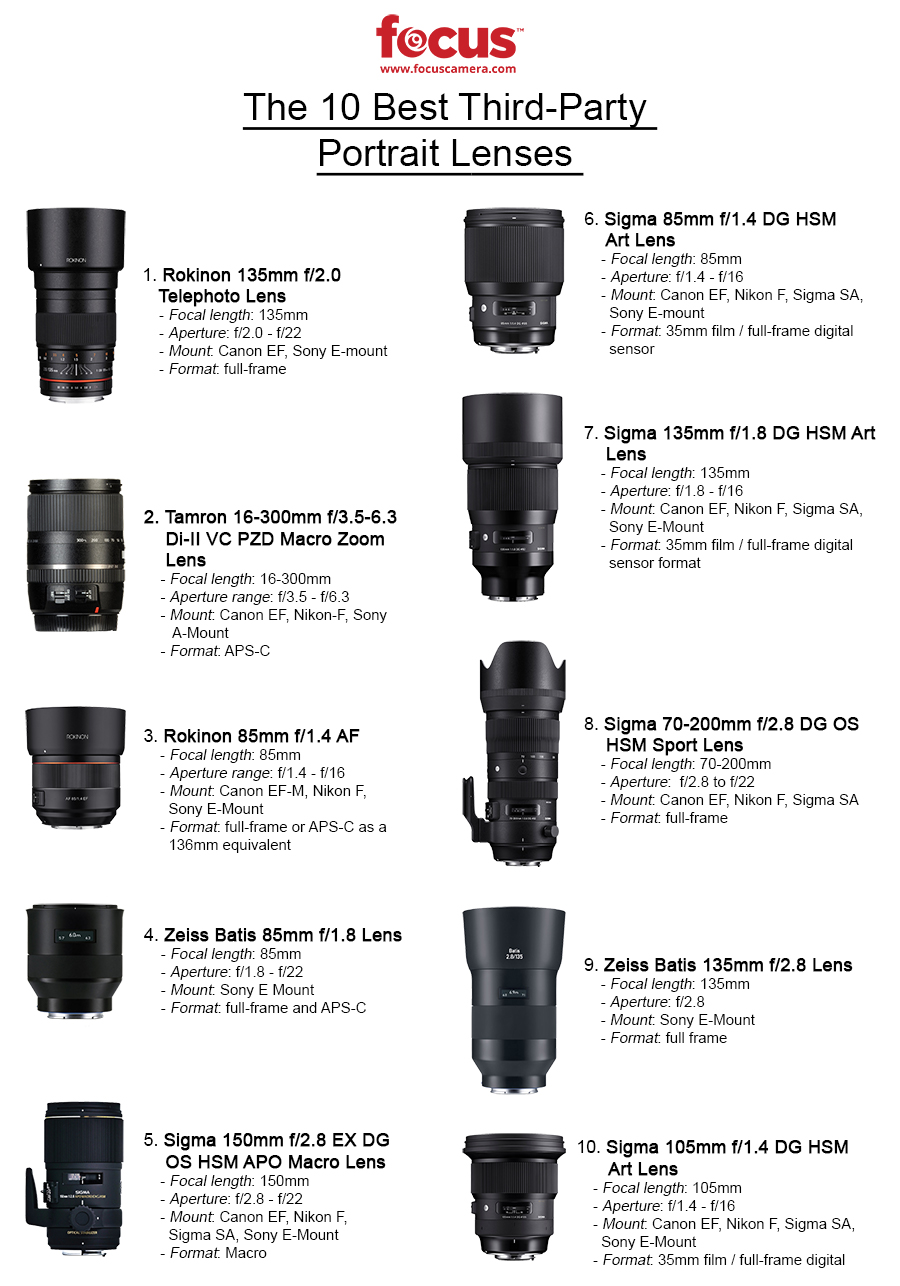
3rd Party Lenses Comparison Chart

1. Rokinon 135mm f/2.0 Telephoto Lens

  • Price: $499.00
  • Focal length: 135mm
  • Aperture: f/2.0 – f/22
  • Mount: Canon EF, Sony E-mount
  • Format: full-frame

2. Tamron 16-300mm f/3.5-6.3 Di-II VC PZD Macro Zoom Lens

  • Price: $629.00
  • Focal length: 16-300mm
  • Aperture: f/3.5 – f/6.3
  • Mount: Canon EF, Nikon-F, Sony A-Mount
  • Format: APS-C

3. Rokinon 85mm f/1.4 AF

  • Price: $699.00
  • Focal length: 85mm
  • Aperture: f/1.4 – f/16
  • Mount: Canon EF-M, Nikon F, Sony E-Mount
  • Format: full-frame or APS-C as a 136mm equivalent

4. Zeiss Batis 85mm f/1.8 Lens

  • Price: $898.00
  • Focal length: 85mm
  • Aperture range: f/1.8 – f/22
  • Mount: Sony E Mount
  • Format: full-frame and APS-C 

5. Sigma 150mm f/2.8 EX DG OS HSM APO Macro Lens

  • Price: $1,099.00
  • Focal length: 150mm
  • Aperture: f/2.8 – f/22
  • Mount: Canon EF, Nikon F, Sigma SA, Sony E-Mount
  • Format: Macro

6. Sigma 85mm f/1.4 DG HSM Art Lens

  • Price: $1,199.00
  • Focal length: 85mm
  • Aperture: f/1.4 – f/16
  • Mount: Canon EF, Nikon F, Sigma SA, Sony E-mount
  • Format: 35mm film / full-frame digital sensor format

7. Sigma 135mm f/1.8 DG HSM Art Lens

  • Price: $1,399.00
  • Focal length: 135mm
  • Aperture: f/1.8 – f/16
  • Mount: Canon EF, Nikon F, Sigma SA, Sony E-Mount
  • Format: 35mm film / full-frame digital sensor format

8. Sigma 70-200mm f/2.8 DG OS HSM Sport Lens

  • Price: $1,259.00
  • Focal length: 70-200mm
  • Aperture:  f/2.8 to f/22
  • Mount: Canon EF, Nikon F, Sigma SA
  • Format: full-frame

See our full video review for this lens here.

9. Zeiss Batis 135mm f/2.8 Lens

  • Price: $1,529.00
  • Focal length: 135mm
  • Aperture: f/2.8
  • Mount: Sony E-Mount
  • Format: full frame

10. Sigma 105mm f/1.4 DG HSM Art Lens

  • Price: $1,599.00
  • Focal length: 105mm
  • Aperture: f/1.4 – f/16
  • Mount: Canon EF, Nikon F, Sigma SA, Sony E-Mount
  • Format: 35mm film / full-frame digital sensor format

That concludes our list of the BEST third party portrait lenses. If you have any more suggestions (or think we’re crazy) feel free to leave a comment below.

Sigma fp Camera Price, Photos & Release Info

Sigma recently announced the Sigma fp: a gorgeous, lightweight, full-frame mirrorless camera. In this post, we go into the price and release specifics, points of differentiation, and a few other feature highlights.

Sigma fp Camera Spec & Price Info

Spec Overview

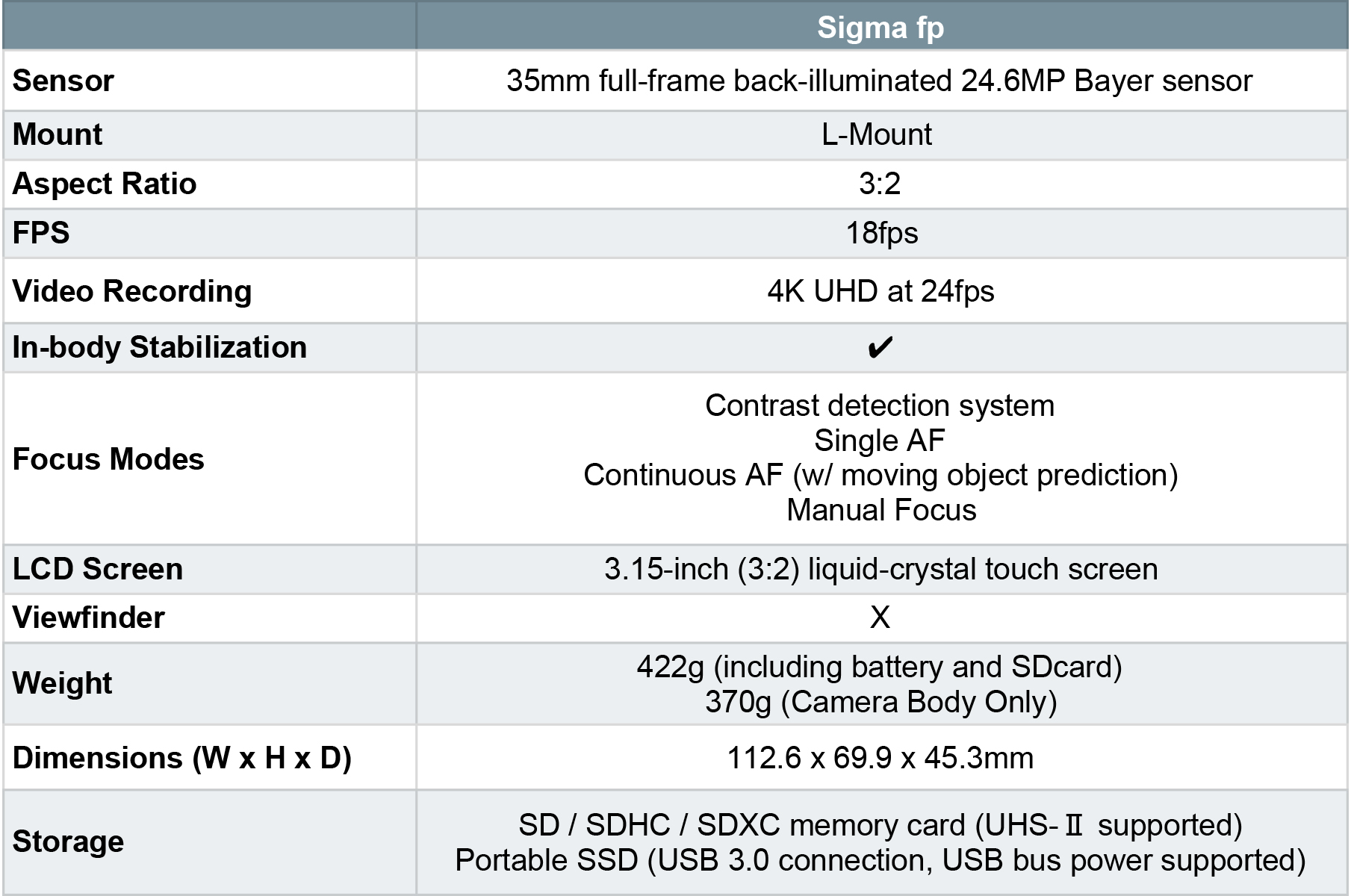
Sigma fp Specs

The fp’s claim to fame is that it’s the smallest, most lightweight full-frame camera on the market. Its intuitive UI and small, 422g body make it incredibly easy to use. The hardest thing about owning one is perhaps choosing how you want to outfit the body.

Think of the Sigma FP as the base of a very expensive lego set—its modular body can be built into whatever you want it to be. All you need is the vision and the cash flow.

We chatted with a Sigma rep at PHOTOPLUS who gave us a real-time demonstration:


View this post on Instagram


A post shared by Focus Camera (@focuscamera) on

Price

The Sigma fp costs a surprisingly affordable $1,899 (you can get yours here). 

Don’t get us wrong, spending almost $2k on a camera is a commitment. But, that price is a bargain when you consider that the other new cameras in this class fall between the $2,500-$7,000 mark.

We aren’t living in the world of full-frame smartphones just yet. That said, this could help with the long-term democratization of full-frame devices. 

Size

The Sigma fp is the world’s smallest and lightest full-frame camera. It weighs in at a mere 422g (.93lbs) including the battery and SDcard. As for physical size, the camera is 112.6 x 69.9 x 45.3mm (4.43 x 2.75 x 1.78in). This is all the more impressive when you consider that the fp is also optimized for video. It supports full-fledged filmmaking, RAW video recording, and All-I (All-Intra) recording.

Lens Availability

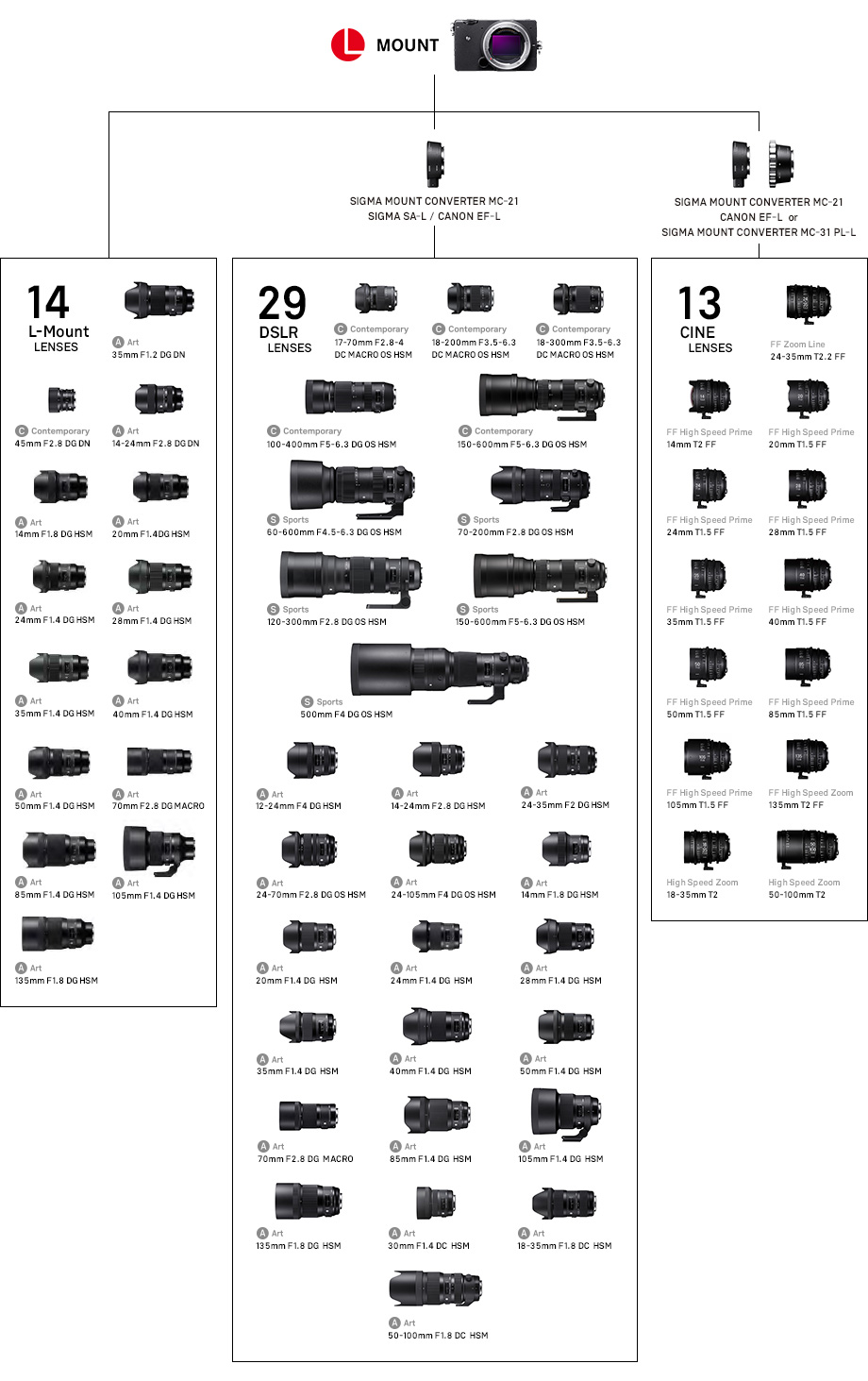
Buying into the Sigma family comes with a host of perks. Perhaps the most tempting bonus is the host of potential lenses you now have at your disposal. The Sigma fp is an interchangeable-lens camera with an L-Mount. It’s also compatible with Sigma’s mount converters, opening up your options to a whopping 56 lenses (including 13 cine).

Here’s a (beautiful) chart outlining your options:

sigma fp lens family tree
Courtesy of Sigma

Sony a9 II vs Sony a9 – Worth The Upgrade? (Photo/Spec Comparison)

Sony has officially announced the new Sony a9 II. This is a follow up to the original (and incredibly popular) Sony a9 released in 2017. After two long years, the company finally created a follow-up they believe is worthy of the a9 title. So, how did they do?

The tough part about upgrading the a9 is that it’s already more or less a perfect full-frame camera in terms of quality and performance. In fact, a lot of the a9 and a9 II specs are quite similar. However, the new camera does have notable upgrades to its overall speed, image transfer rates, user interface, and durability.

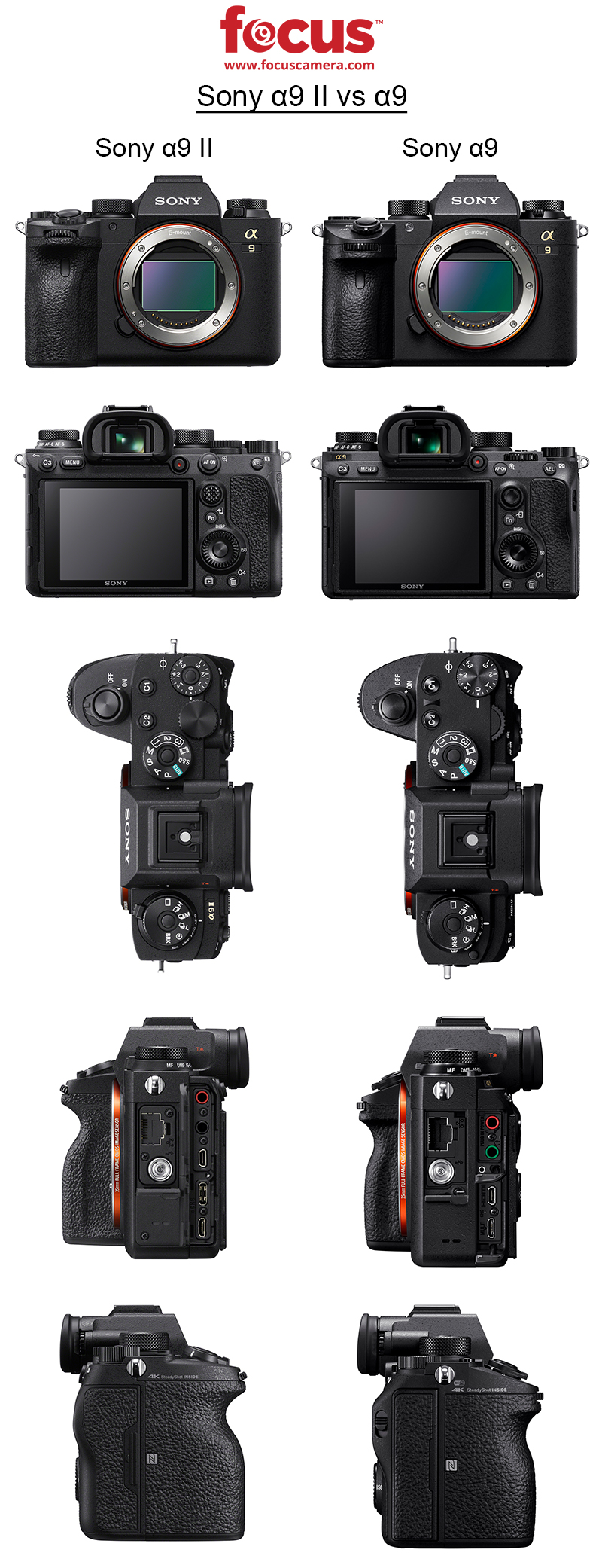
Sony a9 II vs a9 Photo

When can I buy the Sony a9 II?

The new Alpha 9 II is available now for pre-order and ships in November 2019. It costs a cool $4,498.00.

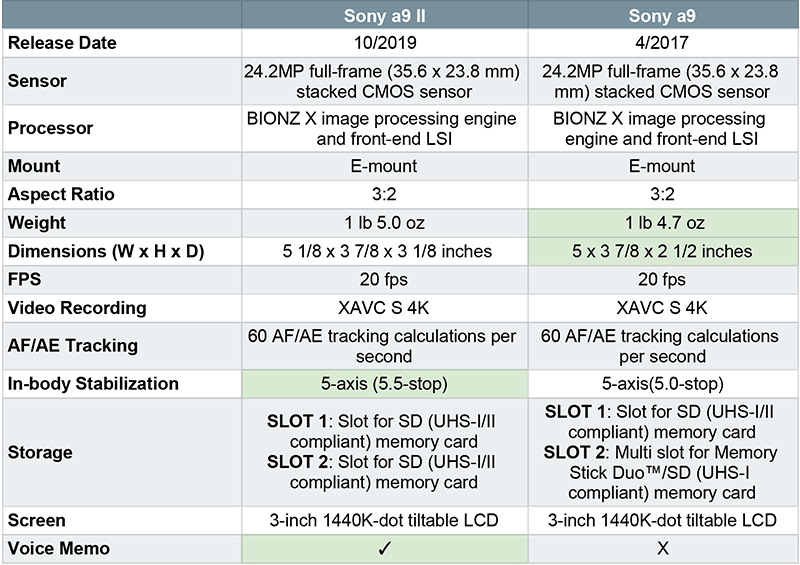
Spec Comparison Chart | Sony a9 II vs Sony a9

Again, the basic specs for these cameras are so similar it almost seems silly to put together a comparison chart. Nevertheless, here are the basics:

Product Comparison Charts - Sony a9 vs a9 II

Who is this camera for? | All Upgrades

The updates to the Sony a9 II make it primarily targeted at professional news and sports photographers. The upgrades are totally worth the investment if speed (both in shooting and exporting) are the most vital parts of your job or hobby. 

Rather than keep us guessing, Sony very kindly provided a bulleted list of all the improvements to the Sony a9 II. They are as follows:

  • Upgraded BIONZ X™ image processing engine gains maximum benefit from the sensor’s fast readout speed; processor works with front-end LSI to enhance speed in AF/AE detection, image processing, face detection and accuracy, and more
  • Upgraded dust and moisture resistant design to meet the needs of professionals in even the most challenging outdoor conditions; stronger sealing provided at all body seams as well as the battery compartment cover and media slot
  • Latest developed image-processing algorithm reduces noise in the medium-to-high sensitivity range while improving subjective resolution and image quality
  • 5-axis optical in-body image stabilization system that provides a shutter speed advantage of 5.5 steps
  • Improved grip configuration for even greater comfort and sure hold; compatible with Sony VG-C4EM Vertical Grip
  • Improved button design and feel; increased diameter and feedback of the ‘AF-ON’ button; a refined multi-selector joystick design; an exposure compensation dial lock button; and a redesigned shape and new position for the rear dial
  • Redesigned shutter mechanism to suppress even the slightest movement that can cause image blur; tested for durability in excess of 500,000 shutter cycles
  • USB Type-C™ connector that supports fast USB 3.2 Gen 1 data transfer
  • Dual media slots that are both compatible with UHS-I and UHS-II SD cards, allowing higher overall capacity and faster read/write speeds
  • Digital audio interface has been added to the camera’s Multi Interface Shoe™ (MI Shoe), enabling the new ECM-B1M Shotgun Microphone or XLR-K3M XLR Adaptor Kit to be connected directly to the MI Shoe for cleaner, clearer audio recordings

Increased Speed

The key theme we keep seeing in Sony’s collateral, press materials, and early reviews is speed. The updated model is designed to facilitate the lightning-fast pace of a news agency’s workflow.

Shooting Speed & Quality

According to the release Sony put out this morning, “the new Alpha 9 II shares the same acclaimed 35mm full-frame stacked 24.2 MP Exmor RS™ CMOS image sensor with integral memory as the original Alpha 9, giving it the same unmatched speed performance and outstanding image quality.

The new model can shoot continuously and completely silently at 20 fps for up to 361 JPEG images or 239 compressed RAW images, with no viewfinder blackout allowing the photographer to follow the subject and action with no interruption to the EVF during picture taking. For times when mechanical shutter is preferred or required, the new Alpha 9 II has been improved to shoot at up to 10 fps, about 2x the speed of the Alpha 9.”

Transfer Rates

Ah, transfer rates. This particular set of specs always seems to get left behind in a world where people primarily focus on user interface and overall image/video quality. However, the Sony a9 II actually makes this topic notable (which is impressive in and of itself).

Per the release, “the Alpha 9 II includes a built-in 1000BASE-T Ethernet terminal, enabling gigabit communication for high-speed, stable data transfer operations. Additionally, File Transfer over SSL or TLS encryption (FTPS) is supported for increased data security and PC remote (tether) shooting performance is improved, with decreased release time lag and reduced live view screen delay when using the ‘Remote Camera Tool’ desktop application.

The speed of the camera’s built-in wireless LAN functionality has also been increased, adding a stable and fast 5 GHz (IEEE 802.11ac) band, in addition to the 2.4 GHz provided in the Alpha 9. IEEE 802.11a/b/g/n/ac standards are all supported.”

Translation: transfer speeds are decidedly faster than they were before. This is especially important for people who shoot breaking news, sports coverage, and those of us who suffer from chronic impatience. 

Are you planning to pre-order? Let us know in the comments and keep an eye out for updates, more images, and a full comparison chart.