Home Blog Page 47

Interview: Jaime Johnson and the Southern Gothic

"Bone Dress" by Jaime Johnson

In Manhattan, in a little gallery in SOHO, is a small piece of Southern swamp. The hardwood floors of the gallery creak under your feet like an old house. The walls are an unassuming slate grey and are lined perfectly with black and white photos. All the prints are immaculate; the framing and placement are exact. However, the last series in the back stands out against its boxed counterparts: a series called “Untamed” by Mississippi artist, Jaime Johnson.

The photos are unframed, fastened delicately to the walls with small magnets. The paper – a Japanese rice paper called Kitakata – is thin, crinkled, and cloth-like. The ceiling fans of the gallery spin, circulating the air behind the photos. They move up and down against the wall, almost like they are breathing. The photos hang on the walls like animal skins and the images on the paper are even more feral.

Johnson’s series was a winner of Soho Photo Gallery’s annual International Portfolio Competition. Her work is Southern Gothic, a popular genre of literature and art that portrays the grotesque, the macabre, and the supernatural. The genre stemmed from Gothic literature, such as Frankenstein and the works of Edgar Allen Poe. However Southern Gothic is very specific on its location: the American South. The work often features a post-bellum South, focusing on the effects of slavery, the decline of the plantation, and the decay of the region after the Civil War. Popular Southern Gothic photographers include Walker Evans, Clarence John Laughlin, Sally Mann, and William Eggleston. Their works are usually monochromatic and focus on dilapidated areas, cemeteries, small towns, the Southern landscape, and, most often, the people of the South.

Nowadays, the Southern Gothic genre is still around in literature, film, and photography. Jaime Johnson’s work is one of the newest in the genre (even though she did not plan it that way). Her artistic statement says that the series “articulates humankind’s capacity to decay as a marker of our identity. Set in the swamps and woods of Mississippi, a natural place where one encounters life and death, growth and decay, the series chronicles the intimate relationship of a feral woman and her surrounding nonhuman environment.”

As a Virginian, I have a fascination with the genre and was very taken by Johnson’s photos. I spoke with her about the series and we discussed growing up in the South, her work and process, and the Southern Gothic genre.

“Rest” by Jaime Johnson

Table of Contents

Kaylin Kaupish: So, the first obvious question: Where did you grow up?

Jaime Johnson: I’m from Mississippi, from a town called Poplarville. It’s considered the Pine Belt region of Mississippi, so there are a lot of pine trees in that area. Very woodsy. That’s something you’ll notice in a lot of my images: more wooded areas.

So, for a sense of place… Well, you know all about the Southern Gothic. I didn’t intentionally set out to make work about that, but I think it’s inevitable. There are swamp lands, a lot of dilapidated areas, and the environment, like heat and humidity. Of course, I don’t know if that comes across in the images.

KK: I think that the heat and humidity are huge parts of the South that don’t come across with a lot of the Southern Gothic genre. When people think of the environment of the South, they might usually focus on the aspects that you can see, but what you feel is an aspect that should be talked about more. So, going off that, what are your thoughts on the South? The environment, the people, the culture… I know it’s a big topic to discuss.

JJ: I had a rewarding experience. I grew up in the woods, in a rural area. When I was making this body of work, I was thinking about my upbringing, roaming the outdoors. I have a romanticized view of the South. There are a lot of small towns with poor and dilapidated areas that I know are a part of the literary genre. But it did change my perspective when I would go to other places. Being from Mississippi, I realize there are not a lot of opportunities down here. But for me, it was this magical experience growing up here.

KK: I also have a similar view of the South. I’m currently living in Brooklyn, so I’m far away from my home, Virginia. Especially now, looking back on it, it is romanticized in my eye. I remember the woods and running around and being carefree. It still has that magical quality to me. Probably because I associate it with my childhood, but also because I was surrounded by nature. But let’s go specifically to your series now. What was your inspiration for this series? Where did you get the idea to go out to the swamps with your camera?

JJ: It started in graduate school, at Louisiana Tech University. I was thinking about how I grew up carefree, roaming the outdoors… but now I’m going to be inside all day at a 9-5 job. So, I was trying to reconnect with my childhood. I decided to go outside and see what happens.

There was one occasion when I saw a deer skeleton, completely clean – the ribs, the spine, and the skull – splayed out. I collected those in a box and I think that’s where this series really started. I collected things, thinking about how I could photograph them. Some of it was literally a process of discovery. I would keep these things around me in my studio. It could be anything: a branch or a nest. I would surround myself with them. One of the photographs in the show is with that deer spine I found; I was working intuitively for that. They [the photos] are all, in a way, self-portraits.

“Spine” by Jaime Johnson
KK: It’s interesting how you collected things and brought nature to your studio to get inspiration. Going back to childhood, it’s almost like being a kid and bringing back leaves or stones you found in the woods. And the one of the deer spine is one of my favorite photos that you did. I didn’t realize that was a self-portrait, so that adds to it.

JJ: Yeah, and before this series, I hadn’t done any self-portraits. It was practical because I only had myself when I was out in the early morning or late afternoon. I wasn’t thinking of them being about me, but I was trying to compare a human to an animal.

I started writing and reading, trying to figure out what this work was about. The first thing I responded to is Thoreau and his work Walden, where he “went to the woods” to “live deliberately.”

Years ago, I read this book called “Women Who Run with the Wolves” and it had some stories of the wild woman archetype. A friend said the work I was making reminded her of the La Loba – which translates to “the wolf woman.” This woman collects bones and once she collects the entire skeleton, she sings over it and brings it back to life. I was struck by that because that is sort of what I’m trying to do. I remember thinking I would embrace this and start thinking about this female character as the “feral woman.” Then all the photographs that emerged were ones that I planned and I started thinking about how I would show her.

“She Rests in Camellias” by Jaime Johnson
KK: Going off that, I wanted to turn the conversation to the Southern Gothic genre. I remember that first time I was introduced to this grotesque, black and white aesthetic as a genre, was the HBO show “True Detective.” It’s often described as Southern Gothic. It’s a crime series, but it focuses specifically on the setting (Louisiana). Do you have a specific moment when you realized that this was a genre, or a moment that you were first exposed to it?

JJ: I have learned about it in literature, mainly with William Faulkner. After I finished grad school, I started teaching in Oxford, Mississippi, which has a huge literary community. Faulkner’s home is there and I knew he was the epitome of the Southern Gothic, with his characters and grotesque themes and sense of death. But for photography, that is something I stumbled into. There are photographers I love, such as Sally Mann, who’s work would be described as Southern Gothic.

I remember my series was being shown at Ole Miss and they asked me if I could frame my work as Southern Gothic. I did some research and realized my work was Southern Gothic, even if I had never thought of it that way.

KK: It’s fascinating how many artists probably weren’t even looking to be a part of a genre and were just doing art based off what they saw, what they felt, or growing up in that environment. But how all those people have a lot in common in terms their thoughts on death, the grotesque, and even the supernatural aspect of it. All these artists are doing their own work, but fell on similar themes and created a genre. But did that bother you when they labeled your work?

JJ: I embrace these things. I do think about whether classifying something as “southern art” is limiting it. But for me, I liked it because it created an elevator speech for me. People ask what kind of photography I do and I struggle to explain it to them.

“Cicada Calling” by Jaime Johnson
KK: Going back to your photos, do you originally shoot them in black and white?

JJ: No, I actually shoot them in color. They are so different looking. For example, when I show people the deer spine photo in color, they say it looks “fashionable.” Something about the colors was distracting and took away from the image. I was experimenting with the cyanotype process, which is inexpensive, because I wanted to see it in a monochromatic color-scheme. I was also testing out papers and tried this thin Japanese rice paper. When I switched the processes, it helped focus more on the image and bring out the texture. The cyanotype process is the easiest and one of the first you typically learn. Most people don’t continue their work in it. But after using the rice paper and tea-staining it, it gave [the photos] this neat look and people don’t even realize they are cyanotype. The process is so basic; you literally just process it in water. It mimics what I’m interested in. It reminded me of Thoreau’s writings on returning to a simplistic way of living.

Jaime Johnson’s series “Untamed” is currently on display in the Soho Photo Gallery in Manhattan (15 White St, New York, NY 10013) until Saturday, June 3, 2017. You can view her full series and other works on her website.

All photographs copyright Jaime Johnson.

What You Need to Watch the Solar Eclipse

If you live on the strip of prime viewing real estate between the Carolinas and Oregon, then you are in for a real treat this summer. On August 21st, a total solar eclipse is coming your way! (Not sure if you’ll see it? NASA made a fancy Google map to show you where to watch.) This is the first solar eclipse visible from the mainland United States since 1979, so go get your lawn chairs.

Of course, as any eclipse fan knows, it’s super important not to look directly into the sun with the naked eye. It’s tempting, but we like your retinas just the way they are, thankyouverymuch. So, we’ve put together a list of special gear that you can use to keep your eyesight intact.

Celestron EclipSmart Solar Shades

When it comes to solar protection, you can’t get any more basic than this. These Celestron shades make you look like you’ve just walked out of an IMAX movie, but they protect against IR and UV light, as well as solar radiation. If all you want from the eclipse is to stare up into the sky at it, then these sunglasses are your best bet for protection.

Celestron EclipSmart Solar Telescope 50

solar eclipse

Say you’re not a telescope person, but you want something easy to use during the eclipse. Take a look at the EclipSmart Solar Telescope. Super affordable, the EclipSmart features ISO-certified, permanently attached solar filters to protect from radiation and harmful light rays. It also comes with a backpack for quick storage and transport.

Meade Coronado SolarMax II 90 Double Stack Solar Telescope

solar eclipseThis Meade telescope is specifically designed for sun viewing. It’s expensive, but if you want the best, then this guy is top dog. You can use it to capture images with PS-C chip size DSLR and CCD cameras, or watch prominences, flares, filaments, and Ellerman bombs before the moon obscures them. Plus, not only is it spectacular for solar imaging, but the Coronado is a gorgeous accessory to make your neighbors jealous of your front porch.

Celestron EclipSmart Solar Binoculars

solar eclipse

Useful for observing solar events like sunspots, these sun-safe binoculars are a great alternative to telescopes. With a generous field of view, they make it easy to see the glittery orb in all it’s sparkly glory. Plus, these binoculars are rugged, durable, and super portable – much better to transport than a big ol’ telescope.

Celestron EclipSmart Observing and Imaging Kit

solar eclipse

Want something portable and easy for everyone in our family? This kit is a great solution. With shades, glasses, and a photo filter, all lenses protect against direct solar observation. Plus, shades and glasses are super simple to distribute among kids, while the innovative filter lets you take still images and videos of the eclipse from your camera or smartphone.

We hope that you’re excited to watch the eclipse, but also terrified enough to protect your retinas. It’s the first time in 99 years that people will be able to witness total darkness like this from coast to coast (but like, not including every single night). So be good to your eyes!

David Attie’s Lost Photographs of Truman Capote in Brooklyn

In 1958, Truman Capote lived in Brooklyn. By choice. “Often a week passes without my “going to town,” or “crossing the bridge,” as neighbors call a trip to Manhattan,” he brags in Holiday magazine. “Mystified friends, suspecting provincial stagnation, inquire, “But what do you DO over there?””

At 33, Capote was young, irreverent – a rising literary star. His novella, Breakfast at Tiffany’s, had been published to great acclaim. When Holiday magazine asked him to write a personal expose about Brooklyn for their February 1959 issue, Capote did so with characteristic relish. He also brought an unlikely companion to illustrate the shifting landscape of Brooklyn Heights: a largely unknown photographer, David Attie.

Attie took 800 photographs, of which Holiday used only four.  And none of Capote himself. Attie packed the remaining negatives away in boxes for almost sixty years, seemingly unimpressed with his own relevance.

“My dad grew up in Brooklyn, and probably didn’t think that a bunch of images of Brooklyn were that remarkable,” says Attie’s son, Eli. “In the 70’s and 80’s, he was trying to focus his career on these almost psychedelic photo montages—which I think are quite beautiful too—and probably thought these kinds of shots were more ordinary by comparison.  I know that a few of these shots were images that he liked and had printed, but mostly it was a job to him, and he moved on.”

Eli stumbled across the images much later. He was looking for pictures that his father had taken of celebrities after a prominent rock photographer told him: “You need more famous people. Gather any pictures your father took of famous people. That’s the only way anyone’s ever gonna care.” Eli hoped to enshrine something of his father’s legacy within the popular canon, so he took the advice. He went to visit his mother in New York, and started digging.

“I found a small manila envelope labeled “Holiday, Capote, A3/58,” he writes in the Afterword of Brooklyn: A Personal Memoir by Truman Capote, With the Lost Photographs of David Attie. “Now, I knew that my father had photographed some notables in his time—including Bobby Fischer and Leonard Bernstein and Lorraine Hansberry—but I had no idea he’d ever been near Truman Capote. And when I had the negatives printed, my jaw hit the floor. These were the coolest pictures of Capote I’d ever seen, framed like shots from a Hitchcock movie.”

Paired with Capote’s original essay, “A House in the Heights,” Little Bookroom eventually published the images. From there, they morphed into an exhibit, “Truman Capote’s Brooklyn: The Lost Photographs of David Attie,” at the Brooklyn Historical Society.

“They capture all that you hear about the post-World War II decline [in Brooklyn],” says Marcia Ely, Vice President, Programs & External Affairs at the Brooklyn Historical Society. “After the boom in the 1950s, with white populations leaving the city and de-industrializing beginning, this was a neighborhood in transition. The photographs capture a moment when artists were moving to Brooklyn Heights because housing stock was inexpensive. Its heyday as an expensive suburb was over, and that’s what Capote captured in his essay.”

Attie followed Capote from his home at 70 Willow Street (Capote rented the basement, but told friends that he owned the entire house) through the shifting streets of Brooklyn Heights, where schoolchildren ran rampant, and bulldozers lay in wait to devour nineteenth century mansions.

“One of the tensions that Attie captures is one of old versus new: developers, development, bulldozers, equipment,” says Ely. “There was a moment when those who lived there didn’t know what could happen. All these gorgeous gems could be brought down with hideous apartment buildings. There was no protection.”

Indeed, Brooklyn Heights didn’t become a historic district until the 1965, when community groups founded the Brooklyn Heights Association.

Still, Attie’s images are joyous and highly peopled, whether by the “shrill Italian children” of Capote’s essay, dock workers, or even W.E.B Du Bois and his wife, Shirley Graham. “How David Attie found his way to take those portraits on those same rolls of negatives is any anybody’s guess,” laughs Marcia Ely. “It’s a little enclave.” From the aging, elegant woman of old world Brooklyn to the artists, writers, and designers of a new, burgeoning arts community, Brooklyn Heights was a world unto itself.

“My dad never saw himself as a street photographer,” says Eli Attie, “but these images show that he ranks with the very best of them, I think.” Attie was more interested in experimental photographs. A student of Alexey Brodovitch at the New School, he pioneered an innovative negative sandwiching technique that landed him his first professional gig: creating whimsical collages for Breakfast at Tiffany’s; a move that effectively launched his career.

“The story goes that Brodovitch was famously cranky,” says Ely, “and that many of his students were afraid of him. David Attie messed up, and was in a panic that these photographs were not going to work well – the negatives were wrong. He threw his arms up in the air, and said I’m going to do something crazy and combine these negatives.” Brodovitch was so impressed that he introduced the student to Capote. Thus, one can suspect that it was Capote himself, rather than the magazine, who invited David Attie on his Brooklyn tour.

“For me, the whole purpose of this project is to give my father a legacy, because he never really had one,” says Eli. “ My dad was an extraordinarily talented photographer for about 25 years, and managed to shoot some incredibly historic things—Bobby Fischer, just months before he won the world chess championship; The Band, at the very peak of their creativity; Ralph Ellison wandering around Harlem—just remarkable stuff.  And yet, because no one lifted a finger to keep his work and his name alive after he died, all of that great art was just sitting in boxes, gathering layers of dust.”

“Truman Capote’s Brooklyn: The Lost Photographs of David Attie” is on display at the Brooklyn Historical Society until Winter 2017.

All photographs taken by David Attie, used with permission from Eli Attie.

How Photographers Grow Their Instagrams

instagram

Love it or hate it, Instagram is a huge boon for professional and hobbyist photographers alike. Many use Instagram as a portfolio, marketing tool, and more. Instagram accounts with large followings can garner industry recognition, and even influencer campaigns from major brands. Of course, growing a large Instagram following takes some doing (and isn’t always the same as being a good photographer!). So, we sat down with four photographer/Instagram buffs to talk about how they curate followings, engage with their communities, and create successful brands.

Produce Solid Content

There’s no way around it; you can’t grow a successful Instagram without great content. “Showcase your best work and remember to bear in mind how your profile comes across to other people,” says photographer Joe Brady of @joebradyphoto. “The best thing you can do is be consistent and upload regularly, daily if possible!”

instagram

It’s basic, but true. With the constant deluge of content on social media, it’s important to build with an eye for quality.”Regarding a growth strategy with respect to my followers, the number one thing you can do is consistently produce fantastic content so that your feed ends up appearing in other people’s Explore and Activity pages,” says Matt Grella, creator of @oneyoungboy. According to Instagram, posts in Explore and Activity are a mix between “hand-picked and automatically sourced accounts based on topics we think you’ll enjoy.” So, if you produce beautiful content, then you’re more likely to get chosen!

Use Instagram for What it Is

An Instagram post is more than just a photograph. Users want a story. In addition to a beautiful image, this often means a great caption with a nod to what’s happening in real time. “Great photography should speak for itself,” says travel and lifestyle photographer Kirsten Alana of @kirstenalana. “But Instagram is an unusual visual social platform in that it is driven by trends which don’t necessarily match up to the larger industry of photography as a whole. If you want to post an image and caption on Instagram that will automatically do really well, you should be paying attention to what’s trending at the moment in the app, not necessarily what is a classically great image.”

grow instagram

Josh Nelson, curator of @bellpayphoneproject, agrees that perfect pictures aren’t as important as the story you create alongside your audience. “Originally, photographers would never have dissolved their work into 1:1 square images, [especially so] exaggeratedly filtered,” he says. “However, now the top photographers in the world use Instagram to reach a larger audience, engage during the editing process and share a living story.” 

Matt Grella has a slightly different take. “A good gram and a good photo are inherently the same thing: the capture of a specific moment you’d like to share with people. Creating intrigue and engaging your audience with a double-take or wave of nostalgia is always the goal no matter what the equipment,” he says. “I do think that the types of images that end up being captured are often quite different given the limitation of mobile photography with respect to lighting and aperture, but that’s slowly starting to change with respect to portrait mode on the iPhone 7+, etc.” Ultimately, it’s important to know your limitations, and also embrace the specifics of Instagram – whether that’s filters, stories, or captions.

Pick a Theme

What is your Instagram – a project, a portfolio? Pick a theme and build in that direction. “I personally use Instagram as a portfolio,” says Brady. “I tend to only upload my absolute favourite images, and avoid selfies or photos of my dinner.” Matt Grella is even more specific. “With @oneyoungboy, I try to focus on capturing the beauty of everyday situations captured in beautiful light and then I organize them in my grid by colour. I like when my grid follows a specific palette so I spend a lot of time making sure the images that are grouped together work in concert to be pleasing as a collective.”

grow instagram

You can also use Instagram to create a series, separate from your general work. With the @bellpayphoneproject, Josh Nelson focused on photographing the dwindling Bell payphones of Canada.  “Having an identity or recognizable brand is essential when curating a collection,” he says. “It lets your followers say ‘this IS you’ without having to even check. Whether you’re instagramming things with polka dots or the streets of Toronto, once you’ve committed to that theme, live and breathe it.”

Engage With Your Followers

If you only follow one rule from this article, then let it be this: engagement is crucial to success. “Constantly be commenting on the photos other people post,” says Alana. “That’s my absolute golden rule. If you never interact with anyone else, how can you expect them to interact with you?” Beautiful photographs and perfect branding are skills are one thing, but building a community just takes time. “With the #bellpayphoneproject I had to focus on establishing and building the collection/library before even hoping other Instagrammers would participate and submit images using the hashtag,” says Nelson. “Once I had established a large enough library, other users got it, that is to say they were more confident in themselves that could start sharing with others too.”

grow instagram

“Hash-tagging and @ tagging specialty accounts (i.e.: getting that latte gram to appear on a coffee lover page with a significant amount of followers) is another really effective way to engage with new audiences,” says Grella. “At the end of the day, Instagram is all about community, so finding where you fit in will organically grow your following through synergistic relationships of fantastic content.”

Building a successful Instagram with a large following isn’t just luck. It’s a unique combination of photography skill, storytelling, trend knowledge, and meaningful engagement. Use your tools! Instagram is like anything: if you want to reap the benefits, then you have to make the effort.


How to Take Pictures of Dogs

pictures of dogs

If you own a dog, then you’ve probably tried to photograph your dog. Heck, even if you don’t own a dog, you’ve probably tried to photograph someone else’s. However, though every dog is a good dog, not every picture of a dog is a good picture of a dog. So, if you want to take canine portraiture to the next level, then check out our tips below.

Get Down

As humans, we’re accustomed to looking down at dogs from above.  For photographers, this creates too much distance between the lens and your subject. Get closer! Kneeling down can also help earn trust, especially if the dog you’re photographing isn’t your own. According to dog whisperer Cesar Millan, the best way to approach a dog is to “kneel down next to the dog, facing the same direction. You’re now in the dog’s personal space, but in a non-confrontational way.”

Get Details

Wide angle lenses are great for capturing doggos in sweeping action shots, but try a macro lens for details. Curly tails and big, expressive eyes deserve their moment to shine! Shooting up close also forces you to find new and interesting angles to explore. If your dog isn’t crazy about camera closeness, then don’t force it. Pull back and crop later.

Get Friends

Whether it’s more humans or more pooches, adding other subjects to the shot can help coax some character out of those sweet doggos. Shooting with people adds context – especially if you include a loving owner. However, adding more dogs is often the most fun (as long as they all get along). You’ll need to find a team of humans to help corral all that joy. Also consider stocking up on memory cards, as photographing a pack of dogs requires a bit of the ‘spray and pray’ approach.

Get Treats

No, it’s not cheating. We’re not all professional dog trainers.  If it creates order and joy in an otherwise chaotic dog shoot, then bust out the milk bones. You can even use the Christian Vieler approach and try to snap a shot or two of your pup in mid catch! Or, use peanut butter and get a few quiet snapshots while your dog is licking his chops.

Get Playful

You guys, they’re dogs. If you can’t get a perfect picture of your guy looking regal and still, then don’t go that route! Instead, increase your shutter speed and embrace the action shot. The best advice we can give you is to enjoy yourself. Because chances are, if you’re not having fun, then neither is your pup – and happy dogs make the best portraits.

Taking pictures of dogs should be fun. If it isn’t, then add treats, toys, friends and a little patience. And let them be themselves! If your give dog space to evolve as a subject, you’ll be amazed by the results.

Watching Her Go

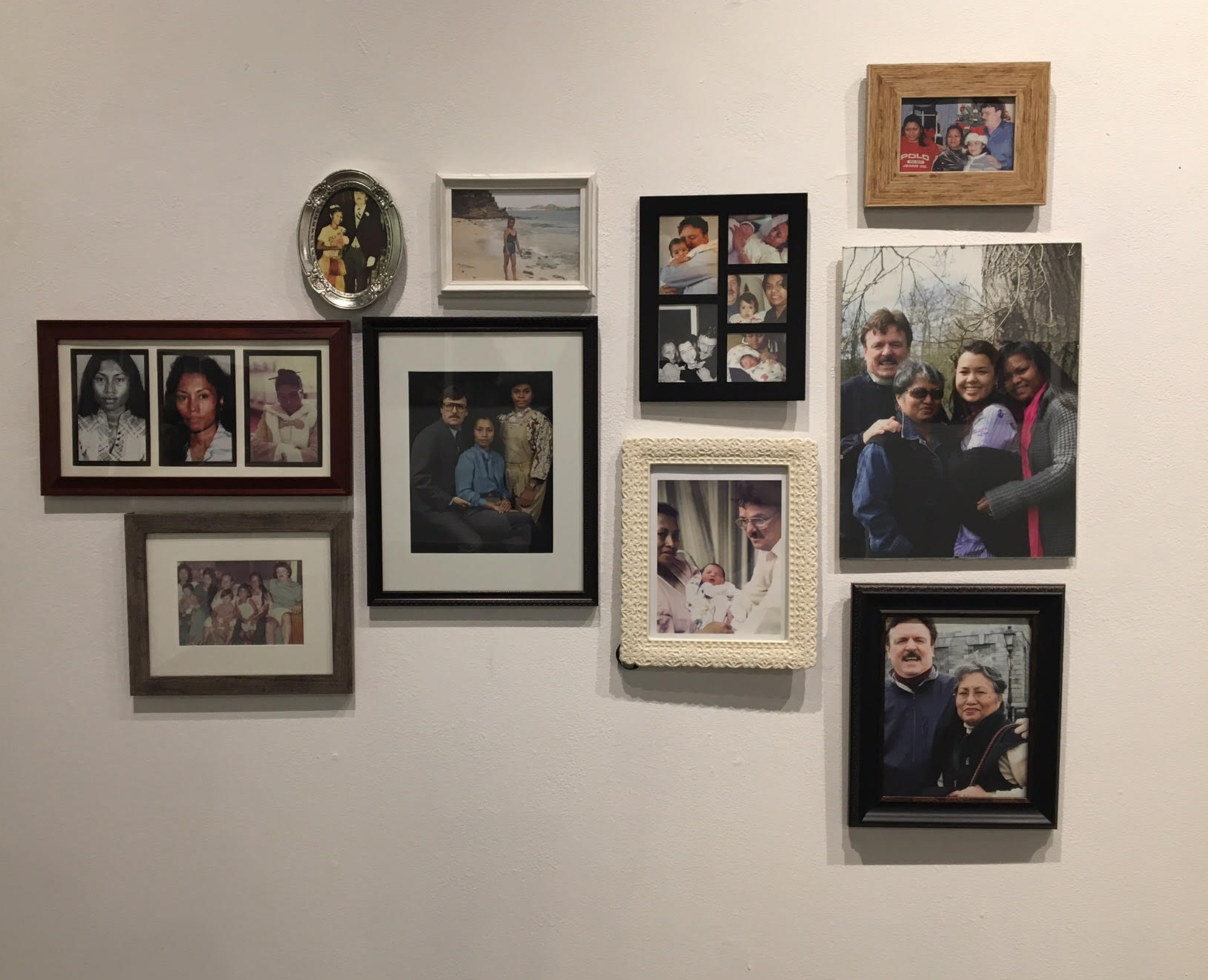
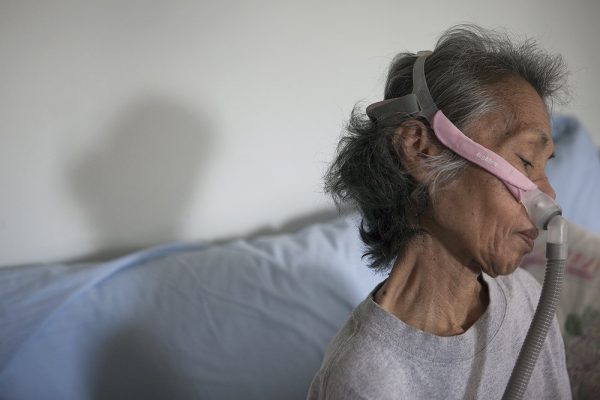
Evelyn Quimby was diagnosed with Amyotrophic Lateral Sclerosis (ALS) in the Summer of 2014, just two months before her daughter, Ella Quimby, left to pursue an MFA in Photography at the University of Alaska Fairbanks. “My dad told me over email, which was not fun,” says Ella. “I was working for a residential arts summer camp in New Jersey, and we aren’t meant to have our phones on us. I was checking my email in the bathroom during the lunch block, and it came out of nowhere.”

Ella and I went to the same suburban high school outside Washington, D.C., and pursued the same honors photography track. At fifteen, Ella was one of the few students with enough talent and grit to make anything resembling an arts career. Even as we lost touch, I followed Ella through her work, which is often brilliant and at times, harrowing.

We haven’t spoken in years, but I feel the same way about her as I do many of my old high school friends, who still I follow on Facebook and Instagram. We’ve drifted apart, but they continue to hold some sway in my life. I root for them. I commiserate. I witness. They are still a small part of my identity. But maybe that’s just myth of social media and of images, that we can touch people when they’re far away. Even when they’re gone.

When We Thought It Was Cancer (I Wish It Was Cancer)

Ella started taking pictures of her mother the Spring before her diagnosis, back when the family thought (hoped) it was cancer. “Part of it was just a compulsion to document. Sitting in these appointments with her, I didn’t know what else to do with my hands,” says Ella. “I’m not the one making any decisions. I’m not paying for anything. I’m not the one who interacts with the doctor, so what else am I supposed to do with myself?”

Sure, some of this is habit. It’s just being a photographer. But some of it is Ella, who has historically used photography to cope with trauma. In an earlier project, “Where I Go to Be With You,” she uses landscape photography to imagine a “psychological landscape” in which to mourn the death of a former partner.

Hence, it isn’t a such surprise that the series continued to evolve after she moved four thousand miles northwest. Rather, it adapted with the distance, and Ella began to shoot her mother in installments. “It turned into ‘now I live away and I’m actually not a part of her care,’” she says. “We don’t have a lot of family photos in general. Even though this is not her in her peak health, it became important for me to remember this experience. That’s my job for our family.”

The final project – at least in its current iteration –  showed in Fairbanks this April. Featuring twenty-one images, “Watching You Go” charts Evelyn’s decline over the last three years. From “When We Thought it Was Cancer (I Wish It Was Cancer)” to “You Are So Tired” and “Give and Take,” the series moves in clusters of photographs. Like Ella, they are bound irrevocably to pockets of time.

Everyone is Here But You, December 2015

In her thesis paper, Ella talks a lot about the idea of the soft documentary. “Photographs present themselves as truth,” she says, “so it’s difficult for people who are not photographers to understand that the photographer is eliminating something from the picture. It’s my mom’s experience, but it’s also my experience of her illness. This is what ALS looks like from my point of view. I’m not there to help her refill her meds. I don’t see all her physical therapy. It becomes nostalgic because I have very little time with her in the year, and in the rest of her life.”

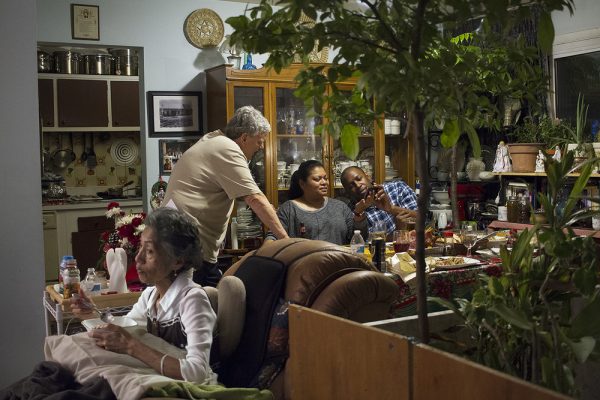
Incidentally, “Watching You Go” also illustrates the evolution of Ella’s family in the wake of her mother’s illness.  “My sister appears two or three times [in the series]. My father appears seven or eight. I’m trying to illustrate the ratio that I see them in her life and in my life. My dad is my mom’s primary caregiver. They still live together and are married, but he’s not there during the day.”

Most of Evelyn’s time is spent, instead, with aides. On her website, Ella writes: I do not know [my mom’s] doctors, and I interact with her aides only a few times a year. My sister is listed on my mother’s Power of Attorney forms, but I am not. I experience my family’s life in chapters, in episodes, in sentences. I am a casual participant in the lives of the most important people in mine.

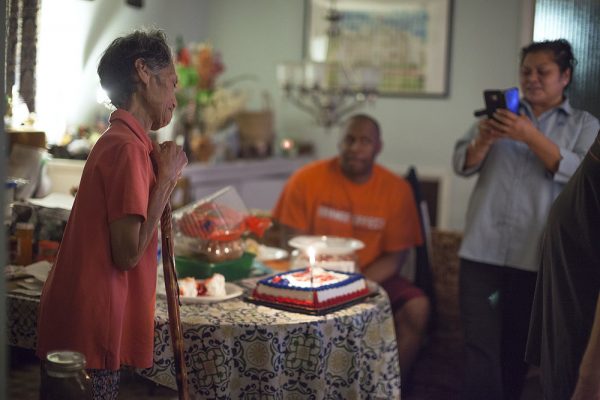
A Birthday While Dying (You Are 63 Today), May 2016

Observing people, guesstimating the cadence of their lives from staggered meetings and images is part and parcel of the digital age. It is how I keep track of the people I knew in high school. It is what we do when we are not quite close enough to touch the heart of another person’s life. If you love someone, if they are family, then it is never really enough.

“My father lives in the house with [my mom],” says Ella. “My sister is very close by. It doesn’t make sense for me to be on her Power of Attorney forms. There is only space on the forms for two people, and asking them to add a third space wouldn’t make sense. I’m not there.”

I remember snippets of Evelyn Quimby. I remember her driving a yellow Hummer back when liberal America was still figuring out if that was something you could get away with. I remember her making huge swaths of Palauan food for tiny suburban girls on Marching Band bus trips. I remember visiting her home in Northern Virginia, with so many plants that they practically engulfed the house. I remember a woman who kept to herself, but was definitively present. In “Watching You Go,” that woman looks lonely.

“She is a very private person, to a fault,” says Ella. “I think that my mother didn’t understand what I was doing initially. She was very resistant. She doesn’t want people to see her like this. She doesn’t go out in public. She keeps the shades drawn.”

Give and Take, March 2017

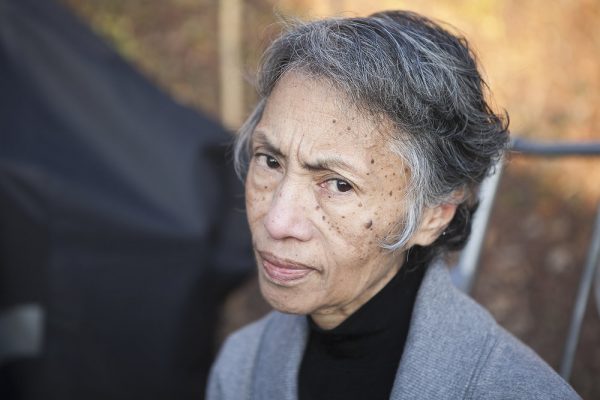
Ella explains that it was hard to convince her mother to participate, especially in the beginning. “I’d never made work about my family before, and I had to learn how to interact with them from behind the lens. They had to learn to be comfortable being photographed, especially by me,” she says. “The last photo is the only one I have printed in the last three years in which my mother is acknowledging my camera.”

At the start of the series, Evelyn is so clearly exasperated – already done with this business of doctors and hospitals. She is done with being photographed. In the last image, part of the “Give and Take” installment, she is harder and softer all at once. She is willing, but mournful. I ask Ella what her mother knows in the last image that she doesn’t in the first.  “Well,” says Ella, “we can be very literal if you want.”

There is no cure for ALS. Once diagnosed, the prognosis is two to five years. Less than ten percent make it to ten. The one medicine available extends life for only a few months longer. While machines can make the body work indefinitely, Evelyn has decided to move forward without them. From what I understand, life attached to a ventilator isn’t a life for a woman who spent summers growing small forests in the deep, dark soil of her front yard. Who owned a chain saw and could fix anything. Who left the small island of Palau in the seventies to make a new life with a husband in America. Who raised the type of daughter who could brave the endless winter nights of Alaska. Who could thrive there.

You Are So Tired, December 2016

“I think that I started the work under the impression that she would never really get it,” says Ella. “Maybe relief is the closest word that makes sense. This is the biggest thing going on in my life right now. It feels good to know that [my mom] understands that this is an important story to be shared. She is now an active participant in a project that was once entirely observational. ”

When Ella says that she will never stop making art about this, I believe her. She is someone who cannot help but to engage with the world, even as it takes something from her. “Even though I’m done with my MFA, I will continue to photograph this work as much as I think is necessary,” she says. “It will continue after she’s gone, and I will continue to examine the relationships with my sister and with my father. But right now, this is what we’re doing. We’re watching her die. We’re all just watching. We’re trying to savor what we have left.”

All photographs copyright Ellamarie Quimby.

Tips for Using a Flash Umbrella

Photo Umbrella

Photography umbrellas are useful because they soften flash, which is typically quite harsh. Soft light transitions more gradually between areas of light and dark, and therefore erases some of the hard lines created by shadow. It’s one of those frustrating instances where more accessories actually translates to a more ‘natural’ look, and not the other way around. However, umbrellas can feel intimidating for newbie photographers, probably because they remind us of waiting to get our class photos taken at school. Still, if you want to achieve a more professional look, then it’s worth learning how they work.

Figure Out How to Diffuse the Light

camera umbrella

There are two types of flash umbrellas to choose from: reflective and shoot through. Reflective umbrellas throw light e-v-e-r-y-w-h-e-r-e. Just willy-nilly in a 180 degree radius. They have an opaque covering on the outside so that light doesn’t pass right through them. Shoot through umbrellas work the opposite way. They let you shoot a flash through a camera umbrella to expand the light source directly. Shoot through umbrellas can change the color of the final image, but this isn’t always a bad thing. Some photographers use gold-lined umbrellas to create the illusion of warmer skin tones. Shoot through umbrellas also let you shoot closer to the subject, which is great for portraiture.

Figure Out Your Preferred Shape

You’ve got some options here too. Regular silver-lined umbrellas are a classic stand by. They feature a convex shape made from triangular panels, and are good for groups and shooting fifteen to twenty feet away from your subjects. Parabolic umbrellas are usually larger with many smaller panels to produce a better focal point. Some photographers argue that they give you better control, and more natural light.

Figure Out if You Actually Want a Softbox

softbox

Essentially, the Softbox  is a wire-framed box with a white or silver cloth stretched across it that directs light evenly outward (i.e. creates a larger source of light). Softboxes are super hip these days, and for good reason. Whether you use a flash or constant light for video, the softbox can, ahem, soften your images for a more commercial aesthetic. Unlike an umbrella, which bounces light every which way, a softbox helps direct it for better control. They come in lots of different sizes, so you can use them both in-studio and as portable accessories.

Ultimately, the goal here is to create softer light than flash alone. You create soft light by producing a larger light source, and there are a few ways to do that. Old fashioned umbrellas will certainly do the trick, especially for larger groups. However, parabolic umbrellas and softboxes provide more focus and better direction.

How to Do Rain Photography with Minimal Gear

Far from being dreary, rain can turn boring, familiar streets and generic scenes into something magical. And contrary to popular belief, you don’t need to drag lens hoods, tripods and microfiber cloths all over creation to get a great shot. We’ve put together some easy suggestions for improving your sparkling rain photography without the hassle.

Umbrellarain photography pictures

Keep a little umbrella in your camera bag. Nothing too heavy; we’re talking like thirteen inches or less. Hold the umbrella over your camera directly. Of course, if it gets to be cumbersome, ask a friend to hold it for you. And don’t use a metal umbrella in thunderstorms! Just lightning-free rain, please.

Raincoat
rain photography pictures

Most DSLRs and Mirrorless cameras are watertight. However, it still makes sense to get your camera a raincoat – or at least a plastic trash bag with a hole in it. Stick your hand through the opening end and pull the whole thing loosely over your face for best coverage. But if all else fails, shoot from the inside of your car.

Lightrain photography pictures

Light from the back. Rain is more visible with a street lamp or a rising sun in the background. Of course, don’t shoot directly into the source. Instead, shoot towards it from the side to capture the detail of raindrops without washing out your image. Then again, if you’re really brave then you can use flash on a super low setting to spark a gleam through the water.

Settings

rain photography pictures

Quick shutter speeds get you individual droplets, while longer times better capture the motion of rain streaming down in beautiful, blurry sheets. For aperture, unless you’re trying to capture a singular detail with a shallow depth of field, we recommend going with an f/8 or more. (You want a wide, clear shot of swaths of rain.) When it comes to ISO, know that those tiny droplets will lose detail with too much noise. So, opt for something around 1600 ISO for clear, bright images without the blur.

No rain gear, no excuses! You don’t need a lot to shoot on rainy days. With a few creative solutions and some lighting know-how, you can capture whimsical, starry rain shots. So get out there, get wet.

Which Expert Enthusiast Camera is Right For You?

The jump between high level enthusiast and professional is already tricky, but it’s even harder when all your camera options look identical. We’ve compared some fan favorites from Olympus, Sony, and Panasonic so that you can get a better idea of what’s right for you.

Olympus OM-D E-M1Olympus OM-D E-M1

The OM-D E-M1 is a portable, lightweight camera with a heavy-duty magnesium alloy body. Super versatile, there are now 70 lenses available for this Olympus, including 35 Zuiko and M.Zuiko lenses. There’s also 5-Axis Image Stabilization and TruePic VII Image Processor for enhanced performance with quick operational speed. Where it shines, however, is in the controls. The OM-D E-M1 features button-and-dial combinations to change every kind of setting, which usually isn’t an option until top-of-the-line models. It’s tricky to figure out in the beginning, but offers a huge boon in versatility overall.

Sony Alpha a7SII

Sony Alpha a7SII

The Sony Alpha a7SII is a powerful mirrorless that offers a wide dynamic range with ultra-high light sensitivity. In fact, the ISO is so powerful that it can basically see in the dark. Similar to the Olympus, this camera also compensates for five types of camera shake. However, where it really stands out is with 4K pro-level movie functions – as Sony often does. The a7SII features sharper accuracy with intelligent auto focus for clear video, and connects with tons of professional accessories for diverse performance options.

Panasonic Lumix DC-GH5

Panasonic Lumix DC-GH5

The Lumix is a Micro Four Thirds mirrorless that, like the Sony Alpha, also functions as a high quality video camera. Along with 4K, the DC-GH5 uses a cheat feature called ‘6K.’ (Don’t get too excited – it’s not exactly what you think.) It uses a higher pixel count sensor and a more powerful processor to add ‘6K’ at 30 fps, as well as to 4K Photo at up to 60 fps. Even though the sensor isn’t as big, some fans hint the the DC-GH5 could draw videographers away from Sony. As for still shots, the DC-GH5 features an auto focus joystick, Wi-Fi, NFC and Bluetooth, as well as 9 fps shooting.

These three cameras all come with their own bells and whistles. Sony and Panasonic are both better video cameras, but Olympus is best for overall control. Panasonic has ‘6K’ that isn’t exactly worth the title, while Olympus comes with a steep learning curve. However, for all their minor differences, any one of these guys will serve you well. 

How to Photograph the D.C. Cherry Blossom Festival

The cold may have slowed them down a bit, but the famous Washington, D.C. cherry blossoms are nearing bloom! If you haven’t taken a trip to the nation’s capital in late March or early April, then you’re missing some serious Spring action. Gifted from Japan in 1912, this annual festival commemorates the lasting friendship between the United States and Japan (albeit the notable setbacks). If you want to photograph these stunning Yoshino cherry trees, then check out our list of must-haves below.

Macro Lenses

cherry blossom festival

Macro lenses are perfect for capturing the detail of individual flowers, and offer some flexibility in terms of personal style. To capture soft blurry flowers, use an aperture of f4 or less. For a crisper edge, we recommend something around f18.  Try shooting with your back to the light (or ideally, from the side) to catch some gentle highlights.

Wide Angle Lenses

cherry blossom festival

Sure, macro lenses are your bread and butter, but what about snapping a wide swath of the blooming basin? We’re talking like a 24mm prime. A nice wide angle lens will give you a stunning view of the overall splendor.

Artistic Courage

cherry blossom festival

That lovely pastel pink is a liar – at least to your camera meter. Your camera will likely try to compensate with fast shutter speeds to limit light. So, ignore the meter. Instead, overexpose and then check your histogram. Or, use whatever settings you usually use for snow photography. Be brave!

Patience

cherry blossom images

D.C. is chock full of tourists year round. During the Cherry Blossom Festival, they will likely clutter the basin from dawn until dusk. They will probably block your shot at least once. Take a deep breath. Grab a tripod to steady your shaking(with rage) hands. These sweet people are part of Washington’s ecosystem. Plus, you’ll capture beautiful ‘fringe’ light at longer exposures, which requires some amount of serenity and calm.