The Canon M100 Mirrorless is so basic that you might confuse it for a Point and Shoot. This is not to say it doesn’t have merits (it does!) but just that you’re looking at a pretty straightforward piece of equipment. With adaptable (read: selfie-friendly) tilting-touch screen, but lack of stereo jack or electronic viewfinder, it’s firmly a starter model.
So who is it for? According to Canon marketing, it’s designed for “those looking to step up from smartphone photography.” According to us: your mom.
Moms get a lot of flak in electronics marketing, and this is not an insult to them or the M100. Moms are busy ladies, and unless they’re photographers, they don’t really have time to unpack the ins and outs of the latest Mirrorless. Luckily, when it comes to the M100, she won’t have to.
Features like Creative Assist and Self Portrait modes are designed with beginners in mind. Rather than adjust ISO, shutter speed, and aperture, users can simply brighten a picture of blur a background. The touchscreen, meanwhile, operates very similarly to a smartphone – and transfers images quickly with a smartphone app. There are also quite a few creative filters like Art Bold and Fish-eye Effect to play around with.
Some more good news: the ISO sensitivity is expanded. Its predecessor, the M10, offered a 100-12,800 sensitivity range, while the M100 offers between 100-25,600. There’s also a built-in flash for super dim shots, and an AutoFocus assist beam for truly dark days. The AF system itself sports 49 points for fast focusing. The APS-C CMOS sensor also boots 24.2 megapixels, up from the previous 18.It’s also fairly inexpensive for an interchangeable lens camera – less than $600 for a body and lens. Plus, built-in Wi-Fi, NFC and Bluetooth connectivity make it easy to assimilate amongst your other gadgets. So, if you or someone who gave birth to you wants something smarter than a smartphone, but not a whole lot more complicated, then check out the M100.
Great for bird watchers, hunters, and naturalists, spotting scopes pick up where binoculars leave off. They’re essentially telescopes for terrestrial use, but with shorter focal lengths. However, unlike stars and planets – which are very hard to startle – spotting scopes let users appear invisible to their animal subjects. Spotting scopes typically come with a magnification range of anywhere from 15x to 80x, which means that you can see 15 to 80 times closer to an object than the human eye is capable of. Whether it’s surveying the land or doubling as a wildlife lens, there’s a best spotting scope for every end.
For the budget-conscious, Tasco offers a very inexpensive scope and tripod combination. We always recommend using your spotting scope with a tripod! Plus, 20-60x is a solidly standard magnification, and the 60mm objective lens is on the better side of light-gathering capability.
More light translates to better clarity and a wider field of view. So, while this isn’t the largest or the most powerful spotting scope, it’s certainly useful for moderate hunting surveillance and beginner bird watching.
Vanguard Endeavor XF 80A 20-60×80
Something like this Vanguard is the next step up. Similar to the Tasco, it features 20-60x magnification with an even larger 80mm objective lens to gather more light.The phase-corrected BAK4 prisms are suitable for intermediate to long-range observation, and the weather sealed construction is well equipped for extensive outdoor use. In addition, the comfortable 19mm eye relief with twist-up eyecups makes this a comfortable choice for long term viewing.
Vortex Razor HD 22-48×65
Designed to perform well in any environment, the Vortex Razor HD 22-48x65mm features die-cast magnesium alloy body, rubber armor with ArmorTrek coating, and O-ring seals to guard against moisture and debris. The 65mm objective lens with multi-coating ensures clarity and color fidelity with a bright image. Unlike some of the other spotting scopes in this guide, this Vortex is angled. While it’s not great for digiscoping, an angled body maximizes wind stability and permits the use of a smaller tripod. Less weight to carry!
Swarovski Optiks STS-65 HD Spotting Scope with 25-50x
Swarovski crafts world class spotting scopes with a price point to match. We recommend a scope like this for digiscoping. With high quality optics, you get a clear image in the center and on the sides of the spotting scope – plus less chromatic aberration in your photograph.
Typically, a larger objective lens translates to better light and clearer images, but 65mm is a sweet spot. It lets in enough light, but remains lightweight for easy travel with your other camera gear.
Leica APO-Televid 82mm Angled Spotting Scope with Televid 25-50X
If you like Leica’s cameras, wait until you see their spotting scopes – perfect color fidelity and maximum contrast. From lightweight magnesium alloy housing to rubber armor exterior, this scope is delightfully resilient. The enormous objective lens (82mm!) translates to tremendous light gathering potential and sharp, clear images in even the dimmest conditions. Plus, the rubberized eyepiece with comfortable eye cups ensures easy long term viewing.
Whether it’s the best spotting scopes for hunting or birding scopes, Focus Camera has a great selection to choose from. Like anything, spotting scopes are an investment. While it’s smart to start with something simple, intermediate and advanced observers should consider the clearest image for the long haul. If you didn’t see anything you liked on this list, then take a look at some of our other spotting scopes here.
Whether it’s street photography, documentary, collages and more, Latinx photographers have a ton of talent, vision, and drive to offer the world of photography. To celebrate Hispanic Heritage Month 2017, we wanted to share some of our favorite up and coming photographers from the New York City community.
“In Latin culture, most parents want you to become a doctor, accountant, or banker since they are careers that pay more and are related to having more stature,” says student photographer Luis Velez. “I, however, didn’t want to take that approach.” From proving to his parents that he can “make a living doing photography” to representing the small Latino presence within the larger photography world, Velez approaches his work with equal parts spontaneity and resolve. “When it comes to working with [subjects], I try to make them feel absolutely comfortable. So, when I ask them to try obscure poses that I come up with in the moment, they do it without question or laugh about when it doesn’t work.”
Living in New York, too, has it’s merits. “It affects the way I shoot heavily,” says Velez. “In New York City, you can go from a bright green park to a dimly lit alleyway. It allows you to have images that are totally different from each other, and I really enjoy that. It allows to me to experiment in completely different settings and light which makes my mind think differently each time I shoot.”
Gear of Choice: “I own a canon 70D body, but I constantly borrow lenses from my college to see which ones I like the most. I’ve been using a Canon 50 mm 1.4 mainly. However, after borrowing the Canon 35mm 1.4 it has become a new favorite. I also use a Apeman E-TTL flash. It’s not a fancy flash, but it gets the job done. I continue to realize that’s it not about how good your equipment is but how you use it.”
Oscar Fuertes
Fuertes transforms his photography into elaborate collages for Street Chronicle, a collection of visual street stories. Vivid and a little chaotic, his work captures expansive movement and raw emotion with creative angles, clothes, and locations. “I come from a family who are very passionate with their love and [are] party animals! During these family gatherings, I’ve always tried to capture the moment as it is,” he says. “The laughter, the people who were there, the time of day, what was I wearing or what my cousin was wearing. The candid moments are what people love in a photograph.”
Growing up, he watched movies with characters from the Bronx or New York, which shaped how he works in the city today. “A lot of my work has that edgy, grimy vibe,” he says.
Gear of Choice: “I shoot with my Nikon D750 and Nikon D7000. I have 50mm f/1.8 lens for my portrait work and a Sigma 24-35mm f/2 lens for landscape or group shots. I also have a Nikon 70-300mm lens. I use these when I want to shoot from afar, or need to get closer.”
Fernando Sandoval
“As much as I struggle with the notion of nationalism and its inherent divisive character, I would say that having being born in Venezuela and nurtured in its culture structured every single atom and neuron that constitutes [this] person,” says Fernando Sandoval. Much of his work deconstructs patriarchal interpretations of traditional masculinity in Latin America and the United States. “This process made me look at all the Venezuelan men in my life: my father and his father, my stepfather, my two brothers, my friends, their fathers,” he says.
Having studied architecture in Venezuela, Sandoval’s work also explores architectural photography and urbanism. From the Chrysler Building to the Empire State Building, Central Park, and the Brooklyn Bridge, New York is itself an ideal muse. “Living in New York City, for me, has been one of the most creative stages of my life,” he says. “From walking around the chaos of midtown Manhattan to the quiet and effervescent neighborhoods like Bushwick, where I live. All of the culture this place holds – museums, galleries, centers for the arts, New York is a city like no other.”
Gear of Choice: “I usually do my commercial work with my Nikon D810, and two different lenses, a 50mm and a 24mm lens. But when it comes to any personal fine art project or when I travel, I usually photograph using film. With film I have an old Nikon FM10 35mm camera with a 30-70mm zoom lens, as well as a Rolleiflex, 120mm. For me, film is as alive as we are, in its physicality and its chemical composition, to the aging and singularity of each frame. I find film photography to be a very cathartic way of seeing.”
The Nikon D850 isn’t perfect, but it’s pretty darn close. Many reviewers have described it as D5-like in feel, at a solid $2K less. With a full-frame image sensor, great dynamic range, 4K video, impressive ISO (and low base ISO), there’s a lot to like in this well-rounded camera. Taking a closer look at the D850 is definitely worth your time if you’re a Nikon lover looking to upgrade or a sports photographer.
One of the most spectacular features of the D850 is the autofocus that it inherits from the Nikon D5. The Multi-CAM 20K autofocus system comes with 153 autofocus points and 99 sensitive cross-type points for adaptability between portrait and landscape. Even while shooting in darkness, autofocus sensitivity is fantastic (it goes down to -4 exposure value in the center point). Moreover, the high-speed shooting is solid at 9 fps (with the optional battery pack). Without the battery pack, the D850 still shoots up to 51 RAW images in a single burst. For capturing fast-moving subjects, it’s really among the best systems.
ISO
Like the Nikon D810, the Nikon D850 maintains a deliciously low base ISO. According to Nikon, that’s the lowest base of any DSLR or Mirrorless. For landscape photographers and others who like long exposures, this feature is especially exciting. If shallow depth of field is in your wheelhouse, low ISO (all the way down to 32) lets you stop down for better Bokeh effects even in bright light.
Megapixels and Sensors
This D850 boasts 45.7 megapixels. If you’re the type of photographer who shows at galleries, then this should tempt you. If you’re the type of photographer who shoots action and shows at galleries, then this is your camera.
It features a BSI CMOS sensor that Nikon designed itself – instead of opting for a Sony-developed one. With it, there are small but meaningful increases in resolution that matter when enlarging prints.
The Nikon D850 is without a doubt a powerful model. It’s improved ergonomics, noticeably sharp details, and fast autofocus should make it especially appealing to sport photography enthusiasts.
Do you have a Nikon D850? Let us know your thoughts in the comments below.
Whether you’re in Brooklyn, Queens, Manhattan, the Bronx, or Staten Island, there’s dozens of great places to photograph a New York City sunset. We’ve outlined our favorite spots around Gotham, so pack your neutral density filter and grab the last subway out before golden hour!
It’s no secret that Brooklyn Bridge Park revitalized Brooklyn’s post-industrial waterfront. This spot features a view of the Manhattan skyline and Brooklyn Bridge. Plus, it’s covered with lovely grass and dotted with repurposed buildings. So the atmospheric possibilities are many! If you stay a while, you can even get a shot of Jane’s Carousel lit up after dark.
Astoria Park, Queens
Known for its enormous pool, which is also the oldest and largest in New York, Astoria Park has lots to see. With two bridges (Triborough and Hell Gate) to choose from, plus trails, a bandstand, tracks, and more, it’s easy to populate your sunset shots. Plus, if you’re having a long wander with your camera, there are tons of benches to sit on and take in the sights.
The Highline, Manhattan
The beloved Highline is a New York institution. Covered with 350 species of perennials, grasses, shrubs, vines, and trees, this nearly two-mile park snakes through the West Side. It naturally faces the setting sun, and it’s one of the few places in the city that feels enmeshed in nature and metropolis. Hovering at 30 feet, you may never get a view of New York quite like this!
Van Cortlandt Park, Bronx
This lush park faces towards the Hudson River. With a small lake and abundant greenery, the city has mounted improvements to Van Cortlandt in recent decades. It also boasts fantastic trails, including some of the best cross country training trails in the United States.
Staten Island Ferry, Staten Island
Wait, wait! We know this sounds like a cop out, but hear us out. There are plenty of great places to watch the sunset in Staten Island. Some of our other favorites include the Alice Austen House and Wagner College. But nothing compares to the glory of having access to views of the Statue of Liberty and the South Manhattan skyline.
A NYC sunset is truly something to behold. Whether you’re facing into New Jersey or across the River into Manhattan, the city skyline makes a great shot at sundown.
Venezuelan Photojournalist Adriana Loureiro Fernandez, 29, never intended to get so political. “I didn’t even plan on getting involved with the resistance, but it was impossible to see everything happening and not be a part of it,” she says. Her series documenting the Venezuelan resistance, Paraiso Perdido, shows at Photoville this week.
Fernandez worked in fashion photography, but later transitioned to covering graffiti artists in her home town of Caracas. “For my master’s project I did a documentary about graffiti called Caracas by Night,” she says. “Back then the conditions in the city were a little bit different. You could still be a woman and go out at night.”
Of course, the work was still dangerous and illegal, so she never used a flash. Instead, Fernandez waited for a car or truck to pass to illuminate her subjects. “Back then, law enforcement was more focused on normal law enforcement – graffiti for example. Anything that would make you more visible was a no.”
Many of her subjects even carried knives and pepper spray to defend themselves. “I spent maybe two weeks going around and asking the prostitutes what they had in their bag. They had car batteries – the craziest things.”
It was only later, after the Venezuelan protests gained momentum, that Fernandez followed her graffiti artist friends to the front lines. “Some of the graffiti artists joined the protests,” she says. “But then they started leaving the country almost immediately – like all of them.” With the writing on the wall, many Venezuelan artists levied their skills to get out before the violence mounted. “Then I was left with nice connections within the Venezuelan resistance,” explains Fernandez. “The artists gave me street cred.”
From there, Fernandez transitioned seamlessly from Caracas by Night to Paraiso Perdido. With an eye for enhancing emotional depth and utilizing harsh light, she began snapping shots of decaying homes and emboldened police officers.
In one photograph, a stoop-shouldered protester in a gas mask visibly loses steam. “That night was hectic,” she says. “That confrontation lasted more than 3 hours, and at some point the gas was such that even with the gas mask you were suffocating – so was he. That guy in the picture was suffocating. In my mind I just went into automatic mode, and just started going. But you could also feel them wearing out. That image belongs to a set of 3 or 4 where they’re just moving around. He just stopped to take a break – to breathe.”
As the resistance continues to shift and change, Fernandez’s work evolves alongside it. She always tries to capture the human face of the conflict, wherever that takes her. “I really like the psychology coming through the eyes or gestures, but also the light and color. I just want [to photograph] the flow of what I experience through my subjects with a particular set of emotions.”
Focus Camera is sponsoring the EmergiCubes at Photoville. Stop by and check out Adriana Loureiro Fernandez’s work.
It’s time for another seasonal show roundup! This fall, there’s a lot to be thankful for. From Joel Meyerowitz’s haunting Between the Dog and the Wolf to the vibrant Women in Color exhibition at Rubber Factory, these are our top 5 photography shows to check out this season.
Mapping out historical and contemporary landscapes of Sudanese diaspora, Iverné’s work blurs boundaries between the anthropological and the personal. A continuation of his 1999 exploration of North Sudan (Forty Days Trails), Bilad es Sudan unpacks the precipitous transformation of South Sudan, where due to the economic, cultural, and environmental changes, many of Iverné’s Sudanese subjects escaped to France. The exhibition unfolds into an epic journey between the deserts of Sudan and the outskirts of French cities.
Between the Dog and the Wolf by Joel Meyerowitz at Howard Greenberg Gallery
September 7 – October 21, 2017
“Between the dog and the wolf” is a common French phrase that signifies the oncoming twilight – the moment between the known and the unknown, savage and tame. Taken while Meyerowitz was spending summers at Cape Code, Between the Dog and the Wolf features photographs captured in this special light of vulnerability and imagination.
Using an 8×10 view camera, Meyerowitz captures a “whole way of seeing [that] was both challenged and refreshed. I found that time became a greater element in my work. The view camera demands longer exposures, and I began looking into the oncoming twilight and seeing things that the small cameras either couldn’t handle or didn’t present in significant enough quality.”
John Griebsch: Aerial Photographs at Carrie Haddad Gallery
August 9 – September 24, 2017
Whimsical and delightfully geographical, John Griebsch’s aerial photographs use pattern and color to communicate something both ancient and accustomed. “Familiar landscapes take on a fresh context when airborne,” says Griebsch. “There is the essential contribution of light. There is the position and altitude of the airplane, and there is a need to capture the stillness and composition of the moment while moving over the subject at more than seventy miles per hour.”
American Visionary: John F. Kennedy’s Life and Times at New York Historical Society
June 23, 2017 – January 07, 2018
The Kennedy administration rose alongside the golden age of photojournalism in the United States. From his private life to public trajectory, Kennedy drew the eye of documentary photographers such as Ed Clark, Lisl Steiner, Ralph Crane, Philippe Halsman, Ted Spiegel Jacques Lowe, Lawrence Schiller, Steve Schapiro, and Sam Vesta. One of the most exhaustingly researched collections of Kennedy photographs, American Visionary is an engaging Kennedy lens.
Women in Color at Rubber Factory
August 19 – September 27, 2017
This exhibition featuring pioneering work of women in color photography is vivid, dramatic, and alluring. Explorations of light and form come together in electric displays of collages, still life images, portraits, and more.
As the weather gets chillier, take some time to warm up in these exhibitions. It’s important to get your seasonal dose of art!
We live in the future. If you’re upset that you don’t have an X-wing, then take a look at Propel’s new line of Star Wars quadcopters. You get to choose between a 74-Z Speeder Bike, T-65 X-Wing Starfighter, and a TIE Advanced X1 (i.e. the one that Leia flies, Luke flies, and Vader flies respectively). They all fly at up to 35mph, and you can – I’m not kidding – battle them. Here’s what else you need to know.
Really, it’s awesome. Not only are these drones hand painted, but they’re totally balanced to fly like starships moving through space! The Propel team developed algorithms to land, maneuver, and flip with a care to realism (or at least the sci-fi version of realism). Chasing is such an important aspect of the Star Wars universe, and it’s ultra satisfying to see these ships fly like they’re supposed to.
The App
Frankly, the app is one of the best teaching tools I’ve ever seen. While each drone comes with its own flight manual, the app guides you through Star Wars ‘missions’ that teach you how to pilot and battle your quadcopter. Just slide your phone into the controller, and training mode takes you away. Any battle stats are uploaded to your app profile, which lets you advance through the ranks. Plus, the app helps you host events and create different multiplayer games, which is especially useful when you start doing…
Laser Fights
You heard me. Laser. Fights. Battles. These Star Wars drones engage in simulated laser battles using Intelligent Awareness Technology. Battle up to 12 people simultaneously! Your drone communicates in real time using light waves that send and receive data. So, if you’re about to get hit, major star wars characters like Darth Vader will warn you to ‘watch out’ or inform you when you’re close to a destroying another player. Rebel ships shoot red lasers and Imperial ships green – just as it should be. Plus, these lasers are even better than classic IR laser tag, so you can play in fog. But they’re also safe! FDA approved and everything with a divergence lens so that you don’t accidentally hit someone across the street.
There’s a lot of love about these quadcopters. If you need one more: Propel is recruiting drone pilots from around the world to fight in an ultimate laser battle with a million dollar prize. So practice, practice! You might be the next chosen one.
In early 2017, Carole Teller, a retired art teacher, approached Andrew Berman, the director of the Greenwich Village Society for Historic Preservation, with a box. It was gathering dust in her East Village apartment, and contained a personal collection of photographs from the 1960s through the 1990s, some of New York’s most transitional years.
The Greenwich Village Society for Historic Preservation works to “preserve the architectural heritage and cultural history of Greenwich Village, the East Village, and NoHo.” They recently made Teller’s images available online as Carole Teller’s Changing New York, stating that “Carole captures the poignancy and beauty of a city in flux.”
“I was struck by the images,” Berman says. “I was struck by how dramatic and incisive they were. [Teller] captured pretty poignant, slice-of-life moments.”
Instead of simply adding the images to the organization’s archive, Berman chose to promote them. News sites like Time Out Magazine, Gothamist and Bowery Boogie raved about the newly discovered photo series. NBC New York called the photos a “treasure trove.” Berman agrees. “The photos are a really important record that tells us about the way our city has changed,” he says. “It’s easy to forget these things.”
Greenwich Village Society for Historic Preservation/Carole Teller ca. early 1980s (left) and photo of location today (right)
While most of the photos capture the East Village, the series also depicts Brooklyn (where Teller grew up) and other parts of Manhattan. They often focus on architecture, as well as scenes on the street level. Even though Teller is an accomplished painter – currently affiliated with Gallery 71 and the Salmagundi Club – she never considered herself a photographer. When asked about her camera of choice, Teller says she used a simple old Pentax.“I’ve always taken photos, but it was never an organized effort,” she says. “I just take pictures.”
Teller explains that she never had the privilege of being an artistic “lady of leisure.” She always enjoyed painting, but needed to make a living. As a result, she taught art in New York City public schools for 32 years, putting her personal art on hold. However, she started painting again after she retired. Teller says that she didn’t really have a choice; she felt compelled to capture things. Much like her photos, her paintings detail city life, from skyscraper landscapes to intimate settings on rooftops. When she didn’t have time to paint during her teaching years, Teller took photos.
“The photos bring me back to that time,” she says. “They are really a visual diary of my life.”
Greenwich Village Society for Historic Preservation/Carole Teller ca. unknown (top) and photo of location today (bottom)
For Teller, photography was a way to document the New York she saw around her and a way to remember it. But to GVSHP, the photos are much more than that, stating that “as a photographer, she had a keen and often prescient eye, capturing in her daily travels, people and places that struck her, but which were also often on the precipice of change or disappearing.”
When asked their feelings on how New York has changed, Teller and Berman offer similar sentiments. Teller feels nostalgic for that past, and misses a version of New York that was quirky and more individual. “Everything is more homogenized now,” she says. She stopped doing as much photography when everything became more digitalized.
Berman, who also grew up in New York, laments the city’s “loss of character,” stating that it used to feel more “gritty, spontaneous, and less programmed.”
While looking through the photos, it is very easy to focus on what the city has lost over the years. Many of Teller’s image descriptions contain the phrase “demolished.” Some photographs depict scenes of cranes and trucks coming to tear down the old and cart aged bricks away. One shows the NY Tribune Building near City Hall, which was demolished in 1966 and replaced with Pace University. One of her most popular photos features the beautiful old Penn Station before it was dismantled in 1963.
Greenwich Village Society for Historic Preservation/Carole Teller ca. early-mid 1960s (left) and photo of Pace University today (right)
However, Teller and Berman also appreciate the changes in New York, as well as the more “programmed” world that comes with it. When discussing the process of bringing her photos to light, Teller says that “digitalization made it possible.” She went to Print Space on 21st street to have her old photos digitalized for the GVSHP archive. Meanwhile, Berman’s painstaking process of finding the location of each of the photos required tons of online research (and Google Street View).
Berman and Teller recognize the benefits that come with the changing New York.“The good over the last several decades is less crime. It’s cleaner, safer…” he says. Teller even found a home within her changing New York. One of her photos depicts a man standing in a building that is set to be demolished. As happenstance would have it, Teller later lived in the building that took its place.
Greenwich Village Society for Historic Preservation/Carole Teller ca. 1960s (left) and photo of location today (right)
“Whether you view the changes as good, bad, or you’re indifferent, people love these photos,” Berman says.
Berman’s favorite photograph showcases posters wheatpasted to a building. He was a “sniper” or “wheatpaster” when he was younger, and this photo reminds him of those days. Teller was unable to pick a favorite, but hinted that she had more to share. Perhaps we will soon have another batch of Carole Teller’s Changing New York to take us deeper.
Greenwich Village Society for Historic Preservation/Carole Teller ca. 1980 (left) and photo of location today (right)
Despite our lamentations for the past, change is an inevitable part of every city. That’s why it’s important for organizations like GVSHP to keep their photo archives, so that even as parts of the world are changed or demolished, we have a history to look back on. And Teller’s photos are even helping to do that. All the photo prints are available for purchase, with proceeds going to GVSHP and their cause. Thus, even as they are shared online and help us remember an older New York, Carole Teller’s photos help us preserve it as well.
Greenwich Village Society for Historic Preservation/Carole Teller ca. early 1960s (left) and photo of location today (right)
The full collection of Carole Teller’s Changing New York is available on the Greenwich Village Society for Historic Preservation Image Archive here. Prints of the collection are available for sale on the website with proceeds benefiting GVSHP.
All photographs copyright Greenwich Village Society for Historic Preservation/Carole Teller.
Back to school is upon us. Every year comes with a list of supplies and must-haves, but it’s good start with some of the basics in the first few weeks. From speakers to smartphones, printers, and hard drives, there’s lots of great technology out there to make your transition from summer to school a little easier.
Whether for your dorm room or giving presentations in class, speakers are a great addition to your supply list. Bluetooth speakers are usually small and lightweight – super easy to store in your backpack. Plus, they connect to lots of different devices, from smartphones to tablets and computers. With long lasting batteries, it’s easy to transition from music in between classes to full blown party on the lawn.
Smartphones
Who doesn’t want to go back to school with a new smartphone? If you’re not an iPhone aficionado, then Sony and Samsung make excellent flagship phones. Plus, whichever you choose, there are tons of great apps to help you study. Evernote helps you track and keep notes, record voice memos, and make to-do lists. Wikipanion can help fill knowledge gaps while studying (though beware, you won’t want to cite it). There are tons of dictionary apps, and of course, EasyBib for quick essay citations.
Printers
We recommend a few different kinds of printers. Inkjet is a great standby, whether for essays or pictures. If you’re studying to be an artist or an architect, you might consider a 3D printer as well. For fine artists, check out Hahnemuhle Fine Art printing paper for better contrast and pictorial depth.
Tablets
Some schools let students borrow tablets, but it’s always nice to work from your own. Tablets are a great alternative to laptops, especially for class-heavy days when you have to lug it all around. They’re also compatible with lots of handy accessories, like keyboards for typing up lectures. Whether HP, Samsung, or Apple, connect it’s a good tool to keep in your back pocket (or backpack pocket).
Hard Drives
If you haven’t seen our article on the importance of a second hard drive, then give it a read. Accidents happen, whether it’s a coffee spill or an email with a virus. Even regular old stealing is a problem on some college campuses! Saving important documents to an external hard drive every few months is extremely important. You might even think that your college projects are useless after you turn them in, but they’re extra important if you want to apply for grants and scholarships.




 It’s also fairly inexpensive for an interchangeable lens camera – less than $600 for a body and lens. Plus, built-in Wi-Fi, NFC and Bluetooth connectivity make it easy to assimilate amongst your other gadgets. So, if you or someone who gave birth to you wants something smarter than a smartphone, but not a whole lot more complicated, then check out the M100.

 The phase-corrected BAK4 prisms are suitable for intermediate to long-range observation, and the weather sealed construction is well equipped for extensive outdoor use. In addition, the comfortable 19mm eye relief with twist-up eyecups makes this a comfortable choice for long term viewing.
 Unlike some of the other spotting scopes in this guide, this Vortex is angled. While it’s not great for digiscoping, an angled body maximizes wind stability and permits the use of a smaller tripod. Less weight to carry!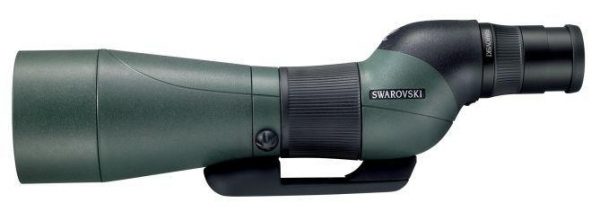




 Moreover, the high-speed shooting is solid at 9 fps (with the optional battery pack). Without the battery pack, the D850 still shoots up to 51 RAW images in a single burst. For capturing fast-moving subjects, it’s really among the best systems.
 The Nikon D850 is without a doubt a powerful model. It’s improved ergonomics, noticeably sharp details, and fast autofocus should make it especially appealing to sport photography enthusiasts.